






tips on growing curry plant...
Hello,
I recently barked upon a project to grow South Asian Indian Curry plant. I did not know much about how to grow it, so I started searching web for information. I could not find any one place that provided this information.
Anyway, after searching for many email threads on this site and others, I found some information. I've decided to complile my findings and share with others. Feel free to add other tips if you think they may be useful to others.
--------------------
Few things I noted during my research:
- if you try to grow plant from curry plant seed, it helps if you have seed first put in moist paper towel for several days before putting them in soil.
- Remove hard shell to expose the seed before planting, it may help germinate quicker.
+ Do not saw seeds too deep in soil. SuperSoil soil (sold at home depot) works very well.
+ I read that it works if seeds are picked and then saw'ed as soon as possible. The seeds should not be too old.
+ Curry plants florishes well in temperature around/above 65 degree temp.
+ Small curry plants do not do well in direct sun light during hot summer weather and don't do well if soil is too wet. Th soil needs to be well-drained soil. Also, let soil dry a bit between watering cycles.
+ During cold winter nights, bring [young] plants inside house and at least cover the pot with shade to avoid night frost which definitely kills them.
+ Leave small curry plants in the same pot for about an year (or about 4-5" tall) before transplanting it into a bigger pot.
+ It's very critical that curry plant roots are not disturbed. The best way to transplant is to move the plant with root around soil into a new/bigger pot.
+ Potted plant requires regular fertilizer, at least during spring/summer time. MicacleGrow fertilizer works fine as well. Do not give strong doze of fertilizer to young plant.
+ Plants can be grown either seeds or from suckers around an adult tree.
+ Have a look at this URl which provide some more information: http://askagent.ammas.com/topics/Gardening/a93170.html
- Lastly, I heard that there are 3 varaiety of curry plants. Have a look at this website: http://www.bhatia-nurseries.com/curry.htm
Hope this helps.
Does anyone have curry plant/seeds for "Gamthi" variety to share?
Regards,
nkt38238
Comments (56)

Bruce Canada
14 years agoThe Curry Tree (Murraya koenigii) is a tropical to sub-tropical tree in the family Rutaceae, which is native to India. It produces the leaves known as Curry leaves or Sweet Neem leaves. Karivepillai in Tamil means black neem as the appearance of the leaves look similar to the neem leaves. The leaves are highly valued as seasoning in South Indian and Sri Lankan cooking, much like bay leaves and especially in curries with fish or coconut milk. Although most commonly used in curries, leaves from the Curry Tree can be used in many other dishes to add spice.
Rachelle Hartman Oregon
13 years agoI have a 2 1/2 foot tall regular curry tree (Murraya Koenigii) that a generous Indian friend of mine gave to me 3 years ago. When she gave it to me it was a 5 inch seedling when she gave it to me. She mentioned that I would have to chop off the main trunk at some point but I've been afraid to do that as I'm not sure if that's the right thing to do and also don't know where to cut it. It now seems too tall and spindly as it doesn't have any secondary branches other than the trunk. Can anyone give advice on how to prune so that it will form branches with bark.
Related Professionals
Carlisle Landscape Architects & Landscape Designers · Reading Landscape Architects & Landscape Designers · Wrentham Landscape Architects & Landscape Designers · Middle Island Landscape Architects & Landscape Designers · Oatfield Landscape Architects & Landscape Designers · Stamford Landscape Contractors · Battle Ground Landscape Contractors · Danvers Landscape Contractors · Miller Place Landscape Contractors · Ramsey Landscape Contractors · Weslaco Landscape Contractors · Schenectady Roofing & Gutters · St. Louis Roofing & Gutters · Marietta Roofing & Gutters · Cave Spring Roofing & GuttersKetki Patel
13 years agoHello
I like in PA USA, currently weather is cold, I have my curry plant pot inside, in fall it lots all leaves. Now it has main trunk. Its all brown, looks like its dried! I have been watering it regularly. Do you think it will have brances or leaves in spring/summer when weather gets better. And if some has seeds or baby plant, are you willing to send it to me. I would really appreciate it. Thank Younkt38238
Original Author13 years agoHi Ketiki,
I am in Northern CA. Even here, the most of the leaves of curry plant are shed during winter and it has to be put under the shade (to avoid frost). So, I would expect your plant to shade all leaves during winter. No worries, the leaves start coming back as soon as spring hits the road (just about now here!). Do not over water curry plant, but keep watering at regular schedule even during winter (although not as much as during summer and don't let soil completely dry up).
If your curry plant's branches are completely brown (and dry to bend), it might have died. You will just have to wait for summer/spring and watch. Even during winter, try to give it as much as sun as possible (e.g. keep near the window,etc.).
If you can get Alfalfa pallet (for Nitrogen) in your area, buy them (pet store usually carry them) and mix them up in soil. They are good organic option for fertilizer (actually, w/ it miracle grow will work better too). If you enjoy listening to garden show on radio, google "Bob Tanem" to listen to his past shows (mp3) or show on Saturdays.
HTH.
nkt38238
Original Author13 years agoRachelle,
If you're still looking for answer....if the plant is mature enough (4-5 years at least and tall (4-5 feet), you can cut off the shoot(s) coming out from very top. The best time to do would be just when spring is around the corner.
I'd beg to differ with Bruce's following statement:
"The leaves are highly valued as seasoning in South Indian and Sri Lankan cooking, much like bay leaves..."
Actually, it's used throughout India (North to South) and Sri Lanka in many forms of curries.
leapy
11 years agoTo cyrus_gardner
"A little knowledge is a dangerous thing!" In your internet searches you will find many experts who do not know what they are talking about. I always verify from several sources.
It is totally wrong to suggest that the Curry plant, "Helichrysum italicum", is inedible. It loses its strong flavour when cooked, so, it is best used RAW and very finely chopped, to add it's wonderful sweet curry aroma as a seasoning to salads, eggs dishes, meat dishes, yoghurt, fish dishes, or flavouring vinegar, cream cheeses, etc etc.
It is also a handy plant in keeping cats and deer away (so plant it near your roses, deer hate it!), and of course it looks really nice in the garden and in floral arrangements.
*** Do not dig it up and take it back to the shop! Rather go back to the shop and educate them a little. They will then sell loads more Curry plants, why?, because, the Curry plant attracts butterflies and other very useful insects (including wasps) which help you get rid of the other "pest" insects. Wasps, for example eat, aphids and caterpillars etc. (Note If wasps disturb your summer BBQs you can keep them away from your outside dining area very simply, as follows: Take a large 1.5 litre plastic coke bottle. Cut the top 1/3rd off and place it cap end down inside the bottle, but, smear a little jam around the neck first. Make a hole in each side and tie it in place with kitchen string. Make sure there are not gaps. Your bottle trap will be filled with the enticing sweet smell of jam. Now smear a little jam way down inside the opening, or drop some pieces of apple inside. Now half fill the bottle with water and a very little vinegar. Make a loop with string and then hang it up about head high in a tree a few meters away from your BBQ area. It might take a day or two, but it will soon start to fill up with wasps, flies, mosquitoes, hornets etc which are attracted by the jam, crawl down inside and then are unable to get out again. Just make sure that the water level comes to within 2 or 3 inches of the inverted bottle neck. This limits the space in which they can fly. You'll be amazed how effective this is and you'll be able to eat outside in relative peace and quiet.) I was worried that it might trap bees as well, but happily this has not been an issue.
Back to the Curry plant, which should not be confused with "Murraya koenigii", the Curry tree and it's spicy citrus flavoured leaves, which are widely used for cooking in the Far East.
As you correctly pointed out Curry is in fact the Tamil word for sauce. There are many different blends used for various dishes in the many regions of India. It is easy and fun, to obtain all the herbs and spices necessary to make up your own batch of curry powders, or Red or Green chilli pastes used in Thailand and all around the Far East.
Don't trust what you read on the net. Always triple check with other sources and then you reduce the chances of getting bad information. Happy gardeningtropicalgardener1212
11 years agoI am shocked at the ignorance of the non-Asians about whether a curry tree is edible or not, or whether it is real! How embarrassing? I have been growing this bush-tree for over fifteen years, in Texas and Puerto Rico. Once established, it is a very hardy tree; but it needs warmth! If you are lucky enough to get a tree started, and it's really not very hard from seed, you will have one of the best kept culinary miracles of the world, on the same level as basil and oregano! My wife is from Sri Lanka, and we use the leaves on and in everything: rice, eggs, curry...if you have any questions about this tree, I guess I am really kind of of an expert; I have three really big ones in the yard, and yes, I do get lots of seeds from time-to-time.
Frank :)
leapy
11 years agoHi Frank,
I purchased my Curry plant at a garden show, really just because of it's wonderful smell. On doing a little research I discovered that it works very nicely in various dishes such as salads, or eggs, or fish, but loses it's powerful aroma if cooked. The recommendation is to chop it up finely, as you would with parsley and add it to the dish like you would add salt or pepper.
It is very nice indeed! I also have a ready supply of frozen Curry leaves (from the other tree!!!), which I use regularly in my Asian preparations. It's strong lemony scent is superb!
Like yourself, I find it quite amazing and frustrating that some people present themselves as experts on a given subject and then proceed to write utter rubbish, demonstrating that they know nothing at all.
The Internet can be a valuable resource for researching all sorts of things, BUT, check and re-check because there are plenty of so called experts out there!
Thank you for your post anyway and Happy Gardening!HerbGrower
10 years agoAll great information... A few points. Both the Curry Plant and the Curry tree are real and edible. I have grown and eaten both. Also Curry not sure which has many medicinal values, including an anti-inflammatory.
My question is what is the best way to germinate the Curry Plant seed.
farm96744
10 years agoI've had my murraya koenigii for a little while and it's a fascinating little tree. here are some observations:
the compound leaves stay green and viable only if the petioles are attached to still green growing tips of the branch. so always start harvesting the lower leaves first!
the petioles don't branch (because they are functionally just a few large compound leaves!) and can be removed freely without affect tree structure, but there is a lot of natural beautiful branching at the flowering tips, so don't mess with them too much!
the little tree can growing into a beautiful mature tree of 12-20 feet. ***Importantly if you want a full size tree; only head the main leader when it reaches a foot or two above where you want the lowest permanent branch to be (probably minimum of about 4-5 feet). of the branches that will grow that will grow beneath the severed head; the strongest two will be selected to be main leader and first branch respectively.
if you want a dwarf or bush, head it at 2 feet as mine was (which will never be able to reach full size). using the same strategy of eventually selecting only two branches to use as leader and first permanent branch, this will probably make a tree of only 6 to 7 feet max.
neat little tree; definitely recommend to everyone to give one a try!
This post was edited by farm96744 on Sun, Mar 16, 14 at 20:36
fruits_veggies
10 years agohi farm, thanks for the details on the curry leaf (murraya koenigii) plant. Could you please post some pictures.
thanks
farm96744
10 years agoUpper leaves: The petioles are connected to the green part of the branch tips and are still viable;
Lower leaves:
once the green branch turns woody the attached petioles and leaflets will deteriorate.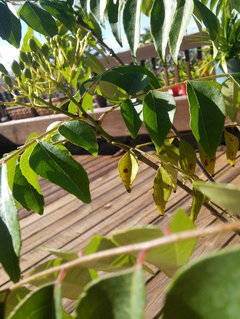
This post was edited by farm96744 on Tue, Mar 18, 14 at 22:21
farm96744
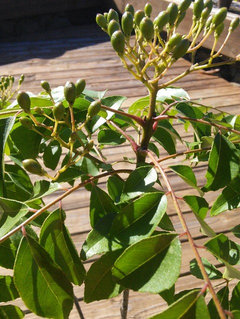
10 years agoThe flowering tips are where the natural branching occurs; so don't pinch them off. These two clusters/branches arose from one flowering tip.
farm96744
10 years agoRadial branches will arise if you head the plant. The stoutest widest angled lowest branch will be your first option for a lowest permanent branch. While the trunk will thicken over time, it will not grow much taller to the point of this branch. The most verticle stoutest highest branch will be selected as the new leader (trunk). All other branches will have to eventually be removed to prevent steal.

farm96744
10 years agoIt will eventually look very similar to this beautiful little tree; once all but two of the radial branches are removed.
To get a tighter looking tree, select the lowest branch to be more vertical-arising instead of one at a broader angle.

fruits_veggies
10 years agoThanks again Farm, you have a nice looking tree.
I wish I can grow curry leaf plant in ground in Dallas like yours but with the Dallas weather I can only afford to grow them in containers.
Weather is getting better here, i moved most of my curry leaf, Jasmine and couple more tropical plants from garage to outside. Will take some pictures tomorrow and post them.
shuffles_gw
10 years agoI have some curry trees in pots. Here in Tampa they grow very well into small 6 or 7 foot trees/shrubs. Could someone please provide reicpes? I would like to start with simple curry rice.
farm96744
10 years ago@Fruits: Can't wait to see your plants. I'm planning on growing out a couple of my upcoming seedlings (hopefully) into braided topiary style trees.
@Shuffles: They are used as little leaf crispies. Fry them up in a little oil or butter until crispy and then use as garnish. Spiking fried coconut shrimp (yes the frozen kind will work just fine) with plenty curry leaf crispies will make them the best shrimp you will ever eat (this is a riff on the much harder to make but crazy delicious cereal/butter prawns recipe)
This post was edited by farm96744 on Thu, Mar 20, 14 at 1:43
fruits_veggies
10 years agofarm,
here are the pictures of my curry leaf plants, it took a while.
Plant # 1 - I pruned this last year and after pruning it only got 2 branches and had grown to 4 feet. Plant in between is a sucker. I need to prune this plant to look like a tree, I would appreciate your suggestions to prune this plant
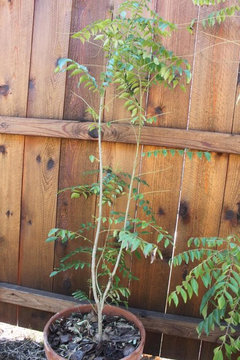
Plant # 2 - I got this plant from a friend 2 years back, last year it had several suckers and some of them had grown bigger than the parent plant. I'm planning to separate the suckers and also need to prune all of them.
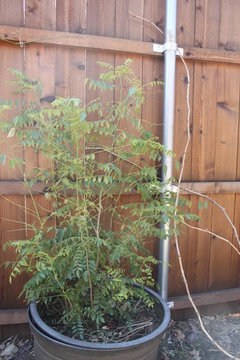
Plant # 3 - This is my other curry leaf plant, i pruned this last year and it got 3 branches, two of them grown big but the other one remained short, I need to prune this as well to look like a tree. This had 2 suckers last year, i plan to separate them as well.

This post was edited by Fruits.Veggies on Mon, Mar 31, 14 at 13:43
farm96744
10 years ago@Fruits: Nice plants!
The first one has some nice potential actually.
Would suggest to head the thicker left branch first at maybe 3 feet+ or so from soil level (hard to gauge the actual height from the photo).
remove the middle branch altogether but be careful to leave a collar and not cut directly into the Y.
Leave the right branch to grow.
By summer's end you should have some nice radial branches from the headed left branch. And next spring, you can remove the right branch altogether since it won't be needed anymore. By the spring after you can remove all the radial branches from the headed left branch except for two (remember choose the most vertical highest arising one as the leader, and the lowest widest angled to be the branch).
And you'll have a great tree!
The last tree is a little less easy to do. If you want a tree shape, you'll have to remove the low branch/sucker even though it is growing the best since it is diverting away from the two taller branches, and then pick one to head to use for the radial branches.
And as far as the pot of little rooted? suckers, if I had those, I would definitely try to do a braided tree!
Good luck!
fruits_veggies
10 years agoThanks farm,
Sure, I'll prune my curry leaf plants as per your suggestion.
Regarding braided tree, do I need to remove the suckers and plant them in a new pot and braid them? in the current pot the suckers are all over the place and in varying sizes. What would ideal number of plants for braiding, 2 or 3
Thanks
farm96744
10 years ago@Fruits: Yep. This is a youtube video on braided hibiscus from rooted cuttings that uses 4 strands: http://www.youtube.com/watch?v=JNgBQFn1hSEâÂÂ
And this is a two stranded braided bay leaf tree: http://www.hgtv.com/gardening/braid-a-bay-tree/index.htmlI think the curry leaf has several really unique things going for it for braiding; it has mostly top only growth, and the stems are nice and thin and pliable and mature to a nice color.
farm96744
10 years ago@Fruits: by the way, do you know which variety you have? some of your leaves are keeping green on the woody portions and the numerous suckers makes me think it is a different variety from mine. Probably the dwarf according to bhatia. The gamthi is interesting; I take it to either mean gujerati and/or villagers/heirloom. I've come across research papers from india that found different compositions in the northern and southern varieties, so the differences are probably significant.
This post was edited by farm96744 on Sun, Mar 30, 14 at 16:28
fruits_veggies
10 years ago@farm, thanks for the braiding links, it is really interesting and informative. Nursery folks deserve appreciation, it takes lot of hard work and time to grow braided hibiscus or for that matter any braided plant.
Regarding my curry leaf plants, all the three seems to be different varieties and I got them from 3 different friends who had curry leaf plants for the last 8-10 years.
Below plant numberings are based on my earlier postings.
Plant # 1 - leaves are large and dark green and petiole bulky area that attaches to the branches are reddish.
Plant # 2 - leaves are regular green and entire petiole is green as well
Plant # 3 - average size leaves with light red tone and the petioles are also reddish. As per my understanding this variety is prefered in western part of Tamil Nadu, a state in South India. It is called in Tamil as 'Senkaambu' curry leaf - meaning curry leaf with reddish (sen) petiole (Kaambu). Green ones are called as Patchai kaambu, meaning curry leaf with green (Patchai) petiole (kaambu). I circled them in blue color in these two photos, not sure whether it is clear. May be you need to download the photos to have a closer look.
I refer this below plant as Plant # 1

I refer this below plant as Plant # 3

Surprisingly I couldn't find more details online differentiating curry leaf plant varieties by their petiole color.
Comparatively second and third plants get lot of suckers than the first one and another thing I observed is that only third plant had flowers last year.
This post was edited by Fruits.Veggies on Mon, Mar 31, 14 at 10:33
farm96744
10 years ago@Fruits: thanks for the very interesting and useful information. wow. very very interesting. many people here go with bhatia nursery's classification since they've been selling these plants on the mainland for a number of years now. here is their page: http://www.bhatia-nurseries.com/curry.htm
as you can see, what they are calling gamthi and regular (corresponding to your trees number 1 and 3) have red petioles while the dwarf (your tree number 2) has green petioles.
here in hawaii, curry leaves were/are grown commercially for indian restaurants on the mainland, so pretty sure mine is the regular (your tree number 1 or 3) especially since it has red petioles.
Do the trees smell any different? Is the Gamthi the "best" (tree number 1 or 3; likely number 3) as it is reputed to be?This post was edited by farm96744 on Mon, Mar 31, 14 at 4:29
fruits_veggies
10 years agoThanks farm, I updated my earlier posting for 'petiole' :-)
I never gave much thought about curry leaf plants earlier, even though I had grown up eating foods flavoured with curry leaves pretty much everyday. This forum in general and this topic in particular has sparked interest to do more research on curry leaf plants.
I remember almost everyone in my village back in India preferring to use/plant curry leaf with red petiole inspite of having green petiole curry plant in their backyard, not sure whether it was for smell or looks, may be it is time for me to get in touch with folks back home :-)
I went thru bhatia nursery website and it seems my plant # 3 is gamthi variety as per bhatia nursery's classification. I could map Plant # 1 to 'Regular' and
Plant # 2 to 'Dwarf' varieties respectively but not 100% sure.Btw, my plant # 3 looks almost similar to your curry leaf plant, which is in this posting "Posted by farm96744 none (My Page) on Tue, Mar 18, 14 at 22:25".
farm96744
10 years ago@Fruits: :) same here. Reminds me of that Bon Jovi song ... who says you can't go home (apropos since Jersey now has a large desi population!)
I'm pretty sure our trees here in Hawaii are all regular Senkaambu and not Gamthi though since they were all grown for the restaurant industry, and fast growing is important to the commercial producers.
The problem with regular is that while the aroma is great when they are still fresh; being so thin and delicate, the leaves really can't seem to stand up to frying to make leaf crispies. After less than a minute, the leaves turn bright yellow and bland (only a faint citrus aroma remains). When I was a kid in Southeast Asia, the leaf crispies definitely retained the dark green color and deep aroma. Maybe I'm frying them wrong somehow, but the thinness of the regular leaves is definitely working against me.
So if your tree number 3 is most like mine; your tree number 1 may in fact be the slow-growing Senkaambu Gamthi variety. If so, take care with the pruning. Be sure to fertilize the plant well (I'm using dyna pro foliage which is really really good), and I wouldn't really harvest from the remaining branch so that it has a chance to regenerate.
Please share if you find out more and I'll certainly do the same!
This post was edited by farm96744 on Tue, Apr 1, 14 at 1:39
xman
10 years agoHello,
My curry leaf tree, it is over 14 years old, it was about 5 inches tall when I got it now over 8 feet tall. Has been growing in containers and moved into the garage every winter. Root pruned and re-potted every 2 years. Currently in a 35 gallon container. Fertilized with just compost and compost tree. I had pruned the branches over the years to get it to be more open have a nice branching structure.
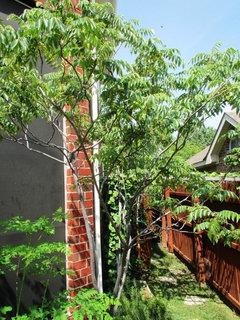
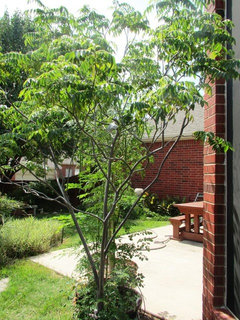
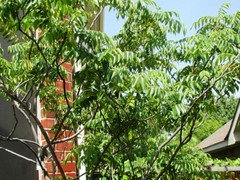
xman
djkj
9 years agoHere are some tips to propogate curry leaf plants from seed
Here is a link that might be useful: Curry Leaf Plant Garden Growing Guide
garijai
9 years agoI have a question for you. I have a Curry leaf plant from last 5-6 years. Initially for couple of years it didn't grow much, now it's growing fine but I never get new plants next to it. The plant is around 39-40" tall. My friends have smaller plants and I see new plants coming next to it. Do you know why the curry plant I have doesn't get new shoots?
hlily
9 years agoThere are two types of curry leaf trees - one that sends out suckers and another that only propagates by seed. I had a couple of the later for 18 years and never got suckers but I was able to grow new plants from seed. The seeds germinate very well if fresh.
Pyewacket
9 years agohlily, could you share how you handled the seeds and harvesting seed from the fruit? Also what kind of medium you used to sprout them, temperature requirements, how long it takes for them to come up - anything about how you get them to sprout.
I got some seed from Hawaii this week and its already planted - hoping I didn't mess anything up. But if nothing ends up coming up this time, I'd like practical advice from someone who has done it for when I try again next time.
Thanks.
hlily
9 years agozensojourner,
I would remove the skin and flesh of the fully ripe fruit (almost black in color) gently and wash it under running water to reveal the green seed. I usually would just pat dry the seed and plant immediately about 1/2 inch deep. I used miracle gro potting mix. I did have a heat mat underneath and got almost all to sprout. The key was - the fresher the seed the better the germination. Once it got 2 sets of leaves I transplanted into an 8inch or 10 inch pot and left it there for 2 or 3 years at least. Curry leaf does not like its roots disturbed.Pyewacket
9 years agoThey actually came pre-cleaned, which I did not realize at first. So I soaked them for about an hour, which I think was a mistake. Some of the seeds split, about 3 or 4 out of the 24 I received.
I planted in MG potting mix. I think 4 or 5 have emerged so far. I'm not sure how long it usually takes for them to germinate, plus there's the whole soaking them when I probably shouldn't have thing.
Because they arrived unexpectedly early, I didn't have a seedling mat yet. It was almost a week after I planted them before I got the seedling mat and thermostat. In that time they were outdoors in the daytime with daytime temps over 80, in full sun, in a black starter tray. I brought them in at night.
Now they are in front of a south facing bank of windows on the seedling mat, but at present it is not keeping them at the 80F I have the thermostat set at unless I leave the dome on - it still doesn't get up to 80F but it does keep them 2 or 3 degrees warmer that way.
If I leave the dome on it stays warmer, but then I get condensation inside the dome. Not a lot but I'm not comfortable with it. I have never bothered to cover seedling flats before as humidity is not usually a problem if you keep the potting media evenly moist. However I'm having to use the dome at present to help keep in the heat as the seedling mat doesn't seem to be able to keep up with things, despite being advertised to heat the soil to 20F above ambient. I'm somewhat worried about damping off.
I have the seedling mat on 1" thick rigid foam insulation. I'm not sure why it is struggling so. I turned the thermostat up to 81F because I noticed it lets the temp drop about 3F before coming back on, hoping to keep it up closer to 80F. I may end up replacing the Hydrofarm thermostat with a herp thermostat. But the seedling mat itself doesn't seem to be up to the task.
I guess I'm glad I got the 4 or 5 to come up, though I had brief hopes of doing a little better than that.
Pyewacket
9 years agoBTW - do you have a recommendation for lighting through the winter indoors? I was thinking I could supplement the south facing bank of windows with spot-type grow lights for each surviving plant. I don't think I can rig overhead fluorescents (affordably) as this is a rental - so I can't really make holes in the ceiling.
hlily
9 years agozensojourner - what zone are you in? How much light does your south facing windows let in? Can you take the few that have germinated out of the tray so that the rest will be under the humidity tray while the germinated ones can grow under the spot grow lights? I have had them under grow lights some years and at others I have just put them on the sunniest south facing windows. They never grew much indoors but as soon as I placed them outside they usually take off. Hope this helps. I think the double pane newer windows do not let in all wavelengths of light, so even when it looks sunny, the plants don't get what they want. Good luck.
Pyewacket
9 years agoZone is weird, I don't bother with it because it isn't accurate because there are a zillion microclimates in Reno. The low night time temps vs the high day time temps plus the highly variable altitude make the USDA zones kind of meaningless here.
Online resources don't seem very accurate either; for instance, the UNR extension site points to a site for frost dates where it claims that 90% of the time, first frost occurs on AUGUST 23rd. This doesn't gibe well with average reported low temps for late August in the mid 50s.
I've seen sources that state first fall frost is 8/23, 9/11 to 9/20, and 10/3 for Reno. I'm sure there is somewhere in Reno for which each of those dates is true. So without mapped data for each microclimate, I just have to wing it, LOL!
We get 252 sunny days per year. The US average is 205. Also there's something about the angle of the sun and clarity of the air that makes Reno one of the best places for efficient solar power. I assume that'll be good for the plants as well!
It's about ... oh ... something around 8' to 10' wide, about 5 feet up the wall (10' ceiling), and the ledge is 18" deep. It faces directly south as far as I can tell and gets full sun all day. There are no trees or building obscuring sunlight. I think I get more than the usual amount of sun through those windows.
I probably can't poke the already sprouted ones out of the container until they've leafed out without damaging or killing the seedlings. They're in a deep cell flat like this:
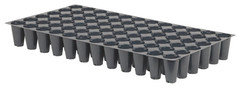
I got them at one of Parks, Burpee, or Gardener's Supply (whoever I got them from has since stopped carrying them) and they work really well except for the fact that you cannot separate them. I think I need to get a plug-type seedling tray, the ones that have straight sides and you can just pop the plug out with a pencil and then transfer it to the larger tray. These do make great seedlings, but it can be a problem if all 72 cells don't sprout in a timely fashion. I will probably pick up some plug paks from Parks - not the bio dome things, but these:

You don't have to use the plugs they sell for either these or the BioDomes, just stuff some decent seed starting mix down in there. But for now they are in the larger deep cell paks and will have to stay there until they are more developed.
This is all new to me. In 40 years I've never used a heat mat to start seedlings, nor have I bothered with domes. The germination so far is at 25% which is not great but given how I mishandled the seed when I got it seems pretty good to me. I suspect some of the seeds were planted too deeply as well. The seeds are HUGE - which probably contributed to poking bigger deeper holes than were strictly necessary.
Now if I can just keep from killing off the little plantlets...
Pyewacket
9 years agoBTW - I am currently up to 50% germination - almost. I can count 11 sprouts now from the 24 originally planted. Of those, I'm pretty sure the 3 or 4 that split when I soaked them will not come up, so from one point of view one could make a case for 75% successful germination so far.
djkj
9 years agoI was not aware you had to start pruning the plant when its about 6-8 inches for bushy growth.There is also information about how to correctly harvest the curry tree without leaving skeletons. See video link.
Here is a link that might be useful: Pruning and harvesting curry tree
Pyewacket
9 years agoYeah, I like that guy. There are actually a bunch of curry leaf plant videos on Youtube now that are pretty good. Here are a few I like:
I am up to 21 seedlings from 24 seeds planted. I'm pretty sure the last 3 are NEVER coming up because they're the ones that split when I soaked the seeds. Which I shouldn't have done. I thought they hadn't been cleaned yet, but he had cleaned them before shipping to me.
Some of them are still pretty small - I suspect they took longer to germinate after I took the flat off the heat mat and put it under the lights. The tallest are about 3.5" tall, and I'm already getting that wonderful curry smell when I brush against the leaves.
I sure hope I don't kill 'em!

Nabila Khan
8 years agoI have curry leave cutting but I kept in freezer in ziplock bag , I was wondering if I use that to grow will it work ??? Any suggestions plzzzz
Pyewacket
8 years agoNabila, that would be a leaf petiole. Even if you hadn't frozen it, it wouldn't grow.
If you are in CA, FL, or HA, you may be able to find curry leaf plants or seeds locally. Otherwise there are several sources to mail order it, including Logee's and Bhatia Nurseries. Seeds of India may also have some curry leaf plant, I'm not sure.
I'm coming off a disastrous experiment with gritty mix which was very very bad for these citrus relatives. I have about half of them repotted into a more conventional mix. Only the seedlings I had planted in a peat-moss based mix did well. The rest in any version of gritty mix (I tried 3) are stunted and suffering from chlorosis and probably iron deficiency, despite application of iron chelate. No amending whatsoever was required for the seedlings in the peat mix. The gritty-like version (included 16% peat moss) was the slowest to fail. These plants just did not do well in a gritty type mix.
I should be able to get the rest of the gritty sufferers repotted into a much more curry-leaf-friendly mix by tomorrow. They are WAY overdue for repotting - it was clear within just a few weeks that the gritty mix was a problem, but I kept trying different things trying to make it work. It just doesn't, at least not for these plants.
MADELYN - you have what looks like an iron deficiency. Curry leaf plants are heavy iron feeders. They are also hard on the magnesium. You've basically got some chlorosis going on there. I don't know what soils are like in Melbourne, but my experience with curry leaf plant indicates that it likes a more acid soil and it often requires iron supplementation.
When the weather warms up, it might help to supplement with some epsom salts (for magnesium) and iron chelate. I've seen it recommended to supplement with iron every other month, but my preference is to apply it as needed.
What have you been fertilizing with?Appu
8 years agoZensojourner, Please could you tell me what kind of seed starting mix did you use for your curry leaf seeds? I have one batch that is sowed in 1 part peat moss, 1 part perilite and 1 part worm castings. Each seed is in a 3inch tall pot. Please could you share some insights on how you started your seeds? Thanks!

David
8 years agoGoodness gracious. Helichrysum italicum is an herb, an extremely precious and hardy/welcoming plant with the common name "curry plant". I rely on helichrysum italicum for daily life! I'm growing it everywhere i can, including under my C. aurantium and in my home's entry. Helichrysum is an excellent addition to any gardener's edging as well, its Asteraceae so it's an excellent addition around chamomiles, yarrows, lavenders, it's also called "Immortal"/"Immortelle " because of it's ability to retain full color of its flowers after its dried. I apply its hydrosol & it's essential oil directly on my skin, grown in my garden then distilled in my copper alembic, it's an amazingly regenerative and healing plant that is about 3' at most, thriving is warm and dry conditions. I grow it near Melissa And also below Rosemary (the Rosemary growing in my garden is super tall, big verbone) plus it grows very well in the same bed as roses or with the easy to grow aloe vera! I grow helichrysum italicum in these beds because they adapt to their neighbors' caretaking easily as long as they have well draining soil and the ones near my old garden roses like bonemeal. Even though the curry plant has nothing to do with curry, it got its name from its aromatic living space, similar to the apple of chamomiles, in my entry, the front door doesn't get much water from the sprinklers and i have loamy/sandy soil that retains moisture but drains almost immediately after the rain, the helichrysum next to the front door does very well, my home is Feng Shui so the front door is east light and the bright yellow flowers are gorgeous. Clip the flowers snd steam distill to enjoy a gorgeous home maple-suger scent! Feom the curry smelling plant! Sugar honey! It's amazing to me that a plant which is reminiscent of a cross btwn Rosemary and lavender with a chamomile top can produce such vast aromas AND be a staple for first aid & anti-aging! Taken internally, it does wonders for hepatic system, and cardiovascular system! Its a must gave (can certainly live insoors if proper light of 6+ hours is peovided!) They're not trees as they're Asteraceae however their stalks can get kinda high. I use them in floral arrangements and they're always the brightest bc they don't fade at all! Decades and centuries later, the immortelle yellow flowers remain vividly perfect as if they were picked that same day!

Jit Dutta
7 years agoHello,
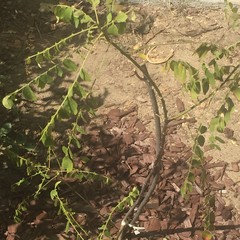
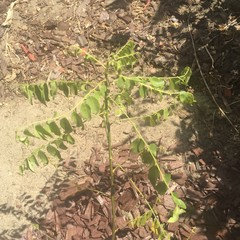
I recently planted a curry leaf plant which I got from the local Indian grocery store. It has been a week and the plant doesn't look too healthy. Any idea of its chances of survival? Is it in shock mode due to transplanting from pot to ground? Should I try feeding vitamin B1 solution mixed in water which some say help when a plant is in shock? Any suggestion is appreciated!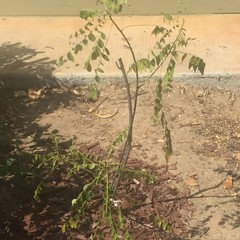
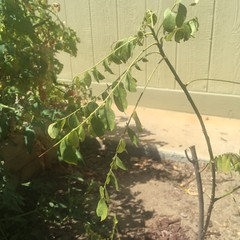
patelhinar
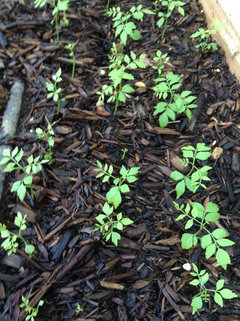
7 years agoHello I just moved my curry leaf plant from smaller pot to bigger pot and i also pruned it about 4 inch from top and it's been 10 days and i don't see any new leaf on it. All the leafs are green and looks healthy so it didn't die as i think but how long before i see new branches please advise.
Thanks


Madelyn CK