

|
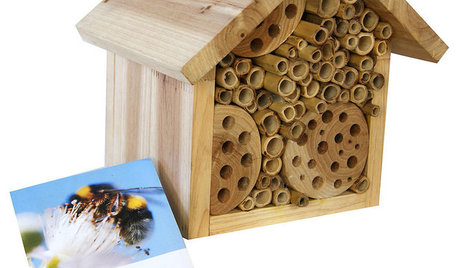
| I am by no means a master gardener nor am I very experienced in keeping bees. When I was a teenager, I kept honey bees because my grandfather was a beekeeper and told me that honey bees were the best pollinators around. However, my research on the internet and my discussions with other gardeners has shown me Grandpa was wrong. I grow lots of fruit. Recently, I started a small orchard to my yard. I have persimmons, apricot, Asian pears, plums, jujubes, peaches, cherries, paw paws, raspberries, figs, blue berries, huckleberries, goji berries, strawberries and kiwis. My vegetable garden includes eggplants, melons, tomatoes, potatoes, peppers, squash, and pole beans and all need bees. So you can see I have an interest in pollinating all of the above, otherwise my garden would be adversely affected. Since honey bees are a social bee, they communicate with each other about where to find the sources of pollen, nectar and water. Therefore the first blooms to open get the first attention. If you watch closely, the bees will exit from the hive and go straight to the blooms that opened first during the season. Bees become fixated, when a nectar source opens, the bees concentrate on that source, becoming fixed on that and little else until the bloom period for that plant is over. If your blossoms open a few days after your neighbor’s blossoms, by the time your neighbor’s blossoms have finished, your blossoms are half over, and old blossoms do not pollinate well, if at all. A bee that flies in cool, damp and cloudy weather, which honey bees don't, is also needed. It is also important that the maintenance of the bees doesn't require a great deal of time, which most gardners do not have. Since the blooming period is often short, the bees need to be able to work quickly and not get fixated on one nectar source. Mason bees are the ideal solution. Mason Bees only fly approximately 300 yards from its nest site, thus helping to ensure pollination of your blossoms, not your neighbor’s. Mason Bees (MB) are solitary and there are numerous strains. They do not need a nest site with thousands of worker support. While they do prefer others of the same strain around, mainly for mating purposes, the females do most of the work in provisioning the nest tube. The males are good pollinators in their own right, but their forage is for their own use, and not for their offspring. These nest sites can be simple blocks of wood up to 6 inches deep, holes drilled approximately 5/16ths inch in diameter. The females will first close off the back of the nest tube with mud on the bottom plug she will use pollen as the feed plus a small amount of nectar, and lay an egg. This section is then sealed with a mud plug, then immediately she will start on a second nursery cell and so on till she gets towards the front of the tube at which time she will lay unfertilized eggs, creating males. Under good conditions MB females will lay at least 3 females and 2 males per tube, after which she will seal the end and move to a second nesting tube. Unlike honey bees, MBs carry the pollen in a sac beneath the abdomen. When a female lands on a flower she dives in belly first, right in the middle of the blossom stamens. Whereas a honey bee lands on the side and walks down looking for the nectar site, possibly brushing past the stamen in passing. Each blossom needs up to eight visits to effectively pollinate them. MBs will do a better job, purely because of their approach to each blossom. It should be obvious that MBs main interest is pollen whereas honey bees interest is nectar for honey making. So with honey bees pollen transfer is accidental, but with MBs, transfer is deliberate. As the honey bee carries the pollen in baskets on the back legs, brushed there when the bee cleans itself, so transfer is accidental. The MB is a hard worker, visiting hundreds of flowers to charge each egg site with pollen and the increase in fruit crops using them is well documented, in some cases up to a 4 fold increase. Unlike honey bees, they will start earlier in the morning, finish flying later in the day and cool damp weather doesn't prevent them working. In a few short weeks, the nest tubes are sealed and the larvae then eat through their stores, pupate, then wait in the tubes till next spring before emerging. The outer eggs turn into males, which emerge a few days before the females, then hang around waiting to mate with the emerging females. Caring for MBs cannot in any way be considered labor intensive. They work without supervision, sealing off their young from predation with mud plugs. Some provision should be made to stop wood peckers accessing the nest site and then late in the fall the nest site should be taken in, opened and the cocoons cleaned to prevent infestation by pollen mites. This is a learning experience and ideally a search on the internet for Mason bees or Blue Orchard bees will supply sites where more information is available and where bees can be purchased. I personally decided not to purchase MBs, but to construct bee boxes to attract the native ones. I have two nest boxes so far and one is populated from last spring. Another is located very close to the old one and is ready to accommodate MBs this spring. My intention is to cover the populated box with a cardboard box, with ½ inch holes in it, on or about March 15 to allow the MBs to exit but to discourage them from using the old box during this spring and encourage them to use the new box. Next, I will remove the old box around May 15 and clean it to kill mites and put it up again the next spring. |
Follow-Up Postings:
|
| I have many of the same fruits you are raising, except for huckleberries; but I also have European pears and apples. I am attempting to raise both honey bees and Japanese horn-faced orchard bees. It is my understanding that west coast orchard bees do not do well east of the Rockies. |
|
- Posted by blueboy1977 TX9A/B (My Page) on Sun, Feb 24, 13 at 8:18
| Hey Charlie, I got my Hornfaced Mason bees fri. I built a covered box for them and secured it up on the fence. Ive been checking on them every day since and as of this morning havent seen any hatch yet. Got my fingers crossed! When they do hatch there will be plenty of blueberry flowers for them to feast on. I hope it works. |
|
- Posted by CharlieBoring 7 (My Page) on Mon, Feb 25, 13 at 12:27
| Here in N. VA they begin hatching after March 15. If you build a bee box with several different sizes of holes, you will see many of the holes will become populated, so there are probably many types of solotary bee that will take up residence if you build them a place. They will probably have hatching dates suitable to local weather. I suggest that you keep a number of bee boxes to encourage species native to your area to take up housekeeping. You will probably have more success. I just planted some vegetables (tomatoes, peppers and zucchini) indoors and will be setting them outside in my garden in about 8 weeks. Bee keeping and gardening are a lot of fun, if you like new things. |
|
- Posted by CharlieBoring 7 (My Page) on Sun, Mar 17, 13 at 9:02
| In these pictures I show my 2012 populated mason bee box with a carboard cover to discourage 2012 population of the box. In June I will clean it. I also show my 2012 empty mason bee box that I hope will be populated instead of the covered one. |
This post was edited by CharlieBoring on Wed, Mar 20, 13 at 12:34
|
- Posted by CharlieBoring 7 (My Page) on Sun, Mar 17, 13 at 9:03
|
- Posted by blueboy1977 TX9A/B (My Page) on Sun, Mar 17, 13 at 18:44
| Well after my first batch of Mason Bees failed I ordered more last week. I think I can claim success! Looking in the house this morning before the sun came up I saw 5 femal bees in the holes and a couple little males hanging out too. Today there was quite a bit of activity around the house. Males were buzzing by and femals going in and out of the holes. I think its going to work. Hopefully they will attract other native mason bees if I have some locally. |
Please Note: Only registered members are able to post messages to this forum. If you are a member, please log in. If you aren't yet a member, join now!
Return to the Bees and Beekeeping Forum
Instructions
- You must be a registered member and logged in to post messages on our forums.
- Posting is a two-step process. Once you have composed your message, you will be taken to the preview page. You will then have a chance to review the contents and make changes.
- After posting your message, you may need to refresh the forum page in order to see it.
- It is illegal to post copyrighted material without the owner's consent.
- HTML codes are allowed in the message field only.
- No advertising is allowed in any of the forums.
- If you would like to practice posting or uploading photos, please visit our Test forum.
- If you need assistance, please Contact Us and we will be happy to help.