



|
Follow-Up Postings:
|
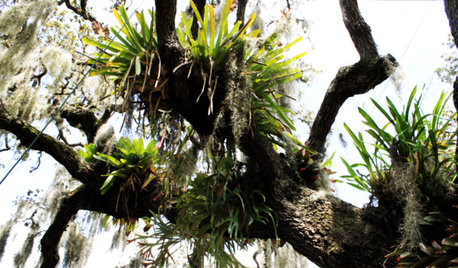
| Wow, I wish I could find these in my c. Fl. yard. The first one is Tillandsia utriculata, otherwise known as the "big wild pine". The one in some of the middle photos with the fine blades is Tillandsia fasciculata (wild pine). I think the last one is Tillandsia balbisiana. Very nice specimens. |
|
- Posted by splinter1804 (My Page) on Tue, Mar 31, 09 at 18:57
| Hi Nebu, Wow! what a find. I'm not a tilly person so excuse my ignorance, but do they grow there naturally or has someone planted them? All the best, Nev. |
|
| Those are great habitat photos Nebu. To add to william's ID, the fasciculata is var. densispica. |
|
- Posted by hort_lvr_4life (My Page) on Tue, Mar 31, 09 at 19:59
| You have a fun back yard! Mine just has cow pies and prairie grass. Great pics Nebu! Thanks for sharing. :-) |
|
|
| Hi Nick, great pics and great to see them in the wild. Many thanks. Cheers, Paul |
|
| I think that endemic might not be the correct term: "endemic" means exclusively native to a place or biota. At least that is how I'm seeing "endemic" used be Elton Leme. Your wonderful plants are probably best described as native. BTW, is that utriculata just growing terrestrially? I don't think I've seen that before. In South East Florida I suspect we have too much flooding to allow terrestrial growth. |
|
| 1En·dem·ic 1 a: belonging or native to a particular people or country b: characteristic of or prevalent in a particular field, area, or environment 2: restricted or peculiar to a locality or region. The area that these are in, are somewhat higher in elevation than other parts of the forest. When tropical storms hit last year, parts of the woods did flood, this scrub oak grove did not flood at all, because it's a foot or two above the lower spots. Yes these Tills naturally grow Terrestrially with no human intervention. |
|
- Posted by sunshine_qld Qld Aust (My Page) on Wed, Apr 1, 09 at 8:20
| Great photos. The amount of babies coming up amongst the mulch is amazing. The scrub beside us is tall gum trees amd weeds as ground cover. |
|
|
- Posted by bromaloonie (My Page) on Wed, Apr 1, 09 at 18:20
| Simply Amazing...how beautiful. |
|
| Even though I'm not really a Tillandsia person, it's always been a kick to see them growing wild in the trees when I go to Florida. Seems like most of the ones like fasciculata that I could see from the highway were growing on pines, though, rather than oaks. That's something you never see here in Hawaii. There are lots of broms in people's yards, but they seldom naturalize. |
|
| Awesome plants! Neat to see them in their natural environment. |
|
| This is a very nice "back yard" that you have there Nebu! I can imagine how much time I would spend there if I had something like that. It is always very nice to see plants growing in their natural environment and thanks for sharing that with us. One question. In the second last picture of the first lot you posted, what is the plant in the background with the red tips (Bottom right corner of the picture)? Japie |
|
| I believe it is a Neo Passion. I took a few Balbisianas to my Exotic Brom Collection on the side of the house. Just because balbisianas are in a hard to reach region of the woods so I'd like to have a few specimens near by. Thanks for looking -Nick |
|
| Its frustrating to live in jacksonville where I'm so close to all my favorite broms but yet so far... I wish they would do tissue culture on our native tillandsias... |
|
| From the first paragraph of Harry's new book on Native Florida Bromeliads: "Only one of these sixteen natives is endemic, that is, found only in Florida." Later he mentions that Florida's only endemic bromeliad is T. simulata. |
|
| I just wanted to update this post as there has been some activity with the native broms here. The picture here is the same cluster of broms pictured in an above post, near a barbwire fence. They've maybe tripled in size. Not sure yet which type it is.. at first thought was Utriculata. |
|
| Found 2 of what I think is a tillandsia utriculata growing near me in Homestead on a roadside tree. Brought them home. It appears that they have both flowered as they both have long dry stalks. One has what I think are seeds, ( very small seed with white fuzz like the pic from nebu). The other one though is strange to me. It has teeny tiny (largest is maybe 1/2 inch) babies under what is left of the flower heads. I'm wondering how to harvest them to propagate. Some of the babies have the beginnings of roots. I thought that babies grew from the base of the mother plant, not from the flower pods. Thanks R' |
This post was edited by rleeq on Mon, May 13, 13 at 19:44
Please Note: Only registered members are able to post messages to this forum. If you are a member, please log in. If you aren't yet a member, join now!
Return to the Bromeliad Forum
Instructions
- You must be a registered member and logged in to post messages on our forums.
- Posting is a two-step process. Once you have composed your message, you will be taken to the preview page. You will then have a chance to review the contents and make changes.
- After posting your message, you may need to refresh the forum page in order to see it.
- It is illegal to post copyrighted material without the owner's consent.
- HTML codes are allowed in the message field only.
- No advertising is allowed in any of the forums.
- If you would like to practice posting or uploading photos, please visit our Test forum.
- If you need assistance, please Contact Us and we will be happy to help.