




-------------------------------
The experts, as their studies become focused on smaller and smaller fragments, soon find themselves wasting their lives in learning more and more about less and less ... Everywhere knowledge increases at the expense of understanding.
-Sir Albert Howard
To cultivate one’s garden is the politics of the humble man.
--Chinese Proverb
-------------------------------
Since you asked, why call it Mapple Farm? When we first laid eyes on the property where it was born, we were struck by the wealth and beauty of its maples and apples, favorite trees and flavors of ours. It seemed fitting to contrive a word which voiced this so, . . . "Mapple" . . . apple with an "M" in front, or maple with an extra "P".
==========
Page 3
==========
UNCOMMONLY GOOD LEGUMES
GARDEN SOYBEANS (Glycine max)
For plant-based protein, good nutrition overall, and vast versatility in kitchen creations, soybeans are hard to beat. Long dismissed by many gardeners as field crops for farmers, soybeans are making their way into an increasing number of small plots.
Particularly precious for organic growers, these are fuss-free feeders of both soils and people. Disease and warrior insects don’t seem interested in soybeans. They’re grown just like bush beans and thresh with even less trouble.
The simplest and soonest way to enjoy soybeans is fresh, known as edamame. When the pods are plump, they’re picked like standard garden peas. They’re then steamed or par- boiled for a few minutes and served to diners who squeeze the beans from the pods and add butter and/or salt, if desired. As with peas, they’re also useful frozen.
We’re most interested in varieties suitable for gardeners as opposed to industrial production. For northern gardens, we look for types with good flavor that yield well while maturing early.
Here are selections that fill the bill and are useful both fresh and dry. Black Jet and Envy are our earliest. Vinton 81 is our latest but most productive variety. All yield green beans at the fresh stage.
BLACK JET--a vigorous selection that grows to about 30" (75 cm) high and yields dozens of pods. The beans are green when immature but ripen to a slate black. Said to be especially good for black bean sauce and miso.
ENVY--New Hampshire bred, this is the earliest olive colored soy we’ve come across. Along with Black Jet, the most reliable to mature in borderline, short season areas.
VINTON 81-- at 3 feet (90 cm) tall, our largest and most productive soybean to reliably mature at Mapple Farm.
-------------------------------
ROASTED SOYBEANS
Soak the dry beans overnight in water, drain and rinse, then bake at low heat on a cookie sheet until dry. If you like, add your favorite flavoring--salt, garlic, chili powder, etc. They’re then snacked on like peanuts or can be ground into soy flour.
-------------------------------
BUSH & POLE BEANS (Phaseolus vulgaris)
ROCDOR WAX BUSH
The best wax choice for so many reasons. Long, firm, flavorful, straight yellow pods exude high quality. Not only is Rocdor fast to mature; its black seed, which allows more certain germination in cool soil than others, ensures that it’s the first local wax bean available. Quick release stems also make it the easiest yellow bean to pick.
PROVIDER BUSH BEAN
This old standard has been our favorite green bush bean for many years now. Dark-seeded types do seem to handle cooler than ideal conditions. Provider’s purple seed regularly proves this to us on its way to providing us our earliest fresh beans.
We’ve always been able to rely on its great flavor, crisp texture, ease of picking and bountiful yields.
PURPLE PEACOCK POLE BEAN
Pole beans, as a class, are reputed to yield heavier and for a longer period than bush beans. Here’s a variety that takes to early planting and cool soil and weather more tolerably than other pole beans and crops very fast.
It yields flavorful, gorgeous deep purple beans when picked at the snap stage. Pods left to mature on the vine yield large quantities of dry, kidney-shaped, beige beans which deliciously grace soups, stews and casseroles in the cold months to come.
-------------------------------
Packets on this page contain 20 grams @ $2.75.Volume Packs contain 50 grams @ $4.50.
======
Page 4
======
UNCOMMONLY GOOD GARDEN SEED
-new-NUTMEG MELON (Cucurbita melo)
Melons, ripened to perfection fresh from the garden, are about as elegant and delicious as a dessert could be. The limiting factor is having a season that’s warm and long enough to produce them.
Enter Nutmeg. The seed we offer was originally sourced from cool Cape Breton. Remarkable for its earliness and fine flavor, Nutmeg easily matures at Mapple Farm even when direct seeded.
Packet: 20 seeds
Volume Pack: 50 seeds
-new-SHOSAKU GOBO (Arctium lappa)
Hardy and healthy, gobo (or edible burdock) hails from Siberia and is a standard in Chinese medicine. But credit the Japanese for developing it as a valued food item. This is a species distinct from the wild North American type.
Shosaku’s carrot-like root is wonderful whether sautéed, stir fried, pickled, in tempura or featured in the famed traditional dish, Kimpira. High in calcium and iron, even the young leaves and stems are enjoyed as lightly cooked spring delicacies.
Packet: 2 grams
Volume Pack: 5 grams
Bulk: 25 grams @ $15
CHUFA NUTS (Cyperus esculentus sativa)
A traditional favorite in Europe, Asia and Africa, chufas (a.k.a. tiger nuts, rush nuts, and earth almonds) have yet to be discovered by many North American gardeners. Thick grassy tufts grow knee-high to feed peanut-sized tubers along the roots by autumn.
After harvest, they become sweeter as they dry and, containing nearly 30% oil, provide a prized cooking oil. Useful for snacks, or in cereals and baking, chufas are also ground up to create the base for a popular drink in Spain, horchata de chufas.
Packet: 8 seeds
Volume Pack: 20 seeds
PARADE CUCUMBER (Cucumis sativus)
Some like it hot. Cukes perform best when the weather gets warm. But Parade, of Russian lineage, has a history of knowing what cold is and pumps out, in record time, a vast number of fruit on such a small bush plant. Bearing cukes of 2-5" (5-12.5 cm), Parade ably plays the dual role of providing both picklers and small slicers.
Packet: 20 seeds
Volume Pack: 50 seeds
Bulk: 10 grams @ $10 or 50 grams @ $35
ORCHARD BABY CORN (Zea mays)
Finally, corn for short-season small gardens!
It’s amazing to see how early and undemanding
this special variety yields sweet corn. The 5" (12.5 cm) long ears don’t extend to the usual commercial size but there’s still a respectable crop—especially when considering there’s up to 5 cobs per plant.
Kids of all ages stand tall in an Orchard Baby Corn patch where full-grown plants only reach a yard (a meter) high. Such compact plants can be spaced far closer (and so, take up less room) than other corns.
In this age of genetic corn tinkering, here’s a wonderful alternative ... for good flavor via kernels (whether "on the cob" or in an honest succotash) and as husks to make trustworthy tamale wraps.
Packet: 10 grams
Volume Pack: 25 grams
TURKISH ROCKET (Bunias orientalis)
It’s known as one of the hardiest and most long-lived winter salad greens there is.
The large strap-like leaves of this perennial are usually prepared as a slightly cooked green. Turks like it quick-stewed in tomato juice. Finely chopped, it also adds bite when blended with dips or spreads.
Turkish Rocket, reputed to be an immune system booster, is especially useful very early and late in the season when other fresh greens simply aren’t available.
Packet: 12 seeds
Volume Pack: 30 seeds
BANANA SQUASH (Cucurbita maxima)
A rare heritage variety, this may be the most moist winter squash you’ll ever find. It’s a perfect candidate for soups and dessert (think pies, puddings and custards) as well as a delectable main course vegetable.
Banana Squashes are shaped, well, somewhat like huge bananas but colored orange- yellow. A superb keeper and productive—our first try resulted in a plant that yielded 7 fruits, each weighing 7 lb/3.2 Kg.
Packet: 12 seeds
Volume Pack: 30 seeds
ZUCCHINI, BLACK (Cucurbita pepo)
A dark green skinned, mild flavored zuke. The traits most appreciated in this selection: earliness, vigorous growth and heavy yields of excellent quality fruits.
Packet: 20 seeds
Volume Pack: 50 seeds
-----------------------------------------------------------
Packets on this page @ $2.75; Volume Packs @ $4.50.
We use, instead of plastic, plant-based cellophane packaging.
======
Page 5
======
UNCOMMONLY GOOD PERENNIAL PLANT STOCK
JERUSALEM ARTICHOKES
(Helianthus tuberosus)
Here’s a neglected vegetable, a North American native, that’s one of the easiest to grow and most productive there is. Also known as sunchoke or sunroot, the Jerusalem Artichoke is an extremely hardy perennial sunflower that produces chocolate-scented flowers and delicious tubers.
Very versatile, they’re used in recipes in any way potatoes are. Plus they’re excellent raw; for example, grated in salads where they lend a pleasant crispness similar to radishes. Sliced up for stir frys or sautéed, they offer a water chestnut type of texture.
Word spreading about the health benefits of j-chokes is also helping to make them increas¬ingly popular. They’re said to ease the cravings of over-eaters and to help strengthen troubled glands. Inulin, the type of sugar they contain, is easy on diabetics.
Like parsnips, j-chokes can be dug in fall or spring and, if well mulched, in winter. Highly decorative, j-chokes are often planted to create a tall, natural "fence" in landscaped areas.
We supply three types. Order for spring.
VOLGO 2—a very kitchen friendly type. It rarely shows any knobbiness. These tubers are large egg-shaped, often inclining toward an elongated pear or teardrop form.
Volgo 2 Pricing:
1 lb. (454 g.)/$8.50 4 lb. (1.8 Kg.)/$23
2 lb. (908 g.)/$14 8 lb. (3.6 Kg.)/$40
-----------------------------------------------------------
CHALLENGER--easily the most productive variety among dozens tested in AgCan trials.
Challenger and Sooke Pricing:
1 lb. (454 g.)/$11 4 lb. (1.8 Kg.)/$31
2 lb. (908 g.)/$19 8 lb. (3.6 Kg.)/$57
-new-SOOKE—without knobs, red-skinned and round, it most resembles the form of potatoes.
CHINESE ARTICHOKES
(Stachys affinis)
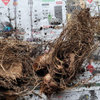
This little known perennial surely deserves greater recognition. It yields small, crunchy tubers with a pearly translucence and a subtle, sweet taste.
Shaped like little Michelin men or pop beads, Chinese Artichokes are as striking in appearance as they are versatile to prepare. In Oriental cook-ing, they’re usually pickled or stir fried. In France, they (known as crosnes) are featured in creamed soups, simply steamed in butter, or served raw.
Hardy and a cinch to grow, this mint family member takes up little space, averaging 18" (45 cm.) high and an 8 inch (20 cm.) spread.
Available for spring planting.
6 tubers/$8
12 tubers/$12
24 tubers/$19.50
Bulk: 100 or more @ $.50 each
500 or more @ $.40 each
-----------------------------------------------------------
Chinese Artichokes and Horseradish Prices Are Postpaid—Shipping Included—Except In Bulk Quantities Which Require Parcel Delivery.
-----------------------------------------------------------
HORSERADISH (Armoracia rusticana)
An easily grown, hardy perennial, horseradish adds bite to dressings and sauces or your favorite mustard. Sadly, it’s often in dreadful shape when displayed "fresh" in markets, if it’s available at all. Growing your own is the answer to getting top quality. We offer roots for spring planting.
5 roots/$8
10 roots/$12
20 roots/$19.50
Bulk: 100 or more @ $.75 each
500 or more @ $.60 each
1000 or more @ $.50 each
-----------------------------------------------------------
Our Jerusalem Artichokes and Horseradish store in the ground through winter. We can't begin shipping these items until the ground thaws here--usually in April.
-----------------------------------------------------------
All items on this page grow so easily and so well that they're known, in some quarters, as invasive. Annual harvesting and spacing works for us; some like to contain them (in beds, boxes or pots).
===========
Pages 6 & 7
===========
DISTINCTIVE TOMATO SEED
(Lycopersicum esculentum)
-----------------------------------------------------------
All our seed listings are open-pollinated (non-hybrid).
Packets on pages 6-7 contain 20 or more seeds @ $2.75.
Volume Packs hold 50 or more seeds @ $4.50 each.
Seed variety names marked with an asterisk (*) are available in bulk @ $18 per 5 grams or $30 per 10 grams.
Latah** is also available @ $70/ounce (28 grams).
-----------------------------------------------------------
EARLIEST REDS
LATAH**--Over the years, we’ve tried hundreds of different varieties in the search for a good, early tomato. In this category, Latah is in a class by itself. It’s given us mature fruit in July after starting from seed as late as May!
Even gardeners from the far north who thought growing a ripe tomato was impossible have become converts. In areas where blight is a common prob-lem, Latah often crops before devastation sets in.
This bush variety pumps out 2 to 3 inch (5-7.5 cm) diameter slightly flattened fruit with superb flavor right through ‘til frost. An exceptional find!
BRADLEY*-- Though just a few days after Latah, Bradley’s production is more concentrated early in the season. Amazing numbers of tomatoes on a relatively small bush plant. Its orange-to-red fruit is egg shaped and 2 to 3 inches (5-7.5 cm) long. Delicious and reliable, Bradley holds well on the plant--not a variety that demands just-in-time harvest or will soften or crack.
EARLY MARKET REDS
NORTHERN DELIGHT*--The earliest "market-sized" (over 3 oz./85 g.) tomato we’ve yet to come across. This bush variety has a lot going for it: great taste, terrific crack and disease resistance with a quite concentrated yield of red fruits.
MOUNTAIN PRINCESS*--Just a touch later than Northern Delight with somewhat larger fruits and a greater overall yield. This soft-skinned tomato is a very juicy delicacy.
LEGEND—Unreal how early such large tomatoes are ready! Maybe it’s because this determinate is parthenocarpic (able to set fruit without pollination). Four to five inch (10-12.5 cm) picture perfect round red fruit are wonderfully flavorful. Bonus: late blight resistance.
MINI REDS AND PURPLES
SWEET 100 OP*--"OP" stands for Open Pollinated to avoid confusion with the once popular hybrid version of this plant. This very large, productive indeterminate bears 1" (2.5 cm) round, red fruits. Its enjoyable sweet-acid balance seems to fit what many consider the standard for a cherry tomato--of that comfortable "what I grew up with" quality.
TEARDROP*--Sometimes torpedo-shaped, sometimes swollen at the bottom and resembling a teardrop, the red fruit of this variety is a "cherry" of unique proportions. It has a nice crunchy firmness, a trait that makes it especially durable and relatively immune to cracks and splits. Attractive shape and texture ... in large measure ... on this indeterminate.
UNA HARTSOCK*--Luscious, super juiciness in an elegant violet skin. Elongated--picture a grape but considerably larger. Unmatched color, taste and form. A very productive indeterminate.
"new" TOMMY TOE*--Our largest cherry fills up containers in record time. Bring lots of boxes because these large plants are ultra-high yielders of faultless fruits. A mid-season beauty widely known as a taste test champ.
BEST BLACK TOMATO
BLACK PLUM--We offer this mid-season indeterminate because it yields some of the best tasting tomatoes around. Quite a complex flavoring, suggesting a natural smokiness and even tropical fruit undertones. Stunningly attractive, these 2.5"/6 cm (shaped like grapes but larger) tomatoes offer a rare color: brown with a dark mahogany crown. Huge crop and super on the kabob or in salads.
MINI YELLOW TOMATOES
YELLOW PLUM*--An early indeterminate and incredibly huge producer of golden, low acid, small plum-shaped (but larger sized than "cherry tomato") fruits. A touch of tartness combines with a light sweetness for a fabulous flavor.
BLOND KOPFCHEN--An indeterminate, reportedly of European lineage. You simply won’t believe the mass of blossoms this plant will produce until you see it for yourself. Phenomenal! A fellow grower aptly describes the crop as "small golden drops of sunshine."
COYOTE*-- Said to hail from Mexico, this variety has much in common with Blond Kopfchen (see above). A major difference is that Coyote’s individual yellow fruits develop in clusters, so can be easily harvested in bunches like grapes. Sweet as candy--a great favorite for children of any age.
OUTSTANDING STORAGE
MYSTERY KEEPER--We’ve tried a few "long keeper" type tomatoes but none has succeeded for us like Mystery Keeper. "Storage" tomatoes aren’t meant to be eaten in season so there isn’t the pressure to get them started and set out extra early for quickest production. The object is to harvest just after they begin to lighten a bit from their greenest stage but before frost hits. Enjoy as they so gradually ripen indoors through fall and winter when tasteless, expensive tomatoes move onto store shelves.
Like other keepers, Mystery Keeper ripens from the inside out which takes some getting used to. While the outside skin may still be olive, orange or pink, once cut open, you’ll find ripe red flesh, a touch more acid flavored than vine-ripened tomatoes.
The Mystery Keeper seeds we offer are the progeny of fruits harvested in late September/early October that lasted to Easter! They weren’t coddled in any way--no wrapping, cold room, or special lighting conditions; just sitting in boxes or bowls on the kitchen counter.
CLOSE TOMATO RELATIVES
WONDERBERRY* (Solanum burbankii)
This treasure was introduced by the botanical genius, Luther Burbank. It’s neither tomato nor garden huckleberry but is related to both. Also named Sunberry, Wonderberry fruit hang in dozens of clusters throughout the plant. Each cluster carries 8 to 12 dark berries about the size of a wild blueberry.
Their intriguing flavor makes for unique pies and jellies--also a good dried fruit candidate. We’re informed as well that it makes an awfully good wine.
Early and prolific.
INDIAN TOMATILLO* (Physalis ixocarpa)
Also known as tomate verde or Mexican green tomato, tomatilloes grow much like tomatoes but naturally come packaged in Chinese-lantern-like husks. Many regard them as essential for a genuine salsa.
This particular strain yields tart green fruits for Mexican fare or, if left to ripen further, 2" (5 cm) golden fruits that are sweet and suggestive of citrus--prime, preserve material.
Indian Tomatilloes are early--even volunteers regularly ripen crops here. They’re also very productive and can stand light frosts that kill off regular tomatoes.
===========
Pages 8 & 9
===========
SHORT SEASON SWEETPOTATOES (Ipomoea batatas)
Sweetpotatoes are among the most rewarding of vegetables to grow. These light feeders tolerate both acid soils and drought, and they store exceptionally well. As a food, they’re nutritional powerhouses. And they’re among those vegetables, like tomatoes and carrots, that taste immeasurably better home-grown than store-bought.
For the adventurous gardener with a 100-day frost-free season, short season sweetpotatoes are certainly worth a try. At Mapple Farm (Zone 5), we consider them an easy and dependable crop.
Since the 1980s, we’ve continually selected for earliness and productivity to provide you with the best sweetpotato planting material possible for northern, short season conditions. We’re proud to be the first and longest serving mail order sweetpotato stock supplier in Canada.
Not grown from seed, sweets are propagated by rooted cuttings or slips--small plants that grow from the tubers themselves and are then transplanted.
CULTIVARS
GEORGIA JET-By far the most popular type we carry . . . and with good reason. Of the dozens of varieties we’ve tried, it’s the hands down leader for earliness and yield among the orange-flesh strains.
TAINUNG 65-Light pink skin, creamy interior. Large tuber potential and high yielding-- often rivaling Georgia Jet for early tuber production. Its purple stems and bronze leaves also make decorative houseplants or hanging baskets.
FRAZIER WHITE- White and very sweet. Bulks up well, especially easy to harvest.
CARVER-The variety we started with and still a favorite. Tops in sweetness and flavor. Copper skin and moist, orange flesh.
SUPERIOR-A copper-skinned, moist orange-fleshed type with striking ivy-like foliage. Most appreciated by Great Lakes region growers.
REGAL-Developed in the Carolinas. Attractive red skin, orange-fleshed and delicious.
JAPANESE YAM- Burgundy skin and cream colored flesh. Very sweet with a hint of cloves.
We continue to trial EXCEL, GINSENG RED, KOREAN PURPLE, TRAVIS, BEAUREGARD & HANNAH.
Minimum total order: 12 plants For XPressPost option,*
Minimum order per variety: 6 plants add to $9.95 shipping:
12 slips/$12.95 $4.50
24 slips/$22 $4.50
60 slips/$48 $4.50
120 slips/$85 $9.00
240 slips/$155 $13.00 per 240 slips
* We ship plants from April (weather permitting) through mid-June via Canada Post’s expedited parcel service. For faster delivery, we offer Canada Post’s XPressPost service, especially recommended for destinations west of Ontario, particularly if you’re far from a major centre.
-----------------------------------------------------------
Note: The larger (more than 24 plants) quantity listings are primarily for Georgia Jet and Tainung 65. We don’t have sufficient supply in the other varieties to fill large orders. We’ll do our best to fill your order exactly as you specify. However, if your order arrives at a time when we’ve run out of a particular selection, your choice in marking the "sub" (substitution) or "no sub" boxes helps in guiding our order handling. If you mark "no sub" and we can’t supply, we’ll simply refund. If you mark "sub," we will if we must and according to your preferences; e.g., feel free to tell us what your sub choices are (by name, by flesh color or whatever and we’ll do our best to oblige).
-----------------------------------------------------------
Timing the Plants Shipping
Usually, you’ll want your plants after the weather has settled to the stage when peppers and eggplants are normally set in the garden. We’ve always tried to ship plants at the proper time; that is, when we’ve thought our customers needed them. This can be tricky especially when (e.g., in B.C.) planting zones can vary so dramatically within relatively short distances. Also, a gardener’s requirements may differ greatly depending on whether a greenhouse or other protective techniques are used.
So, if you know when you want plants, fill in the "When To Ship Plants" line on the Order Form. Otherwise, we’ll decide for you when it’s best to send them.
Shipping Plants Versus Tubers
We’re often asked why we don’t supply tubers instead of plants. For one thing, plants can handle colder conditions than tubers. A tuber exposed to temperatures below 10ºC./50ºF is subject to chilling injury and may rot; plants remain okay if kept above freezing.
Given that you’d need to have tubers at least 2 months prior to transplanting time in order to grow the plants you’d need, it’s simply too cold then to have them shipped.
Also, plants are far lighter (so less costly) than tubers to ship.
What’s in a Name?
You’ll notice that we refer to "sweetpotatoes" all in one word. As if the confusion over yams isn’t enough of a trial! (Some commercial sweetpotato producers refer to the moist, orange-fleshed cultivars they grow as "yams" to differentiate them from the drier, white- fleshed types.) Of course, yams (Dioscorea genus), a tropical crop, aren’t, botanically speaking, even related to sweetpotatoes (Ipomoea genus). . . and neither are potatoes (Solanum genus). So, the thinking goes, the recent move to "sweetpotatoes" instead of "sweet potatoes" helps to distinguish "our favorites" from "the common spud."
-----------------------------------------------------------
SWEET POTATOES FOR THE HOME GARDEN:
With Special Techniques For Northern Growers
Following his popular article in Harrowsmith #96 (March/April ‘91)
on sweetpotato growing in Canada, Ken Allan released, in 1998, the definitive book on the topic.
Table of Contents:
1. Introduction
2. The History of the Sweet Potato
3. The Patron Saint of Sweet Potatoes:
George Washington Carver
4. Chilling Injury
5. Slips Production
6. Location, Soil and Fertilizer
7. Soil Warming & Bed Preparation
8. Planting and Care
9. Growing in Pots
10. Curing and Storage
11. Pests & Problems
12. Northern Sweet Potato Climate Zones
13. Putting It All Together:
size and yield records
14. Varieties
15 Anatomy of the Sweet Potato Plant
16. Sweet Potato Breeding
17. Cooking with Sweet Potatoes
18. Bibliography
We offer this 204 page softcover @ $20—shipping included
-----------------------------------------------------------
In the spring, at the end of the day, you should smell like dirt.
-Margaret Atwood
I am an old man but a young gardener.
-Thomas Jefferson
We will be known by the tracks we leave behind.
-Dakota proverb
The greatest fine art of the future will be the making of a comfortable living from a small piece of land.
-Abraham Lincoln
===========
Pages 10 & 11
===========
GROWING SHORT SEASON SWEETPOTATOES
-----------------------------------------------------------
Please save these instructions. Our intention is to save paper and trees by displaying them here rather than including them with each shipment.
-----------------------------------------------------------
On arrival, sweetpotato plants might look somewhat tired (yellowed or browned) from their trip to your house. Don’t be disappointed; they have a will to live.
If you can’t (or conditions don’t allow you to) plant them outside fairly soon, place them in a clear jar or glass. Put enough water (at room temperature) in the container to cover the plants’ rooted area.
Better still, heel them in; that is, place the plants temporarily in a seed flat and hold them in a bright warm place.
THE PLANTING SITE should be the warmest, most sunny, and weed-free place you can provide. Wide raised rows or beds help speed soil warming and give the sweets loosened earth to grow in. Some go further to enhance soil warming by covering the beds with plastic mulch 2-3 weeks in advance of planting.* The plastic is anchored with earth around its perimeter.
THE SOIL should be somewhat acid (pH 5-6.5) and, ideally, light . . . but Mapple Farm’s isn’t--we get by with clay soil.
Sweetpotatoes are light feeders; they like a little phosphorus and a little more potassium-- a dusting of bonemeal and a sprinkling of wood ash will suffice. Avoid over-feeding nitrogen which favors vine at the expense of tuber growth, and leads to spindly rather than chunky tubers.
Sweetpotatoes won’t stand frost. Transplant them outside after the soil warms to at least 13ºC./55ºF.
ON TRANSPLANTING DAY, if using plastic and weeds are growing beneath, lift the plastic, hoe and replace plastic. Cut holes (about 9"/23 cm. diameter) through the plastic every 18 to 24 inches/46 to 60 cm. Draw some soil within the cut circle to anchor the plastic perimeter of the hole. You now have a saucer-shaped depression. Transplant through the hole, allowing only 2 or 3 leaves to show above ground. Water them in.
After transplanting, provide some shade during the first few days if the sun shines brightly. **
Sweetpotatoes are among the most drought tolerant vegetables. But you’ll get best results from regular watering.*** Those saucer-shaped basins will help to catch, hold and direct water to the roots.
GROWTH seems slow at first; the plant initially concentrates on root development. But by mid-summer, the vines take off. In the final stage, the plant’s energy is devoted towards tuber growth.
Vines extending over bare ground will sometimes try to root along their lengths. If you notice this happening, lift the vines to direct the plants’ growth to tuber development instead.
HARVEST when frost turns the vines black or when the soil temperature falls to 10ºC./50ºF.
CURE the tubers by keeping them in a warm (27ºC./80ºF.) , humid state for a couple of weeks.
STORE them in a cool (18ºC./60ºF.) but not cold room. Don’t clean the tubers until ready to cook them.
ABOVE ALL, sweetpotato plants appreciate warm soil. Row covers (of, for example, slitted clear plastic or porous spun-bound polypropylene) provide a beneficial space.
* Heat rays penetrate clear plastic mulch to warm soil at greater depths than black plastic. But black plastic (unlike clear) blocks the light rays weeds need to grow.
** "Help, my leaves fell off!"
We’ve heard this complaint a few times and suspect that perhaps shading wasn’t applied. If the plants move directly from the dark confines of a shipping box into a bright field, shedding leaves is an appropriate survival mechanism.
If time permits, gradual exposure of the plants to increasing amounts of light (as part of the hardening-off process) is ideal. Transplanting on cloudy days or late in the day is the preferable method.
Regardless, the plants most often recover since new growth will develop as new leaves form along the stem where the old leaves fell off--much like tomato suckers.
*** "Some of my sweetpotatoes have cracks!"
This is sometimes a genetic trait we can’t do anything about but often irregular watering, by the gardener or from the sky, gives uneven growth--much like what happens with split tomatoes. Proper curing will heal cracked sweets.
-----------------------------------------------------------
To shade our new planting (all new plantings) we use flower pots, which we cut the bottoms out of. We get them from the Cemetery because I am the Administrator. Any cemetery should have them. We leave them on until the leaves grow out of the top.
Dennis Ballance, Napanee ON
-----------------------------------------------------------
If you’ve ordered more than one variety, the names will be coded on the plastic covering the plants’ roots:
GJ-Georgia Jet
65-Tainung 65
C-Carver;
S-Superior;
R-Regal;
FW-Frazier White;
JP-Japanese Yam;
GR-Ginseng Red
E-Excel;
KP-Korean Purple
B-Beauregard;
H-Hannah;
T-Travis
-----------------------------------------------------------
RECIPES
Sweet Potato Latka (potato pancakes)
Peel sweets and grate coarsely. For every 2 cups, add an egg and 2 Tbsp flour. Season to taste with salt. Experiment with other seasonings--suggestions include grated onion, pepper, ginger, nutmeg, cayenne, cinnamon or sesame seeds. Drop by the spoonful into hot fat (pref. oil) and fry until golden on both sides. This recipe is approximate since moisture content, size of eggs, etc., varies. These are wonderful hot but okay cold too. Try them with maple syrup, or sweet & sour chinese style dip or cool, crunchy garnishes like cucumber & pineapple.
Jerusalem Artichoke Latka
Mix grated artichokes with flour, egg & salt as in the above recipe & season with onion & garlic. Fry as above and serve with a squeeze of lemon. Tres gourmet!
Sweet Potato Fillings & Stuffings
Mashed seasoned sweets make a fabulous stuffing for wontons, ravioli or perogi. Vary your seasoning according to the ethnic specialty; i.e., ginger & cayenne for wontons, riccotta cheese & basil for ravioli (with a sprinkle of parmesan), carraway and sour cream for perogi. No measuring here--just keep adjusting to taste.
Submitted by Maria Kasstan, Toronto ON
Sweet Potato Soup
3 celery stalks, chopped
1 large garlic clove, minced
2 T ginger root, minced
1 T curry powder, minced
2 T oil
4 medium sized sweet potatoes
salt & pepper to taste
6 cups of vegetable stock
Sauté first 4 ingredients in oil for several minutes. Tehn add sweets, peeled and cut into cubes or slices. Sauté a few minutes more. Add stock and salt & pepper. Cook covered for 25 minutes, puree half, then add back to the pot. Re-heat before serving. Garnish: yogurt & sprinkled cheese.
Submitted by Margie Anne Boyd, Douglas NB
=======
Page 12
=======
UNCOMMONLY GOOD ONION FAMILY STOCK
FRENCH SHALLOTS (Allium cepa)
(Santé Shallots and Grey Shallots)
These are the real French shallots (not the more common multiplier onions) with a rosy coloring and elegant flavor. We’ve seen them sell in stores as high as $2.29 an ounce.
Though expensive in produce sections, French shallots are very easy to grow. Both the greens and the bulbs add a special touch to sauces, marinades, salads and stir fries. Recipes (from France) included with each order.
We supply Santé Shallots, an extra-large and very productive variety, for spring.
For fall planting, we offer Grey Shallots, the most upscale culitvar in this already elite class of onions. This strain carries its pink color further into the bulb’s interior; they’re especially fine-flavored and appreciated by chefs. Maximum Grey Shallot order this year is 16 oz. (454 g.).
4 oz. (113 g.)/$4.50
8 oz. (227 g.)/ $8.50
16 oz. (454 g.)/$15.00
2 lb. (908 g.)/$27.50
3 lb. (1.36 Kg.)/$38.00
5 lb. (2.27 Kg.)/$55.00
EGYPTIAN ONIONS (Allium cepa)
Also known as topset, walking or winter onion, this is an extraordinarily hardy perennial. These onions were popular standards in gardens a century ago.
The Egyptian onion produces bulbs at ground level, huge onion greens (great for stuffing) and, atop the greens, clusters of pearl-sized onions--good picklers.
A very interesting plant to watch grow. As the topset onions enlarge, their weight forces the greens to bend down. When the topset onions then hit the ground, they root and the cycle begins again.
We ship bulbs for planting in Aug./Sept.
(Prices below are Postpaid—shipping included.)
6 bulbs/$7 12 bulbs/$10 24 bulbs/$15
GARLIC (Allium sativum)
Garlic is the very first item we offered for sale--back in the ‘80s. Our favorite, the one we offer here, is Roja.
A hard neck type, Roja is exceptionally hardy and has proven for us to be most dependable and problem-free, especially in terms of fungal attacks that can occur while growing or show up later as premature spoilage. It sizes up reliably and in just the way we like ... fewest cloves per bulb for maximum weight per clove. No effort is wasted on tiny cloves that are tedious to work with in the garden or kitchen. Half-ounce (14 g.) cloves and 2-ounce (56 g.) plus bulbs are common with Roja.
Limited supply and for fall planting only.
$3.50/bulb 6 bulbs/$18 20 bulbs/$55
-----------------------------------------------------------
BROCHURE MATTERS
Thank you for looking over our brochure. Please note that those who order will automatically be sent one the following year. We appreciate your efforts in letting others know that it’s also available:
a) by request via e-mail ; please let us know, though,
where you're based (in serving residents from outside Canada we need to pass on some added info);
b) via standard mail: free within Canada with a Self-Addressed Stamped Envelope (S.A.S.E.)--please make it at least a #10 (4?" by 9½") envelope with a 52 cent stamp. From outside Canada, send $1 U.S.; Canada Post won't accept U.S. stamps. ^^^^^^^^^^^^^^^^^^^^^^^^^^^^^^^^^^^^^^^^^^^^^^^^^^^^
MAPPLE FARM’S ORDER SHEET (please print)
Name:____________________________________
Address:___________________________________
_________________________________________
Postal or Zip Code: ___________________
Should we need to reach you quickly about your order:
Phone:___________________________________
E-Mail:___________________________________
""""""""""""""""""""""""""""""""""""""""""""""
ORDER FORM A
Seed from pages 3-4 and 6-7 @ $2.75 per Packet or $4.50 per Volume Pack
Variety Quantity Amount