





Cupressus bakeri...
Anybody have any experience growing this rare species? Denver Botanic Gardens has a fantastic specimen. Though it is zone 5, Denver has dry summers and this lack of summer humidity seems to allow them to grow many cold hardy west coast species that tend to struggle in the midwest and east, such as sequoiadendron. Anybody have experience with this species in an area with humid summers? Also, I have seed if anybody is interested. drop me a line @ theforestprimeval@gmail if interested.
Comments (35)

sluice
14 years agoThis might be the one you mention. An outstanding tree!

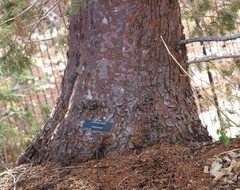
Bark texture and colors
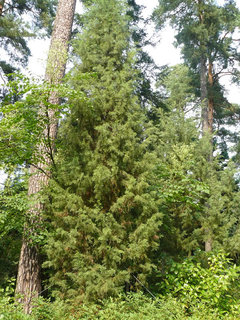
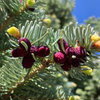
Foliage and cones

One of the tags said Cupressus bakeri spp. Mathewsii, Siskiyou Cypressblue_yew
14 years agoHello
I would be interested in cupressus bakeri seed
you can email me through my page.Thanks
Related Professionals
Baltimore Landscape Architects & Landscape Designers · Camas Landscape Architects & Landscape Designers · Glen Ellyn Landscape Architects & Landscape Designers · Pelham Landscape Contractors · Ashburn Landscape Contractors · Athens Landscape Contractors · Biloxi Landscape Contractors · Framingham Landscape Contractors · Galt Landscape Contractors · Paterson Landscape Contractors · St. Louis Landscape Contractors · Tustin Landscape Contractors · West Orange Landscape Contractors · Shenandoah Landscape Contractors · Vadnais Heights Landscape Contractors
gardener365
14 years agosluice, I see online that seeds of the Denver Botanic Specimen are being sold. Do you have seeds from that specimen?
theforestprimeval, what is your seed source?
Thanks,
Dax
scotjute Z8
14 years agoMy experience is in growing its near cousin, Arizona Cypress, assume it to be similar, they sure look the same. They are one of the few dry weather mountain conifers that can handle extra humidity and rainfall, but should be planted in well-drained to very well-drained areas with full sun. They are pH adaptable and prefer more porous soil but will also grow in clay soils if well-drained. Germination - I pre-soak seeds 72 hrs and plant, but the expert advice is to then cold stratify for 30 days. I have not seen any germination improvement with it.
The guys at the Cupressus Conservation Project may be able to give you more specific information regarding Cupressus Bakeri.theforestprimeval
Original Author14 years agoIm not sure, exactly, how closely related C. Arizonica is to C. bakeri, but I would be inclined to say that its not related closely enough to necessarily warrant similar cultural requirements. The two are in different sub-families, I believe. There is a specimen of bakeri at Morton Arboretum, near Chicago, and especially given its age and where it should be in terms of growth, it is certainly not thriving. It seems to be exhibiting characteristics that many west coast natives do when grown in areas with humid summers - stunted growth, a scraggly look, browning foliage, etc.
Where as the Denver specimen is less than thirty years old (from seed) and is already touching on 35 feet in height. That tree almost looks better than the wild specimens Ive seen that are more than three times its age.
As the seed is wild collected I would prefer to give seed to individuals with a particular interest in this species and its preservation, who live in climates that are suitable to its health.
If I am wrong in assuming this species struggling in humid summers somebody please correct me, I might be dead wrong for all I know as I am only going on one particular tree Ive seen and a trend in many, but certainly not all (ex: Calocedrus) western natives.
pineresin
14 years ago"I see online that seeds of the Denver Botanic Specimen are being sold"
If they have any other Cupressus species growing there (including Nootka Cypress), there's a risk that the seeds will give hybrid progeny.
Resin
sluice
14 years agoDax, I don't have any of the seeds.
Resin, there are other Cupressus at DBG as I recall.
Natetheforestprimeval
Original Author14 years agoJust checked, and i stand corrected...supposedly C. Bakeri is more closely related to C. arizonica than I thought, according to Eckenwalder.
And...DBG had many specimens of both C. arizonica and C. nootkatensis so hybridization is very likely. I picked up some seed from the nootkatensis however this species is reportedly somewhat tricky from seed.
Resin, any word on possible humidity tolerance of bakeri? As it is supposed to be close to nootkatensis in taxonomy might it be more humidity tolerant?
pineresin
14 years agoHi Forestp - missed your post before (same time as mine, just a fraction earlier!).
Relationships within Cupressus are much disputed and hybridisation little investigated, but given that nootkatensis has crossed successfully with 3 quite diverse American species (glabra, lusitanica, macrocarpa), I'd guess options for hybridisation are fairly wide.
On humidity - it thrives well in Britain with cool summer humidity. Less sure how it does with eastern US hot humidity, the one I've seen there (in Missouri) was alive and no obvious disease, but was decidedly thin and slow-growing. The spot it was in was I'd suspect a mite on the shady side though. I'd say definitely worth more trials on a wider range of sites.
The biggest one I've seen - much bigger than any I saw in the wild at Seiad Creek - is at Villa Taranto in northern Italy. Summer humidity is higher there than in most of the Med., due to its proximity to the Alps.
Resin
gardener365
14 years agoResin,
From the Gymnosperm Database:
Little (1970) reports an accessible grove at Miller Lake, near Steve Peak in southeastern Josephine County, Oregon. Wolf (1948) adds that the grove is on the NE slope of Miller Pk., 0.5 mile E of Miller Lake, T.40N, R.5W, S.28, about 0.3 mile by 600 feet at an elevation of 5000-6000 feet. HERE is a Google Maps image of the area; there appears to be a logging road running to Miller Lake. Wolf assigns these trees to his subsp. matthewsi. He also suggest a good site to see his subsp. typica: the "timbered crater" site in Siskiyou County immediately adjoining the NE corner of Shasta Co., California, at T.38N, R.4E, S.2. These trees occur on lava beds in "a remarkably thrifty looking forest of Pinus ponderosa, P. attenuata, Juniperus occidentalis and Libocedrus decurrens."
The Gymnosperm Database for Cupressus bakeriI can buy seeds of matthewsi from an orchard in Hungary. Would it be that sub. matthewsi comes from this cold elevation (originally) in Oregon?
I've been reading but please put me out of my misery. I assume this is the best locale of seed origin for me, yes?
Thanks,
Dax
theforestprimeval
Original Author14 years agoGenetic analysis has reportedly shown little to no difference between matthewsi and 'typica', I visited both groves and the only discernible difference is that typica, a.k.a. subspecies bakeri, has somewhat smaller cones. The trees in the matthewsi stand were larger only because theyre growing at a higher elevation and receive much more precipitation (they are also right next to a clear cut and hideous pine plantation! Hows that for conservation and environmental stewardship? Im going to miss the bush years...).
Anyway, I doubt there is any differentiation in the species as a whole in hardiness...both pops are subject to immense snowfall and wind and cold temperatures. Most botanists involved with this species seem to doubt that the siskiyou county and oregon populations are even a valid subspecies.
gardener365
14 years agoThanks forestprime. I read that too regarding the seperate populations.
Thanks for the info. I may sometime purchase a seedling and see what I can do. I don't need more than one anyways. It's the closest look I'm going to see when it comes to Sequoiadendron. And, it will probably crash and burn.Good luck to you.
Best Regards,
Dax
theforestprimeval
Original Author14 years agoHeres some photos of foliage at one of the lava bed sites as well as a photo of an odd specimen of bakeri with a "skyrocket" form. Will post more later...
P.s. - one of the most remarkable things about this species is the smell of its foliage...it is by far one the most pleasant and overpowering smelling of all the new world cypress. After visiting this location I kept a little piece of foliage near my bedside to smell when I went to sleep at night, it smells that good.From Desktop From Desktop
 From Desktop
livingfossil
14 years agoI have been growing one here in Ohio (Zone 6) for around five years or so. It is a rather fast grower and it has never had winter burn. It was a bit top heavy at first and tended to want to lean over for the first few years, but not it has stabilized. When I got it it was maybe 2 feet tall and not it is around 8 or 9 feet.
It has a very nice fragrance. I can always smell it when I am within a few feet of it, especially after a rain.
pineresin
13 years ago"It has a very nice fragrance"
Yep, nice; quite similar to Cupressus nootkatensis.
"It is thought to be the hardiest of the cypress and not so dependant on warm and long summers"
The second-hardiest North American Cupressus, after C. nootkatensis (which can also take even cooler summers). In terms of other cypresses, Chamaecyparis thyoides and Ch. lawsoniana are also hardier.
Resin
cedlib
13 years agoIt depends how do you treat Cupressus genus.
Chamaecyparis nootkatensis (I'll stick to the "old" version) is a real mess - it has been in genus Xanthocyparis (togheder with X. vietnamiensis) and quite recently it's genus was changed once again into Callitropsis...
Other Chamaecyparis species are rather rarely refereed to as "Cupressus". If so the most winter hardy is probably Ch. pisifera growing in Russia as far as Zone 3...
I understand the taxonomical problem (there are no characteristics clearly differentiating Cupressus from Chamaecyparis) but for me the difference between Cupressus and Chamaecyparis is more ecological.
Cupressus are plants of Mediterranean climate with long periods of drought, light demanding, tolerating alkaline poor soils.
Chamaecyparis on the other hand are the trees of dense forests of humid areas of temperate zone, shade tolerant, preferring moist, acidic conditions and cool summers...
Of course it is simplification (some East Asian Cupressus also grow in humid forests) but I just fell like that...CedLib
pineresin
13 years ago"Chamaecyparis nootkatensis (I'll stick to the "old" version) is a real mess - it has been in genus Xanthocyparis (togheder with X. vietnamiensis) and quite recently it's genus was changed once again into Callitropsis... "
And now (even more recently, or back to original!) it is back in Cupressus again.
"Other Chamaecyparis species are rather rarely refereed to as "Cupressus""
True; but they are referred to as cypresses (I did make the distinction in my post above! ;-)
"Cupressus are plants of Mediterranean climate with long periods of drought, light demanding, tolerating alkaline poor soils"
Far from all - e.g. C. lusitanica, C. benthamii, C. tonkinensis, C. cashmeriana and C. funebris are all adapted to summer monsoon climates with winter dry seasons. And C. nootkatensis of course to a cool temperate oceanic climate with year-round rain. Not all like alkaline soil, either, some like acidic conditions (sometimes hyper-acidic, e.g. C. pygmaea) or highly mineralised serpentine soils. So a pretty varied mix!
Resin
cedlib
13 years agoI have just presented my point of view but I agree with Resin and didn't want it to turn into some sort of argument...
Maybe my "believes" are "regionally twisted" because here you always think: Chamecyparis (incl. Ch. nootkatensis) are those "casual", "every day", conifers that are all (except of Ch. formosiana) hardy and common, and Cupressus are those rare plants which are told in books that "won't grow here" and which possession makes your friends, also conifer-twisted, envy...;-)
CedLib
nothotsuga
13 years ago(there are no characteristics clearly differentiating Cupressus from Chamaecyparis)
You should read this article.
Here is a link that might be useful: NOOTKA CYPRESS: CHAMAECYPARIS OR CUPRESSUS ?
cedlib
13 years agoThank you very much. Interesting article.
I have written it as if C. nootkatensis was into Chamaecyparis genus so there is always some species from one genus an another sharing the same characteristics. Eg. flat shoots or cones that open in the second year. I did not knew about these number of seeds per scale...
CedLib
sluice
13 years agoThat's a nice specimen, CedLib.
You mention cold hardiness at -30C (-22F) temps.
We've had similarly cold temps this winter (e.g. -17F), and potted seedlings here seem to be doing fine.
From today.
shastensis
13 years agoSluice, where did you get the seed from? Do you have any larger seedlings? How old are your bakeri?
sluice
13 years agoShastensis, this seed is from the timbered crater location and was germinated in late spring of 2010. I have a few seedlings, but none are much larger than this one.
Here's another one from today. It's in a raised bed (planted out in fall 2010).
{{gwi:620085}}shastensis
13 years agoThat's great! Looking good. Timbered Crater has seen very cold temps, supposedly. Do you have them protected? I had a few that suffered rodent/rabbit attack in the winter when other food sources got scarce.
sluice
13 years agoThese are not protected. Luckily, the rabbits haven't been much of a problem. They've chomped one or two C. arizonica seedlings, but that's about it.
sluice
13 years agothe ones in the raised bed are all greening up now
those in pots seem to be lagging
futaku
13 years agoThe Cupressus bakeri at the Denver Botanic Garden is one I grew from seed. I have given it the clonal name 'Captain Jack,' who was a Modoc Indian who had the temerity to resist the invading Whites intent on stealing his tribe's land. He was hanged for his efforts. I thought it was the least I could do to right an ancient wrong. Although C. bakeri is said to not come readily from cuttings, cuttings from the DBG tree do root rather well. The seed came from the Mount Shasta area, and was collected by Frank Callahan (he went by the name Sesock at the time). Those of you who do not know Frank are missing a great plantsman. No one is as knowledgeable about the flora of Oregon, including conifers; he also collects and sells wild seed. He also discovers and registers big trees. He recently discovered "the world's tallest pine," a ponderosa, in Oregon, naturally. If you want to contact him, google his name or Callahan Seeds; he lives in Central Point, OR. You could also google "world's tallest pine" and get the info on that.
mesterhazypinetum
13 years agoI think Cupressus bakeri must be one of the most resistent cypresses for frosts. I also used to get -30-s in every 4-5 years, and this is the only cypress what I have. All others are dead, overhelmingly arizonicas. Z5-Z6 border.
Zsolt
pineresin
13 years ago"and this is the only cypress what I have"
No Cupressus nootkatensis? Nor any of the cypresses in other genera?
Resin
mesterhazypinetum
13 years agoResin,
I have Aurea and Viridis of nootkatensis, I bought them as Chamaecyparis 25 years ago. Both are under 2 meters, they frost back year to year. I also selected some Chamaecyparis for hard frosts and long summer droughts, meanwhile planted over 50-100 cultivars. Patula and Lane are very good, Stewarti tries to survive, the selections of Barabits usually take better the heat and drought air as western selections. You know, in our continental climate its not enough, if a plant looks like good, they also must be alive.
Finally Cupressocyparis is also on the bad side, I'm simply unable to keep them alive. If they survive the midwinter frosts, the late April-May frosts kill them - even -5 is enough, if the plant is in work again.
Junipers are very happy at me, also the "semidesert" selections from Midasia or the dry USA.
Since 15 years I plant only pinaceae, specially abies and cedrus (except deodara).In other areas of the country in Z6 or even Z7 - Cupressus looks like very happy. A friend of mine has one of the greatest Cupressus collection in Europe, and there the cypresses live quite good. He thinks, that our country needs more mexican and USA cypresses, the wet european countries need mostly himalaian cypresses. They use more water as the semidesert specieses, most of them live in not hot high areas, and up to Z6 they have usually no great frost problems.
Zsolt



cedlib