


|
| can anyone interpret this for us .. lol ...
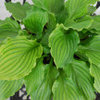
does anyone else find it VERY interesting.. or am i.. or was i.. just a hosta geek ... lol .. with kudos to Geo. Schmid ... at the link i dont understand why the 'copy'.. left off letters at teh end of lines ..??? the original pdf is fine ... ken Hosta plantaginea represents an evolutionary step back and has molecular macro- and micromorphological characters that set it apart from the Korean and Japanese species. Predecessors of thgenus probably migrated from the east-central Chinese mainland, where thmost “primitive” hosta still exists (H. plantaginea), through southern Manchuria into the Korean peninsulaand via this southern route to souJapan. The northern route extended along the coast of the south-eastern USSR following a path on the southerside of the Sikhote-Alin mountain range and migrating to Sakhalinfrom there south into Hokkaido and Honshu. The main Japanese islands providing a climatologically and ecologically very diverse habitat grise to increased speciation. There is good phenoltypical evidence that the taxa growing in northern Kyushu (H. tibae), on Tsushima Island (Htsushimensis) and the southernmosislands of Korea (H. jonesii) maoriginated with the northern branch of evolution, while all other, highly differentiated Korean taxa originated with the southern evolutionary branch after becoming geographically isolated in insular Korea (and it was only through geograpthat these species (Chung PhD dissertation and my own field investigations |
Here is a link that might be useful: PDF at page 10
Follow-Up Postings:
|
- Posted by steve_mass 5b (My Page) on Mon, Jul 23, 12 at 17:17
| I need to get this book. Steve |
|
- Posted by ken_adrian z5 (My Page) on Mon, Jul 23, 12 at 18:03
| steve ... go to the library home page ... in red.. almost dead center.. 'species update' ... click and go for it.. i am thrilled to have enabled you.. or are really p.o.'d at your sarcasm ... lol .. we in MI have an E library.. were in we can order the book from any book in MI .... you might want to look at it.. before you invest in it ... talk to your local librarian ... ken |
|
| I have just read the Schmid article through and, without sarcasm, find it very interesting. What is fascinating in taxonomy is the precision with which professional botanists use language. Schmid rejects earlier attempts to group the genus Hosta with daylilies and other groups, and argues instead that Hosta is more than a genus: it is a monotypic family that he calls Hostaceae. The term "monotypic" simply means that it is one of its type, meaning that it should not be grouped with others in a larger family or tribe. For our purposes, the clincher for me in this linguistically precise essay is that Schmid refers to the common plural of Hosta as hostas. As I read this, unless you are speaking of the monotypic family, the Hostaceae, or the genus, Hosta, you refer to individual cultivars collectively as hostas. Just as the family name is Brown or Smith, when you get them altogether for a reunion, they are the Browns or the Smiths. So, with all due respect to experience, age, beauty, or whatever else deserves our respect, let's stop referring to a garden full of hostas as a garden full of hosta. Steve |
|
- Posted by hostahillbilly Zone 4 (My Page) on Thu, Jul 26, 12 at 23:32
| Schmid, Zilis, Grenfeld, required reading. |
|
| Thanks, Ken for reminding folks of that great resource. Most of our questions have already been answered there. Geo. Schmid sliced and diced the plants and the flowers to great detail. He is the father of the Genus Hosta. I own the Zilis Hosta Handbook, and have owned the Grenfeld book and Schmid tome. Yes, indeedy, required reading for any truly hostaholic. From my first hosta to my many hostas, I feel very reasonably informed. BUT I learn something new every day (well, almost every day) here on the forum because we encompass such a large and diverse growing area. -Babka
|
|
- Posted by moccasinlanding z9A AL (My Page) on Fri, Jul 27, 12 at 1:33
| Hmmm, am I mistaken here that somewhere Mr. Schmid says he will not be publishing this in print, just online at the Hosta Library? Not updating his first tome with a new edition IN PRINT, is what I'm saying.... Ken, you gave someone a link to the SPECIES UPDATE and that is what led me to reading about plantaginea all this last week. I need to improve my botanical vocabulary in order to understand more of what I read. As someone said, "I don't understand all that I know." This is a thread I hope will be a long one. I was thinking that some of what we were talking about re Fragrant Blue should be in this thread, instead of hard to locate again. Thanks, Ken. |
Please Note: Only registered members are able to post messages to this forum. If you are a member, please log in. If you aren't yet a member, join now!
Return to the Hosta Forum
Instructions
- You must be a registered member and logged in to post messages on our forums.
- Posting is a two-step process. Once you have composed your message, you will be taken to the preview page. You will then have a chance to review the contents and make changes.
- After posting your message, you may need to refresh the forum page in order to see it.
- It is illegal to post copyrighted material without the owner's consent.
- HTML codes are allowed in the message field only.
- No advertising is allowed in any of the forums.
- If you would like to practice posting or uploading photos, please visit our Test forum.
- If you need assistance, please Contact Us and we will be happy to help.