This has been a hot button topic (it would appear) with both opponents and proponents, but there has been little in the way of documentation or supporting fact; most has simply been opinion.
While hardly an unbiased view, Muso Soseki (garden designer of the Tenryu-ji and Saiho-ji, among others) did make some observations in his Dialogues in the Dream which can offer an inclusive, but not unbiased look at the place of Zen in the garden (he was a Zen priest). Note that the use of the phrase "the Way" refers to Zen here, but is also interchangeable with the Tao, from which much of Zen Buddhism springs (another thought as to the Chinese influence on Japanese culture).
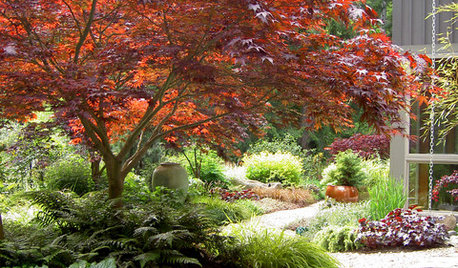
" From ancient times until now there have been many who have delighted in raising up mounds of earth, making arrangements of stones, planting trees, and hollowing out watercourses. We call what they make "Mountains and Streams". Though all seem to share a common liking for this art of gardening, they are often guided by very different impulses.
There are those who practice the art of gardening out of vanity and a passion for display, with no interest whatever in theirown true natures. They are concerned only withhaving their gardens attract the admiration of others.
And some, indulging their passion for aquiring things, add these "mountains and streams" to the accumulation of rare and expensive things they possess, and end up by cherishing a passion for them. They select particularly remarkable stones and uncommon trees to have for their own. Such persons are insensible to the beauty of mountains and streams. They are merely people of the world of dust.
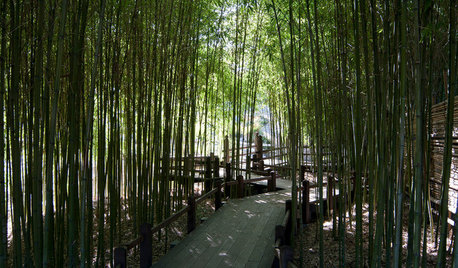
Po Lo-t'ien dug a little pool beside which he planted a few bamboos, which he cared for with love. He wrote a poem about them:
The bamboo-it's heart is empty
It has become my friend
the water-it's heart is pure
It has become my teacher
Those everywhere who love mountains and rivers have the same heart as Lo-t'ien and know the way out of the dust of the world. Some whose nature is simple are not attracted by worldly things and they raise their spirits by reciting poetry in the presence of fountains and rocks. The expression "a chronic liking for mist, incurably stricken by fountains and rocks" tells something about them. One might say that these are secular people of refined taste. Though they are in the world and without the spirit of the Way, this love of the art of gardens is nevertheless a root of transformation.
In others there is a spirit that comes awake in the presence of these mountains and rivers and is drawn out of the dullness of daily existence. And so these mountains and rivers help them in the practice of the Way. Theirs is not the the usual love of mountains and rivers. These people are worthy of respect. But they cannot yet claim to be followers of the true Way because they still make a distinction between mountains and rivers and the practice of the Way.
Still others see the mountain, the river, the earth, the grass, the tree, the tile, the pebble, as their own essential nature. They love, for the length of a morning, the mountain and the river. What appears in them to be no different from a worldly passion is at once the spirit of the Way. There minds are one with the atmosphere of the fountain, the stone, the grass, and the tree, changing through the four seasons. This is the true manner in which those who are followers of the Way love mountains and rivers.
So one cannot sat categorically that a liking for mountains and rivers is a bad thing or a good thing. There is neither gain nor loss in the mountain and the river. Gain and loss exist only in the mind."
The argument can certainly be made that this is a singular point of view from the Zen side of the coin, but Muso is simply saying that it is the same coin no matter how you look at it. To deny either the secular side or the religious side is an exercise in futility; they continue to exist despite our protestations...
To those who feel that Zen has no part of garden appreciation I offer Muso Soseki's poem "It"...
One by one many leaves
the colors of autumn
let go of their twigs and fall
The cold cloud full of rain
passes above
the hollow of the mountain
Everyone alive
is born gifted
with true sight
How do you see
these koans
with your own eyes?
Enjoy your gardens with your own eyes...
Scott
Here is a link that might be useful: Muso Soseki












inkognito
jeepster
Related Professionals
Surprise Landscape Architects & Landscape Designers · Avocado Heights Landscape Contractors · Amesbury Landscape Contractors · Arlington Landscape Contractors · Bethel Park Landscape Contractors · Cornelius Landscape Contractors · Gainesville Landscape Contractors · Hickory Hills Landscape Contractors · Pompano Beach Landscape Contractors · San Pedro Landscape Contractors · Wallingford Landscape Contractors · Woodburn Landscape Contractors · Welby Decks, Patios & Outdoor Enclosures · Leander Decks, Patios & Outdoor Enclosures · Monroeville Decks, Patios & Outdoor EnclosuresScottReil_GDOriginal Author
wasabinsoy
yama
ScottReil_GDOriginal Author
Cady
ScottReil_GDOriginal Author
yama
ScottReil_GDOriginal Author