





JOIN NOW LOG IN
iVillage GardenWeb iVillage GardenWeb THE INTERNET'S GARDEN & HOME COMMUNITY ADVERTISEMENT
Blogs Forums Photo Galleries Ask The Experts Tools & Directories        
Return to the Garden Experiments Forum | Post a Follow-Up

 o
Vegetable garden chickens

Posted by gardengrub (My Page) on
Mon, May 28, 07 at 16:48

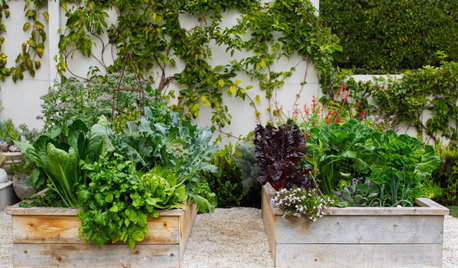
For years now I have been trying to incorporate chickens (little silkies which lay smallish eggs) into my garden plan. My orginal soil is/was very deficient (clay and/or white shaley stuff) and their droppings have really helped the ecology of the garden area. HOWEVER, it takes a lot of management to keep them happy and the plants happy and ALIVE. So far this year the place is humming since I built a lot of raised vegetable beds and created "stay out zones." I'd love to hear from anyone who has been trying to do this. I want my chickens to be as close to "free range" as possible. Right now they are wolfing up the bugs in two compost bins I just emptied. I've been thinking about building some type of worm bin garden box that can be opened now and then for the chickens to work through for worms to provide extra protein. Their "house-run" is the collection point right now for "chicken-poop" straw to incorporate into the compost bins. There is a real need for nitrogen in this area so the chicken manure is a valuable ingredient. Any good ideas out there?


Follow-Up Postings:

 o
RE: Vegetable garden chickens

Ducks!


 o
RE: Vegetable garden chickens

I have tried that with a pet goose and he ate my plants to the roots! Now I vermicompost.Check the forum on raising worms for their castings to improve the soil.


 o
RE: Vegetable garden chickens

I have 3 hens - large sex-links that lay large brown eggs.
I really can not let them free range all day every day - they have their house and stay in that most of the time - and I will let them out for the afternoon for a few hours. this limits the damage they can do in my flower gardens and yet they have access to greens and bugs.
where their dropping really help - is in the litter I clean out twice a year. the concrete floor is thickly covered in first crushed corn cob and then pine shavings. this is a very absorbent bed that cuts down on oder by absorbing the amonia in their droppings. it also gives them a softer footing and something to scratch in.
I take it directly to the flower beds and mulch with it. It really cuts down on weed growth - loss of moisture thru evaporation and quickly disappears (by the end of summer) by the worm action.
hope this helps
Kim


 o
RE: Vegetable garden chickens

I have lived in Hawaii and in Idaho and raised chickens. I found out that if you have two areas you can have them in your garden. one in an established garden and another area where you're getting your plants up to size. If you stick to Bantum size chickens and run them where you have adult plants it works marvelously. They're too little to do much damage and they keep all the bugs out of your garden. Just keep your nursery bed off limits to them and you should have no problem.


 o
RE: Vegetable garden chickens

I must have lost the site, but there was a chicken board that included, i think they were called chicken garages. You could move them around and the chickens could poop and scratch wherever you want them to, while still having a roost/nest area.
I'm enlarging my raised beds this year and was thinking of putting one of these "garages" over my main 8'x8' bed during the winter. It would be ALOT closer to the house for feeding during the winter Etc.
My optimal planting time in the spring is April 15th. How much earlier do you think I should move the chickens so I don't burn the plants?
Any ideas? Nancy


 o
RE: Vegetable garden chickens

You are probably thinking of "chicken tractors," Nancy. The City Chicken website has lots of examples. They are probably just the right size for a small number of hens in your climate.

I've had laying hens a few times in a backyard (& a farm) setting. They weren't in chicken tractors however.

Usually, I've dug out a bed to 8" to 10" and thrown in a few inches of chicken house litter. The bed is then recovered with soil and planted after it has settled. I've never had a bad experience using this approach and think the plant roots can just stay in the top 8" if there's any problem with getting into the manure.

Usually, fresh manure on the soil surface is applied in the Fall and left until Spring to decompose. There are some concerns about e. coli as well as burning the plants if the planting comes too soon after application.

Your local library probably has Chicken Tractor: The Gardener's Guide to Happy Hens and Healthy Soil, by Andrew W. Lee. I haven't read it in quite a few years but it should give you some good tips.

Steve

Here is a link that might be useful: The City Chicken tractor gallery


 o
RE: Vegetable garden chickens

That is IT!!!!! Thanks so much!
My DH is a woodworker, so i'll probably get one built in...................A couple of years! LOL
Actually, if I make him go out to the barn a couple of times, it should be done very quickly!
Thanks for the link! Nancy


 o
RE: Vegetable garden chickens

I thought this site was pretty interesting. She moves her chicken tractor once a month to a different raised bed.

Here is a link that might be useful: Garden Girl Livestock


 o
RE: Vegetable garden chickens

I've got 7 raised beds along one side of our house, and the chickens free range all day in the backyard. Bearded Collie/Poodle mix keeps an eye on things and makes sure our friendly neighborhood Cooper's Hawk doesn't eat any more of our little gals. We have 8 large birds (Wyandottes and Orpingtons) and 2 bantams. We seriously haven't cut the back lawn in years = they love nibbling the grass. Anyway, 2 of them like to hop the fence to lay their eggs up front, and on the way back they visit the gardens. The compost is next to the gardens, and they've figured out that it's much easier to find fat grubs and worms in there than it is in the gardens. I haven't had any trouble with them eating the plants other than a nibble here and there in the lettuce. The only problem I've really had is in a bed I've been trying to direct seed that is a great place for a dust bath. I solved that by putting pots and some rocks down in the spots I haven't yet seeded so there aren't big areas to really go wild in the dirt. And I built them a sandbox in the backyard underneath the raised coop.


 o
RE: Vegetable garden chickens

If I plant something in the yard that I don't want the chickens to scratch up, I put 2-3 brick bats around the plant, and if planting some seeds in a bed, I put pieces of fencing (hog fence) over the seeds and they won't scratch where the fence is, I have had bantums dig up trees that were freshly planted, just to see if there might be a bug in the soil from the nursery! They are good.


 o
RE: Vegetable garden chickens

Lots of great ideas in this thread!

I garden with chickens and am always looking for more ideas on how to do it. For composting the droppings, I keep newspaper under the roost, carry it to the compost and shred the paper before turning it all in. Chickens turned my good compost into fabulous compost. For this one reason, I will always keep a few hens around.

I also use the same kind of methods mentioned by kumquat1 in my orchard area and ornamental beds with chicken wire flat over young seedlings and seeds. I keep the hens out of areas like the vegetable garden with fences, but I let them into "work" when I am switching between vegetable crops. So far it works okay. The flower beds are not as pretty as it once was, but everything that has survived the chickens is green and pest free. I have been compiling as short list of plants the hens don't eat.

Here is a link that might be useful: List of plants chickens don't eat


 o
RE: Vegetable garden chickens

I raised chickens too, but they happened to spoil my greenery so I gave up this idea

Here is a link that might be useful: Landgrave Patio Furniture


 o
RE: Vegetable garden chickens

Just put some bird baths around the garden and the birds will poop over the edges.


Click here to learn more about in-text links on this page.


iVillage GardenWeb: The Internet's Garden & Home Community  
  iVillage Home & Garden Network