



Re-introducing extinct natives in my area
One of the things I am doing in my garden and the surrounding woods is re-introducing native plants that went extinct in my area during the last ice age, but can survive in my area with no problems or impact on the current ecosystem. The Dwarf Palmetto (Sabal Minor) and the Needle Palm (Rhapidophylum hystrix) were both native to most of Virginia a few thousand years ago and were in the southern part of the commonwealth in colonial times. They are well established in my garden and yard with birds spreading the Sabal Minor seeds. Sadly, the vector for the Needle Palm is extinct, the Giant Sloth, however bears and raccons have been known to ingest the smelly fruit when really hungry, so there is hope. I plant the seeds in the woods and the seedlings spring out of the ground after the winter and seem to be growing well through several winters with some actually starting to look like small palms. It will be neat to see a more "deep southern" looking landscape in the years to come. What do you all think about this?
Comments (58)

Lynda Waldrep
5 years agoSabal minors exist (planted about 20 years ago) in a local park in my area of NC. Someone gave me a seedling 15 years ago, and although it is only about three feet tall, it has survived next to the brick foundation. I imagine location is an important factor.

dbarron
5 years agoThough Sabal minor is occurs natively in the SE part of Oklahoma, there are sabals all over the OKC zoo, some hundred(s) of miles from the natively occurring population. They seem to be reseeding all over the zoo area with great facility.
Until we hit a minor Ice Age, they may well thrive and expand.
Related Discussions
Introducing myself and my babies!
Q
Comments (44)Jamie, gorgeous plants. Thistledown has some real beautys. I ended up ordering another batch, but less than the first order. He even sent a freebie. Don't forget to leave feedback on Gardenwatchdog.com. He's a really nice guy, very generous, and honest. Your hoyas are good-looking, too. All your plants are. The first looks like a variegated Haworthia. I bought a similar plant on Ebay, same colors, thinner leaves, it's called Aloe 'wansley' variegated..very tiny. I'll have to snap pics. Thanks for turning me on to Thistledown. Let me know how your Fukien Tea works out. HD usually has them available. Do you know if it's evergreen or decidious? I love your CC..It's a true red. Walmart here I come. lol. Actually, I'd like a variegated CC, but they're hard to find. One seller on Ebay is selling a variegated 'cutting' for, are you ready? 49.99!! Right, I'll take 10, lol. Kim, why does Pilea freak out your b/f??? lol..that's hysterical. I'd understand if it was a 'Man-Eating-Plant,' lol, but a Pilea??? I just bought a variegated Euphorbia 'paddle plant.' The green are okay, but this guy is veryyyy pretty. Toni...See More(Re)introduce myself & need opinions on two-stage remodel
Q
Comments (2)marie, I would def have the rough-in work for the island done now. Since you have access through the basement (is it finished?) you can just leave the capped runs waiting in the joist space below your future island. Welcome back! Sandy...See MoreRe-introducing myself
Q
Comments (4)Hi! And welcome! Yes -- just open a free account on Photobucket (there are other sites but I use this one ....) Then uplocad your photos to your album -- when you move your cursor over the photo -- four codes will appear under it. Simply click on the HTML one -- and it automatically copies -- then go back to your message here on GW -- and paste it into the body of your message! ((thank the stars for the person who figured out the auto-copy feature -- SO much easier!!)) Hope this helps! :) Jan (who is VERY high-tech challenged ...... LOL!!!)...See MoreRe-establishing natives in Woodland restoration project
Q
Comments (36)My ambitions have scaled back considerably - I now clear much smaller areas at a time - no more than I can easily resow with native grasses and flowers. I allow myself a blast of herbicide to do away with the worst of the nettle and bramble and hand weed until the grass and flowers are growing well enough...and I am still propagating as many plants as I can after the initial shock of proudly clearing the first huge bramble patch (a million tiny brambles appeared almost overnight)...and I have decided to get along rather than fighting all the time. I have a little wheeze at present, using the brambles as 'nurse' plants. They have shallow and not terribly competitive root systems while also making good natural tree guards so I cut back the longest canes, thin some out at the base and plant maiden whips in amongst the blackberries. The little saplings benefit from the support (and although deer pressure is very slight, the bramble also helps with protection against the infrequent water deer incursions)...and bulbs are turning out to be the restorer's friends - over 10,000 bulbs in 3 years are beginning to make little pools of light and colour... I let the celandines have their head, as well as wood anemones. It still feels terribly experimental and contingent...but nonetheless, I have planted the first trees I raised from seed this autumn - little understorey rowans (sorbus)....See MoreUser
5 years agolast modified: 5 years agoBarron, I hate seeing those Sabal plants at the OKC Zoo entrance. They look utterly out of place in Oklahoma as do all tropicals---especially irritating are the sickly looking banana trees people plunk in their yards and baby along or Pampas Grass for a touch of "Florida" in Oklahoma where the surrounding plants, landscape, buildings, background & atmosphere is all wrong. YUK. I can't remember what they were planted with (seems like it was mountain pines) but I do remember the combination was ghastly because it was like mixing non-native tropical plants with non-native plants from another unrelated ecosystem ----- the effect was visually disturbing. I actually got angry when I saw it.
maifleur01
5 years agolast modified: 5 years agotexas you apparently do not understand that one of the last stands of native Sabals were in a field in Oklahoma so they are native to that area. Not certain if the field is still there as the owner was planning on selling. Many plants have had wider distribution than what they have currently which is why so many are wanting to return plants to what is thought to be their original distribution. Supposedly their distribution used to go much further north before farming wiped them out.

Jay 6a Chicago
5 years agoI think it's great that you are reintroducing plants that were once common natives. I'm trying to do the same thing.
User
5 years agolast modified: 5 years agoI understand that maifleur01 ----but, what looks natural way down SE in the Western Gulf Coastal Plain ---Pines and bottomland hardwood forests of NW Louisiana, SW Arkansas, Easternmost Texas and SE corner of Oklahoma doesn't visually fit in the same way up here on the Rolling Red Plains where thorny shrubs, prickly pear, mesquite, oaks, grasses and forbs are the main vegetation from the Edwards Plateau going up to central & western sections of Oklahoma.
Personally, I prefer seeing plants that fit in with the surrounding landscape no matter where a man-made state line has been drawn. Oklahoma is a diverse state with many types of landscapes, each with its own topography.
Around here, I prefer landscaping using local prairie grasses and other local types of shrubs---not tropical looking plants which appear contrived. If I lived down in the SE corner, I'd probably have a different opinion.
- PRO
GardenDude
5 years agoAnyone have pictures of their Sabal minor and Sabal minor growing on their own where they are being reintroduced? This thread needs more pictures!
User
5 years agoI ought to drive down to the OKC zoo so I can post a "Plant combinations to avoid" picture. Sorry, I'm just being ornery.....
Jay 6a Chicago
5 years agoWell, this has kind of focused on palms, but I'm trying to grow endangered plants to help bring them back from the brink. Leafy prairie clover is one such plant I'm growing. There is also prairie bush clover, and about 6 or 7 endangered milkweeds that I want to grow, but finding seeds for these rare, endangered plants is nearly impossible. There are over 20 Asclepius species native to my area, yet only one species is present in number.
Lynda Waldrep
5 years agoHave you checked the milkweed section of GW? People share seeds from time to time there.
maifleur01
5 years agoJay just in case you and others are not aware some plants, especially some Asclepius, put out chemicals from their roots to inhibit growth both of their own kind and others. One of the things that is seldom talked about with native plants is has the growing conditions changed so much that what was native will no longer grow in an area. A plant may have been native when it was an open field or sheltered under small shrub growth but as the landscape matured, either becoming woodland or grassland, those plants can no longer survive. In establishing natives there is a need to look beyond the word native to what the growing conditions were when they were native. If native was there a large population or only a few. Has the climate changed which is different from growing conditions. The southwest, New Mexico/Southern Colorado apparently had better growing conditions based on the number of people. As the area became dryer, climate, what had been native was no longer able to survive even if the places they were planted in had not changed, growing conditions.
Being on Prairie edge as I am this area is currently light woodland but as the older trees are dying the growing conditions are reverting back to grassland conditions.
Jay 6a Chicago
5 years agoThat's odd. I've read quite a bit about many different species of milkweeds, but never once came across anything stating that they produced allepothic compounds. Cowpen daisies are supposed to have that quality too, but I have them growing with a bunch of other flowers with no ill effects. Most of the milkweeds are prairie species, so they can be restored wherever the prairies are being restored. I've looked for endangered milkweed seeds on the milkweed forum, noone has them.

WoodsTea 6a MO
5 years agoI went through a phase where I would look at the list of endangered plants in Missouri and try to figure out how I could grow them in my yard. The only one I ever did was Bush's poppy mallow. It's not really all that endangered, considering that you can buy seeds from Prairie Moon, etc. Some of the plants were like that -- rare in Missouri, but plenty of them in other states. Not really the same as plants like Mead's milkweed that really are in danger of going extinct.
Eventually I lost interest in that project -- it just didn't seem like I would be accomplishing anything even if I could manage to get one or more of these plants going in my small urban yard. Any of the truly endangered plants would be hard to get a hold of anyway.
Jay 6a Chicago
5 years agolast modified: 5 years agoMead's milkweed is at the top of the list. It doesn't have a lot of leaves, so the female Monarchs lay eggs on the flowers, and the cats eat the flowers, so many plants end up not setting seed. I don't think I'm saving the planet by growing endangered plants, but it feels good to be holding onto something that is dissapearing fast. If more people became interested, then change could really happen. I won't give up on growing threatened plants, but it's a long process, and who knows if or when these rare seeds may come around, I'm keeping the list. I enjoy plants, and find it fun to grow rare natives, and see what kinds of insects and other wildlife interact with them.
User
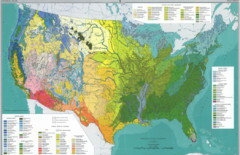
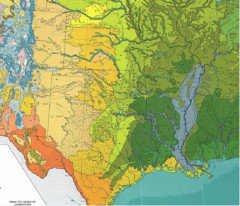
5 years agoEcological map. A map like this is a better guide than state lines when determining what to introduce because as maifleur said "every time you introduce a plant you change the ecosystem". I don't mean to say the OP suggested anything about state lines but that SE area looks rather consistent over a wide area compared to other parts of the country, especially the western half.

WoodsTea 6a MO
5 years agolast modified: 5 years agoMead's milkweed also has a genetic diversity problem. In some locations the lack of a diverse enough population appears to prevent viable seeds and any new plants appear to be vegetatively propagated. I think it's doubtful that you could get a hold of viable seed unless you were to get it from a researcher (and why would (s)he give it to you?), and if you did it's likely it wouldn't reseed.
Perhaps if you had a sizable property near some location where Mead's milkweed was already established, you could volunteer to help with the recovery project. If it's still funded, that is...
https://www.fws.gov/midwest/endangered/plants/meads/index.html
Jay 6a Chicago
5 years agoI am very patient, I will open doors, and walk through them if I can position myself so I do have access to rare, endangered seeds. Just to lay my head on the ground and stick my nose in a Mead's milkweed flower, and smell its heavenly oil of cloves fragrance. Is that too much to ask?

Skip1909
5 years agolast modified: 5 years agoI think about this a little more with ecotypes. There is an inexpensive source of native bareroot trees and shrubs in Virginia that i was thinking about ordering from. Virginia is not that far away and the climate is similar, but I still get brutal cold snaps on occasion that I dont think they get there and I wonder if the plants would handle them the same.
Theres a good point earlier in the thread about what will grow in the landscape now, given the current conditions. Plenty of invasive plant species have totally changed the way a forest will regenerate after disturbance. They are now part of the site conditions preventing the old natives from returning.
- PRO
GardenDude
5 years agolast modified: 5 years ago@texasranger2 According to the map that you sent of the ecosystems, I am in the same ecosystem as Sabal minor are farther South. I live about 20 miles South of Richmond. Whenever I am down in the Carolinas the woods look almost the same as the woods do here, just our woods are missing the randomly scattered Sabal minor and Spanish Moss (which is native to Southeastern Virginia). I am not sure where you get that Sabal minor quickly take over gardens if left unmaintained. Sabal minor are extremely slow growing palms that take at about five years to start producing seed in a full sun spot with perfect watering and soil conditions and take sometimes as long as ten years to start producing seed in heavily shaded areas (where they are mainly native to). When they do start producing seed, they do produce a lot, especially after the first year. But, the seedlings that come up from the seeds (if the seeds are not collected) can easily be removed and take years to become large. They are very slow growing plants that can be easily kept under control. If you do not mess with the seedlings that come up here, they will mature and start producing seed of their own, and the plant would spread without human intervention.
Jay 6a Chicago
5 years agoWoods, thanks for the link. Anyway, while I'm waiting( hopefully not in vain) for Mead's Milkweed, I still need to find seeds for, A. lanuginosa, engelmanniana, amplexicsulis, variegata, quadrifolia. I was looking for native plantain seeds to use as butterfly host plants, and had a hard time. Tons of seeds for the alien Plantago major and lanceolata are available, I found some native Plantago virginica seeds, and that was it. I was hoping to find seeds for the native Plantago patagonica, which is really beautiful, but can't find them anywhere. I'm growing the threatened leafy prairie clover. I got the seeds from Prairie Moon. A lot of the rare plants need such special conditions that I couldn't grow them. The decurrent false aster needs wet soil, and Pitcher's thistle needs sand dunes. I guess wanting to grow rare natives is like a hobby. I really enjoy gardening with all the plants I now have, and it's more about diversity with me. I'm certainly not going to let the fact that I can't find some seeds, rob me of any happiness. Oh, by the way, I love the yellowwood tree. Wouldn't mind having one on my hell strip.
User
5 years agolast modified: 5 years agoDude----- they'd look right at home there. I'm sure they'd be easy to control in a yard but....lots of stuff thats controllable in a yard where people do maintenance is a nuisance (or worse) once it escapes into the wild. We now have some very lovely Bradford Pear forests around here which are even crowding out the (native but invasive) red cedars and all kinds of other introduced species in the wild. Cactus are one of the easiest plants to control in my yard but they have taken over parts of Australia.

wantonamara Z8 CenTex
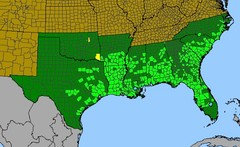
5 years agoSabal minor grows where I live ...not Where I live but in the valleys around rivers and and streams where there is WATER. Here is what Lady Bird says about them.
Water Use: Medium
Light Requirement: Sun , Part Shade , Shade
Soil Moisture: Dry , Moist
CaCO3 Tolerance: None
Cold Tolerant: yes
Soil Description: Moist soils. Sandy, Sandy Loam, Medium Loam, Clay Loam, Clay
Conditions Comments: Palmetto lends interest and variety to a damp, shaded place. Provide it with plenty of water during establishment; afterwards palmetto is quite hardy through droughts although the tips of the leaves may turn brown. Dwarf palmetto is a good accent plant for moist areas and will tolerate poor drainage. It is the most cold-tolerant Sabal.They stay small here. I am guessing their roots can not go to deep because they get into that limestone stuff. Also they only grow in constantly moist places. Places that stay moist in during droughts. We have a few of those places around us. TxR . That map is not inclusive of the valleys and swamps that you will find them up river valleys. I am always amazed how drastically water will change a semi-arid environment. one goes from prickly pear forrest to palmettos in just a few feet. You never see it with a developed trunk around here. The character of the plant is very different. I like it . It seems natural in the area that it grows. WE are on the edge of woodland, the edge of grassland, the edge of the tropics, the edge of practically everything. Old gardens of this area show the merging beautifully. I am in the furthest west clump of light green in central Texas, actually , the western edge of the eastern county in it. The contrasts between spring and river with the uplands is startling. We almost bought land that had a native population of sabals amongst the bald Cypress . The back boarder was an overhanging limestone bluff and dry grassland was above it. This mao leaves out the many sightings of sabals that I have seen in San Antonio and and south and west among the many stream areas. That central green blob should be a lot bigger IMHO. Ibet the sabals could grow in wetlands of the Arbuncke mountains and north in the Ozarcks. Is it ethical to re establish them ? I don't know. The whining out of predators and over abundance of deer might have negatively effected them . The whining out of the buffalo might have removed some wet hollows out of their range . Who can say. Do the reasons of their disappearance change the answer to the ethical issue. I can answer that these of once natives is definitely preferable to use of aliens that can naturalize with abandon. I do not see Palmettos as quick multiplying plants , at all. They are a safe plant, as far as I can tell.
As to growing VERY rare plant seeds: I have reservations about this. The seed bank is so little on some plants that the native populations get raped very easily because of people collecting them to sell on Ebay and Etsy, One huge example is Agave Utahensis var eborispina. People go in and take a whole blooming stalk and that plants diversity within the population is lost. Patches around California and the Grand canyon are being raped year after year so people in Japan, thailand china, germany, Russia , USA can have a coffee table plant that will most likely die. The plants grown from this culling are lost to the wild and , I can tell you that this plant is very difficult to grow. Probably 99% of these plants are dead within 3 years of their sale. I LOVE this plant and I refuse to grow it because of the back story. I only see the stalks broken an empty lying on the desert rocks. The growing programs are so important of establishing and strengthening populations in their native areas.
User
5 years agolast modified: 5 years agoGardendude, I read they will take over a garden online when I was looking for information about culture etc and you know you can believe anything you read online. Maybe it depends on conditions? There is a local guy at a place called Alligator Alley that sells palms along with rustled cactus and agaves along with snakes, reptiles etc inside that are kept in glass aquariums (smells awful in there). I know he rustles plants because there are no roots on the agaves and you can see the dried gray caliche at the base of lots of cut off agaves laying out back.
Wantanamara said Sabal palms seem natural in the areas where it grows. I agree. I just think it looks out of place around here to me like an 'imported' plant or a house plant growing outside. Tropical just doesn't go with this part of the country although many people like it and insist on trying to get that effect in their gardens which means lots of additional watering which is wasteful and pampering and covering plants in winter in order to protect a plant that isn't indigenous and not looking its best as it would in its natural habitat. To me it looks contrived and artificial.
You can't help but notice a dramatic difference in landscape when driving south deep into Texas coming from Oklahoma when you hit the warmer zones with completely different trees (that wouldn't grow here) and rocky land, natural springs etc. The whole look is completely different, more tropical and exotic in many ways compared to what we are used to up here where its flat grasslands, windmills, silos, small towns, barns, hay stacks, cows, farms and pastures. I'm one of the very few people that likes the flat grasslands and those little towns and I don't like seeing them 'spiffy-ed' up with exotic looking plants. I was livid when the political swells in Oklahoma decided to name a hybrid tea rose honored with the name 'Oklahoma' by a Japanese breeder as its state flower by the powers that be. Previously Indian Blanket was our state flower but it got demoted to our state wildflower.
Jay 6a Chicago
5 years agoI love blanket flowers. Now I'm getting angry. Agave rustlers, what a bunch of scumbags!
User
5 years agolast modified: 5 years agoRustled cactus too.
We paid $45 for a Neomexico Agave and when we got it home we found it had no roots at all, just a flat bottom. It had just been sliced off at the ground level. We went back to complain and the guy assured us it would form roots. That's when I walked around out further toward the back and saw the sawed off Spanish Dagger yuccas and some more agaves that looked like they'd just been delivered and saw the tell-tale caliche on them at the bases which had a few torn roots where they'd been ripped out of the ground. He wouldn't refund our money so we planted it. It never got bigger and finally died after 3 years.
Yea, it made me mad too. The guy has a website online. I tell everyone he sells rustled plants.
To add insult to injury, he sells Bamboo or as I call it---Damboo. I've seen huge stands of this invasive 'weed' in the wild; you want to talk about UGLY?......and I've seen it invade into innocent neighbors yards and invade into the back screened in porches of houses in its attempt to swallow everything in its path. I've said more than once the invasive types should be banned from the market but that upsets people who like it.
I also wonder about where the animals he sells come from and I wouldn't be at all surprised if those big expensive palms he sells are ill-gotten, probably from Louisiana.
Jay 6a Chicago
5 years agolast modified: 5 years agoHe should be arrested and thrown in prison. What kinds of animals does this creep sell? Bamboo isn't a problem here, because nobody grows it. I grew the P. nuda running bamboo, but got rid of it before it got into the neighbors yards. I grew ground cover bamboo, and it did get into the neighbors yard, but they didn't care, didn't weed or keep up their yard, and it was filled with weedy Siberian elm treelings, so I didn't feel too bad about the bamboo. I did learn from it all, so I got a beautiful clumping Fargesia, and that fall my roomate was cleaning up the yard, and pulled out the Fargesia, thinking it was a dead annual. It was a very pricey plant. I grow Manfreda, thats the only Agave I can grow. Grew our locally native Opuntia twice, but finally decided I couldn't deal with its microscopic spines anymore. The problem was that weeds would keep popping up in the middle of the cactus, and I would get stuck with spines even when wearing leather gloves, so rather than spending countless more hours removing thorns from my hands with tweezers, I decided to just get rid of it, but I did love that plant. I also grew a couple barrel cacti that I got from High Country Gardens that were hardy in my zone. I don't know if they are still in business, I thought I heard they closed. I would think in areas that are dryer, the weeds growing in the cacti wouldn't be much of a problem.
User
5 years agoJay, I wear thick dishwashing gloves and use tongs and a butcher knife to weed around cactus, its not that difficult and I'm very zealous about keeping anything that gets in there in check when I clean my garden. One time using leather gloves to work around opuntia's and you have to toss them; the glochids stick in them because leather is skin. Glochids love skin. To pick up a pad to root it, I use a folded newspaper or you can use a piece of carpet to manage a larger specimen to hold a larger plant in place to plant it. Agave's are worse to work around because they are so sharp on the leaf tips and that can really hurt bad.
Parryi Agave is very cold hardy and I have many of them, they would grow there as long as the drainage was very good and the soil sandy with gravel on top and no trees dropping debris on them. A larger cold hardy agave is A. utahensis. Shindaggers are very easy to grow and they form a big patch.
Manfreda survives winter here but it lays on the ground in a mushy looking mess completely dying back to the ground (looks awful) but comes back each spring. By that time the mush is finally dried out and you can finally remove it. It stays green further south in Texas unless they have a particularly cold event which happens from time to time.
Tweezers are part of my garden tools. I always have them on me because I love the structure of the cactus and I'm willing to put up with it. The worst problem I have are the glochids that fall on the ground and the babies that hide under other plants because I'm not being as careful when weeding and have often grabbed one of the little tykes, or I put my knee down on the ground and end up with them. Chollas and small cactus just stick you, no glochids. Chollas seem to be more forgiving with too much moisture.
wantonamara Z8 CenTex
5 years agolast modified: 5 years agoSalvia penstemmonoides is a nearly extinct plant who's reintroduction into gardens was done right. I think that this has as much to do with the plant as it has to do with the people who did it. The plant makes a lot of seed and are fairly easy to grow in a garden setting . SO the seed you find is seed from captive populations. It was let out intermittently in to several nurseries in Texas that have connections with native collectors. I think it was a seed that was passed along through collectors in NPSOT and then out into a few nurseries. I started growing my first that I found at Barton Springs Nursery in Austin in 1996. I did not find it routinely popping up in nurseries till the 2004 or so. Now , I barely ever see them. Here is an article about them.
Once , in 1987 or "88 , I was staying at a ranch on Cypress Creek in Wimberley Texas and I found this great plant with a long red inflorescence growing in a crotch of a tree. It was startling most truly amazing. My uncle (from Pennsylvania) said it was a cardinal flower. A cardinal flower needs way more moisture than a tree crotch in texas could provide. I did not know about Big Red Sage and neither did my uncle so we referenced what we knew. I now think it was a Salvia penstemonides. They can grow on cliff bluffs. I have been back and there is no longer a plant there. Here are a few more articles about it. It would be weird if I had found a wild lone plant . People are finding them around now that people know what they are looking for.
on The Trail of the Big Red sage
New stand of Big red sage found.
Now comes the danger that some naturalist fear in that the hybridization of captive populations will find their way back into the native gene pool. I don't think there is a danger of that here. These populations are not near gardens.
OH Tx, The deer have seriously broused my stressed plant and I think it might be dead. The small ones that I had growing around it have not made an appearance this year.. Do you have seed? I will keep you posted. I might need some seed sent down next year. I hope not. That plant has been around for a LONG time. Maybe it got old and decided that this was its last drought.
Jay 6a Chicago
5 years agoOh darn, Big red sage only grows in Texas. Thanks TR for all your very useful information. 400 ft. tall horsetails used to grow in my neck of the woods, but fat chance on getting any spores for those. They did bring back a 200 million year old cycad or something. They have to grow it in a special room where they can adjust the air mixture, because it would die if exposed to the air we breath every day. I know they brought back a beautiful white flowered Silene that had been extinct for 32.000 years. I would love to grow it some day. They found the seeds for it in thawed out tundra that melted due to climate change. Very interesting that as the planet is going down the tubes, long extinct plants are being ressurected in the process. I was looking at milkweeds and saw some really cool ones. The pink flowered one is hardy in Texas. The purple flowered one that reminds me of an African violet is hardy in Oklahoma. Sadly, neither are hardy by me. Pink, A. nummularia, Purple A. uncialis.
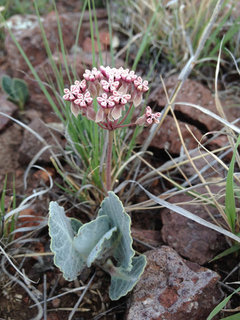
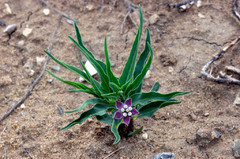
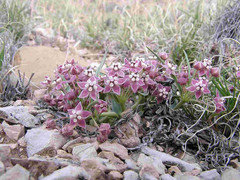
User
5 years agolast modified: 5 years agoBig Red Sage grows well in Oklahoma, zone 7b.
I had a hard time keeping Big Texas Sage watered enough during the drought last summer and it dried up but it was planted in that dry area along the driveway where the neighbors pin oak sucks the ground dry and in a place out back that gets real dry too. I still have a lot of seeds in a paper sack filled with cuttings. It crawled and twisted about in the first spot (courtyard surrounded by walls) I had it in because it only got morning sun (I think?) and the plant got too big & unruly for that spot (pictures below before it got out of hand) so, after 3 years I took it out. I'm planning on sowing a few seeds next spring to start up front in that deep sandy soil where I think it ought to do well, grow more upright and the roots can really take off, plants seem to need less water up there in that sand because the soil never compacts and soaks up water deep when it rains. Its a fast grower and a long bloomer---- the hummingbirds and hawk moths love it. I kind of like the smell too, its unusual and very distinctive, smells like the inside of an antique wooden cabinet to me, that old wood smell like they get sometimes.
Mara, I'll send you back some seeds and think of them as going back to the original source.
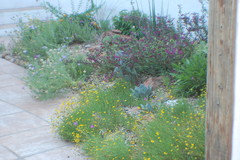
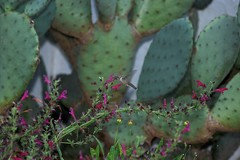
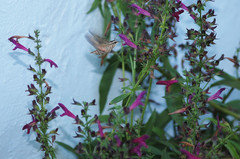
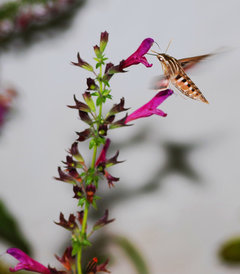
wantonamara Z8 CenTex
5 years agolast modified: 5 years agoThanks TxR. I was out looking at it and it has life in it so I do think it will make it. I had not a flower out of it this year. The deer broused the p-ss out of it. I have never had deer go after it before. The drought has made the deer into terrors.
Here is s Sabal minor by a stream down hill that feeds into the Pedernales River. The places it grows are really special . We do have a few constant water streams, and springs . Around here , that is what they like.
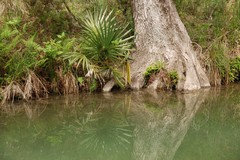
Jay 6a Chicago
5 years agolast modified: 5 years agoBeautiful pictures! It's a pretty sage. Sort of reminds me of cardinal sage. I grew that and a few Mexican sages that I ordered from Richters herbs. I grew Salvia divinorum a couple times while they were still offering it. An oddly beautiful Salvia that likes some shade. My annual Salvia coccinea returns every year, and I usually grow 2 or 3 Salvia gregiis for the hummers, and so I can feel a little 'southwestern'. Years ago after travelling in the southwest, somewhere in New Mexico at an extinct volcano, and some naturally frizen ice that never melts, I got the genious idea of trying to grow southwestern Penstemons and California fuchsias. I ordered the plants from High Country Gardens, but they all did very poorly in my wetter, more humid climate..Live and learn. As far as my present delving into sedums, I have a raised stone patio with nothing holding back the fill on the sides, so I decided to use native sedums for that purpose. I don't have a lot of the native S. ternatum, so I am temporarilly useing some older non native Sedums too. I plan on sowing seeds of S. pulchellum, and S. glaucophyllum in there as well. Over time I will remove the non natives and replace with natives. Sort of gardening embroidery. I know that image can come to mind of feeble attempts at curb appeal with the daylilly, the Hosta, a large rock, and a couple mounds of Sedum, sooo tacky! That's my neighbors for you. I should have kept my Opuntia, and bought dishwashing gloves. Mild guilt trip!
User
5 years agolast modified: 5 years agoThat palm looks a lot better (more natural) growing there than it does in yards around here. Looks nice reflecting in the water too. That kind of reminds me of some of the places I used to see in North Carolina where all those moss covered cypress trees and huge ferns grew in the wild. Seeing those huge cinnamon ferns really blew me away, to my eyes they looked like Okie house plants growing in their natural habitat---"Toto it looks like we aren't in Oklahoma anymore".
I get the Responsible Beauty catalog from Native American Seed and they have a nice memorial to Richard Hensley (1938 - 2014) in honor of his contributions of time and effort helping them. They named their Big Red Sage 'Hensley's Big Red Sage' which they transplanted on their farm 40 years ago in his honor. Its a good source for ordering seeds.
They also mention two other wildflowers that are dismally sparse in the wild: Narrow Leaf Coneflower (E. angustifolia) which they say was nearly wiped out from over harvesting and Bush Sunflower (Simsia calva) ---"a few of these hardy, drought tolerant perennials can still be found on dry, rocky, caliche and clay hills around Texas and northern Mexico". Rough leaves discourage browsing----
Mara, maybe that Bush Sunflower would grow good for you if you don't have it and "discourage browsing" sounds like the deer might snub it? Info says it grows from seed to full bloom in 60 days; blooms Apr- Oct; 6" - 24" tall. I'm tempted to order seeds myself.
Personally, I'd like to see some Compass plants around here along the roadsides because I never see them. At least they quit mowing along the highways and we are seeing more native plants in bloom instead of scalped grass. I was amazed how many Antelope Milkweed plants I saw this year, you can't miss them from the car.
Jay 6a Chicago
5 years agolast modified: 5 years agoI like Native American Seeds. They have nice selection of grass. That's where I got my cowpen daisies. I don't know your all music tastes, but I'm a musician and Texas and Oklahoma sound like this to me. https://youtu.be/9hO-83CIVKM
User
5 years agoJay, I looked up Cardinal Sage, its a much smaller plant from what I read. Big Red Sage gets really big, about 4 feet wide and tall; the sheafs left on the stems after the blooms fall off are very stickery and unpleasant to touch when harvesting seeds, which is why mine are still in that paper bag with the seeds probably in the bottom of the sack of stickery dried out stems. It still smells like Big Red, that smell is strong. The flowers aren't really red, they are more purplish red, the leaves are rather coarse and the base is rather woody, more like a shrub.
The native salvias from Mexico are typically not reliably hardy here, they would be a gamble as are many of the kinds of Salvia; the local nurseries sell them as annuals. Those SW Penstemons really REALLY hate too much moisture. I have luck with some but not others; as it is they are short lived but they re-seed so prolifically I always have some to replace the ones that die in a couple years.
The smell of Salvia coccinea literally gags me and the plants look like scraggly spinach until they finally bloom late in the season. I decided its a nuttin'-burger plant although I still get some scraggly volunteers here and there that get lost in the over grown west side which I have named Butterfly/Hummingbird row due to the thick growth of S. greggi, hardy lantana, Turk's Cap Malva, Mealycup Sage, White Mistflower and Flame Acanthus.
wantonamara Z8 CenTex
5 years agolast modified: 5 years agoThe deer also harvest the echinacea.. Every year I try to seed out the E. anguvstifolia. That is native in my area but I have never seed one in the wild. Not around me.I have some that grow in my garden. I had one bloom this summer and none of the seed was viable. aThe seed looked really wimpy compared to what they normally look like.
I have been tryimg to encourage Bush sunflower but it wants to go and grow where I have "my Garden". They are hard to weed. they develop a long taproot immediately and then they have a weak stem connection so you pull and they break and grow some more. I keep moving them out and they keep returning. I want them on the edge of my line of oaks out in the field, not in my succulent garden. I know it is all part of God's plan to frustrate me and get the poison out. Or move ALL the succulents and wire grass and datura and then get the pick axe out. I think it is a good field plant but might not be that controllable in a garden once happy.
I think the palmetto goes good with ferns and live oaks and bald cypress trees. There's an old style of Texas gardening where it is well used for structure and contra point with Hibiscus and magnolias trees in the under story.
User
5 years agolast modified: 5 years agoSpeaking of Hibiscus, did you sow those Blue River white blooming hibiscus seeds I sent? Its an Okie native that doesn't have a widespread range. I need to go check around in that over-grown area I mentioned on the west side where I planted some small plants, they probably got swallowed up under the monstrous growth of the lantana's and Gregg Salvias. The plants at the History Center where I got the three seed pods were not as flashy as the larger red variety but I personally liked them better because the plants were smaller, the flowers very white with red stamens but best of all--the leaves were a pretty blueish green, smaller in size and soft looking. You know what sucker I am for blue leaves. Reggie was all agog over the red ones but I was smitten with smaller, more subtle white ones.
ps, I didn't get a single E. angustifolia plant, second year of failure unless there's some little plants, or maybe even just one, I have missed but I don't think so.
wantonamara Z8 CenTex
5 years agolast modified: 5 years agoSorry Jay, but Dylan , even with a cowboy hat does not sound like Tx/OK. Try John Fulbright, Butch Hancock, Jimmie Dale Gilmore . I will tell you that listening to Willie nelson and Joni Mitchell harmonize two words, "Cool Water" transports me immediately down to the Blanco River, Hamilton Pool, and the Pedernales, on a hot summer day , immediately, never fail. I can feel the heat and the relief. I can smell that miracle of what water does to hot dry land. It can make palmetto a neighbor of prickly pear. I can feel the thirst..
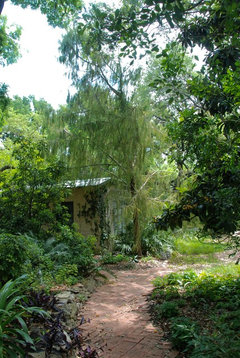
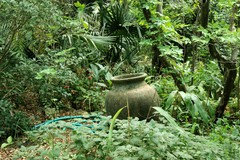
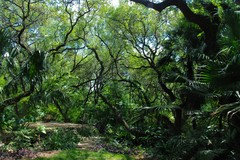
Since the thread is about Palmetto here is a friends garden who uses palmetto and other palms to great advantage and it feels SO texan , So Louisiana. I love his creation of understory under some amazing live oaks. He has been gardening here for almost 40 years. He has water on his property. Definitely not Oklahoma. Toto is lost in the bushes.
User
5 years agoJay---We still have wild Indians that live in TeePee's here in Oklahoma, everyone, but everyone knows this. Quick drawin' cowboys still drive cattle across the state, ride horses, pack guns on their hips and go to saloons after the long cattle drives where hard-core ladies like Miss Kitty on Gunsmoke serve them beer and whiskey while the Matt Dillon types keep the peace wearing a star on their chests. All the men drive pick-ups with a gun rack in back and EVERY one of them wears the required cowboy hat and boots. Its a wild place.
mara, you know me well enough by now---- that makes me feel claustrophobic. I nearly went mad living in North Carolina with all those pine trees everywhere and no wind. I swear, they had no wind there. I'll never forget coming home and landing in Love Field in Dallas where the sun was noticeably brighter with no haze and felt that wind blowing on my skin and looked out and saw miles of land meeting a huge sky on the way home. I nearly cried with relief.
Jay 6a Chicago
5 years agolast modified: 5 years agoMara, I never heard of the first 3 artists, but I'll check them out. Cool hearing what you're in to. I suppose Dylan can be a cowboy if he wants? Didn't he do a western once? That was how Texas sounded today. Tomorrow it will sound totally different. I've been transorted by Joanie and Willy many times. I think I might have seen tepees in OK. , not sure, I remember being at a reservation eating bean tacos with Navajo flat bread, oh wait, that was at 4 corners. Yep, I stood on 4 states at one time.
Jay 6a Chicago
5 years agolast modified: 5 years agoI need advice. I want to take out some of the front lawn to make more garden space. The front gets a lot more sun, so I want to grow all the sun loving prairie plants there. I'd like to use gravel, I'm just not sure if gravel mulch is the best way to go in my zone. I could use wood chips, but I'm concerned about the wood sucking nitrogen out of the soil. Compost is another option. I do love the idea of gravel. It's like a palette you can paint on continuously.
Skip1909
5 years agolast modified: 5 years agoThats funny Texasranger. when I was in southern Colorado and even at Denver international, I couldnt stand how dry it felt, and it was so strange not to have an ocean to the east. I love the enclosed feeling and lush understory of the forests here. I love the humidity and the crazy colors the sky gets at sunset. I dont live within a mile of the ocean anymore but I still feel its there. I can smell the sea air when the wind blows the right way while I'm at work
WoodsTea 6a MO
5 years agoJay -- if you are growing prairie plants you don't necessarily need mulch at all, as long as you're willing to put a little time in now and then to work through the bed with a good dutch hoe, especially early in the year before things have filled in. I do have a fair amount of trouble with weeds along the edges of my hell strip. Partly that's because I pulled out things like the prairie dropseed that used to be close to the sidewalk. When I had those in place they would extend out over the sidewalk and keep the edges shaded.
Ether way I don't think I would worry too much about nitrogen. You don't want a really nitrogen-rich environment like you do for annuals and such. Keep it lean for prairie plants, especially grasses. I always try to include a few legumes here and there, like Baptisia, Chamaecrista, etc. I never, fertilize, though. The only thing I add is a little lime in most years.
User
5 years agolast modified: 5 years agoJay ----I have gravel mulch (medium sized river rock pebbles) on the entire property, front and back. We hauled in tons. It comes with pros and cons.
CONS---- digging is more difficult + you have to push the gravel away if digging up a plant, otherwise you bury the gravel. I am in the process of thinning out some grasses and I don't use a shovel for this reason. I'm using a hori-hori knife so I don't do too much disturbance to the gravel. A hoe like woods tea described wouldn't work either. You have to get down on your knees and pull stuff in gravel, often working your fingers into the space between the pebbles to grab hold of the weed.
It gets washed down or buried under soil if on a slope or sometimes just during a heavy rain even when not on much of a slope. Gravel can work itself down pretty deep over time.
Seeds come up very easy in it, that can be a pro or a con. It works both ways for me
Your knees get sore if you garden like me and like to squat down with your knee or knees on the ground.
When you rake leaves, you also rake gravel and I really hate leaves on my gravel. I have to sort out what I rake up so I don't toss my "we paid for that gravel and I ain't tossing it" gravel.
PROS----It looks great and of course never breaks down. Its kind of the same effect you get when it snows and the garden looks neat with all that consistent layer of white around the plants instead of dark soil or leaves etc.
You can go out right after a rain and walk around.
It melts the snow off fast in winter and keeps the ground warmer on sunny winter days which we have a lot of. Its also good for drainage or plants that don't like wet feet or suffer crown rot on winter, it wicks away water rather than holding it around the plant base and it keeps the soil moist down low and provides a good sponge on top so water soaks in fast compared to compacted dry soil where you easily get runoff when it gets dry.
We put in a deep layer of coarse sand under the river rock which also helps with good drainage. I keep it well weeded but weeds are easy to pull in that sandy soil and I like weeding so its not a problem for me to keep the parts clear that I want to stay clear. I do a lot of weeding in the gravel.
I agree with woodstea, you don't need (or want) to add nitrogen. I don't think wood chip types of mulch look right around prairie plants myself, its too artificial and urban-flower-beddish looking.
I've seen some yards where people leave swaths of trimmed grass creating defined areas set off by large, usually curved areas of prairie or tall grasses that grow pretty thick. It looks very neat, well defined yet still natural and in a case like that you wouldn't need mulch of any kind, the plants would shade the soil. Just cut it back in spring (easy). I have to trim everything by hand, one plant at a time, because we tossed the mower and besides, you wouldn't want to mow over or around the area with small pebbles that could fly out, those pebbles have a way of escaping from where they were put. We have several large rocks among the gravel and I like the way they look, especially in winter but they tend to get a bit lost in summer.
Jay 6a Chicago
5 years agolast modified: 5 years agoTR, Thanks so much! Actually I'm just doing a portion of the front lawn, so your last suggestion sounds perfect. I was planning on doing a circular bed already. The whole yard is on a slope. It used to be farmland until they built I80. I live on a hill that overlooks I don't kn w what it is. I can't call it a prairie, more like a field of tall grass. Spill the wine. Anyway the cows would lounge on my hill that's covered with huge old oak trees. Sunlight issues are complicated here due to the trees. More sun in front for the favored prairie plants. I may use compost for a top dressing. Not too thick. I was looking to see if there were any native Salvias that are mounding and low growing. I thought I had found one from High Country Gardens called Salvia sylvestris. Turns out it's not native. There seems to be a lot more native Salvias out west. I have tried growing the rose verbena, glandularia canadensis twice. It never comes back, and the last time I grew it, it grew so vigorous like it was on steroids spreading 5 feet in every direction. I was shocked when it didn't come back. Have you ever grown the meadow verbena, glandularia something? I was just wondering if I'd have better luck with that one. I grow this annual Verbena teniusecta. I like it a lot. Draws a lot more butterflies than those bedding hybrid verbenas.
User
5 years agoJay, there is some kind of low growing verbena, a couple will pop up in a spot out back blooming for several weeks in spring (can't remember the name) and another I see every once in a while on one of the hills out back (not this year)---Moss Verbena. I like the Moss Verbena, its subtle & blooms all summer into fall. I pretty much take what comes (or doesn't) in stride by letting them reseed. Each year is a bit different. Verbenas are hit and miss plants.
Salvias are not my thing so much but I have used a lot of the S. greggii because they are cast iron plants, $$ free (volunteers + cuttings) and will grow in difficult or shady spots along my borders or in shady areas. I have many of these planted in masses along the property line. To me they don't look 'prairie'---- they look 'landscape' or more like bedding gardens where plants are flashier, have greener foliage & where each plant is more defined than what you see on a prairie where all the plants blend together creating a subtle 'whole' effect to be appreciated like a canvas rather than focusing on individual plants trying to stand out or specimens to be collected.
So..............I'm not really a specimen collector although I was somewhat when I first started with the cactus and had all this empty space to fill. Mara continually tempts me with seeds she collects in Texas from her property and I plant a few each year, often nothing you would ever see for sale which is often "my kind of plant". For some time now I have preferred mostly repeats and plants that self sow creating a natural, cohesive look and rhythm. I strive more for many of one kind which has replaced a mania to collect one of each type of plant that catches my eye because thats how the plants grow in nature and the effect is more pleasing & natural. If, for instance, I want a patch of white or yellow or any color etc (I usually don't care about what color) I don't care what kind of plant it is, I look more at the height and how a lot of them growing together will look. I make use of a lot of common, easy to find plants--- plants like Mexican Hats, Liatris, Purple Prairie Clover, Annual Bitterweed, Annual Gaillardia, Grasses, Hairy Yellow Aster and some kind of little native Morning Glory I got on a Kansas roadside that has naturalized all over the front which form little mounds that bloom spring through summer, they love coming up in my sidewalk cracks and make cute bouquets with miniature trumpets every day in spots they choose on their own all across the front.
Jay 6a Chicago
5 years agolast modified: 5 years agoThank you fir being so generous! I live with my best friend. We've been friends for 30 years. We got a duplex in the 90s and that's where I turned the whole back yard into a garden. That's where 99.999% of my native plants are still residing. My friend bought this house on the wooded lot in 2006 and moved here. In 2016 I was having health problems and I needed help so I've been staying here since. I have cancer but it's in remission and I've been feeling better. Whoever originally landscaped this house had no gzrdening kniwledge whatsoever. They put yards of landscaping fabric on every side of the house and around all the plantings. And then after putting the fzbric diwn they dumped a bunch of tacky red lava rock on top of it. The plantings, all your favorites I'm surr lol. Hostas, 2 gold privets, a bunch of biring Spireas, stella de oh!no! daylillies. I sort of have to guerilla garden. In the next couple days I need to secretly dig out a few stellas and spiderplants and replace them with the milkweeds which were an emergency visit to the nursery to feed my starving Monarch caterpillars. I think the only native that was planted here was a serviceberry, and they put 5 feet of fabric and red lava rock around that too. The serviceberries sucker really bad but because of the fabric you can't prune the roots back so there are suckers radiating out for several feet in all directions. I bought a special tool that can macerate the suckers in seconds. I want to brutally murder the privets after seeing what they're doing in the south. I have a feeling they might put up a fight. I still haven't come across anything as tenacious as my campsis vine. I've been trying to eradicate it for years. I won't be bringing that one over. I might come across as one of those grow one of everything people, but what you're saying about grouping rings so true. I think things that get big like ironweed and big bluestem probably look better standing alone, but it's really all about how much land you have to work with, I mean if you have lots of land then those plants can look good in groupings from a distance.
Jay 6a Chicago
5 years agolast modified: 5 years agoWoods, thanks for the advice. I've gotten by this far without mulching, so I'm already used to gardening in plain soil. I couldn't use gravel on the hell strip because there's too much of a slope. I'm a big legume fan and put a sensative plant in the front yard just to mark my territory. I got a late start this year and wish I would have planted a bunch of Mexican hats, blanketflowers, Zinnias and Tithonias for the pollinators, but I got a lot of good ideas for next year. I'm getting more into butterfly gardening which is why I want a lot of flowers. So choosing native butterfly host plants raises questions like where can I plant pale dock and make it look good? It's a host plant to 3 butterflies and 2 moths so I really need to grow it, and well there's sheep sorrel that is alien and looks better, and the butterflies love it too so what is one to do? I'll go with the native pale dock. I haven't really decided where any plants are going yet, but I need to play around with ideas on paper. I thought you were growing hoary pucoon because you had a picture of it from a prairie, and then I saw the hell strip thread with the orange tuberosa, and somehow in my mind I thought you were growing it. There was a time when you wanted to grow it a lot. We were talking symbiotic fungal and plant associations and wondering what that question mark after seed preparation on the prairie moon site was all about. Not very comforting.


User