


|
| There's this barron lot near my house I was thinking of "improving" with some wildflowers. I wanted easy to grow (from seed) ones that would do well in a sunny spot. I'm thinking:
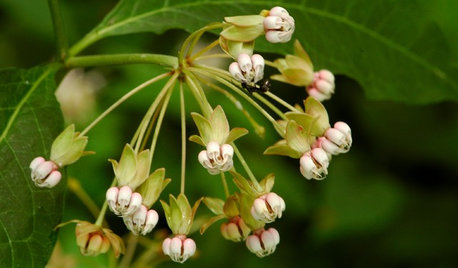
asclepias tuberosa daucus carotas (I know its not native but butterflies LOVE it so) asclepias syriaca rudbeckia echinacea coreopsis and? I wanted something that hummingbirds also might like..... and just some others..... ???????? |
Follow-Up Postings:
|
- Posted by joepyeweed 5b IL (My Page) on Mon, Jul 10, 06 at 23:44
| I would probably add columbine |
|
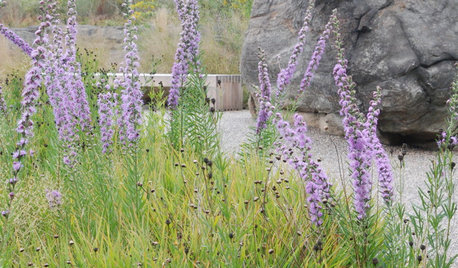
| i would add to the above rough blazing star (l. aspera) - the monarchs LOVE this |
|
| Cardinal flower (Lobelia cardinalis) and bee balm (Monarda didyma) are supposed to be good. I have seen one hummingbird at each of them so far since I started having these plants starting last year--I don't have much of a hummingbird garden yet. |
|
| Depending on where you are and site specifics your options are endless. It is a good idea to research what historically grew in your area and seek out local ecotype seed , after all, they did evolve and flourish in that specific area. In nature there is a succession of flowers from early spring till fall.typically, shorter plants flower early and progressively taller species follow as the seasons go on. Some of the shorter native grasses are a great addition to any naturalized meadow. Keep in mind that interseeding may have limited success in areas populated by aggressive and invassive species like tall fescue and sericea lespedeza.Often, site preparation is the key to success. that is a whole other topic. I have found the following plants the easiest to establish |
|
- Posted by genie_wilde (My Page) on Sun, Jul 23, 06 at 14:42
| I'm not sure I'd advise adding butterfly weed, if that's what I know as the "butterfly bush," because the things get humongous and are incredibly invasive. They are classified as "noxious weeds" in many areas (illegal to plant them, and the city can make you remove them). Some of my favorite wildflowers are: •yarrow (white, yellow, etc.) - will blossom even if mowed, grows tall if not •bee balm (fragrant with red blossoms •wild phlox/woodland phlox (very fragrant, white, lavendar, pink) •California poppy - perennial, fairly drought resistant but likes to be watered • Other poppies, such as the giant Chinese-red ones • Lemon verbena But I echo what Huzzah said. Check out what plants are native to your area. Some real problems have occurred from nonnative (to your region) plants being cultivated and then taking over. An example is the wild morning glory here in the Pacific Northwest. They're pretty and make a nice fence cover, but they choke off everything else and are hydra-like in their resistance to being killed or cut back. |
|
- Posted by genie_wilde (My Page) on Sun, Jul 23, 06 at 15:49
| I found this pic via http://images.google.com/images?svnum=10&hl=en&lr=&q=wildflowers&btnG=
Search http://silencio.weblog.com.pt/images/eyes/NG-AnnieGriffithsBelt-Wildfl owers.GIF This looks exactly like my perennial red poppies. I guess it's just a case of "Poppies Gone Wild!" ;-D I also have a wild (?) self-propagating perennial with flowers that look very similar this: The flowers kind of fan out a bit at the end, with distinct petal endings, and the leaves are simple, though, not like the leaves in the foreground of that picture. I've been told my flowers are a Hosta variety, but they don't have that typical cluster of leaves at the bottom with flowers at the top of a tall stem. Anyway, these plants come back every year and also make new babies by seed. The seeds are easy to collect too. |
|
- Posted by genie_wilde (My Page) on Sun, Jul 23, 06 at 21:12
| There's another weed/wildflower in my garden that's really pretty in some of its permutations. I've been calling it a "wild geranium" because the leaves sort of look like geranium leaves. I finally found it on the net and it's actually mallow. Several types, to be specific. The prettiest are the "tree mallow" or "hollyhock mallow," which grow to several feet tall (if tops aren't pinched off) and have relatively large, brightly colored (pink, purple, or 'striped') blossoms. Then there is the "common mallow," which has much smaller, white or pale pink flowers and usually spreads out over the ground. Pretty sure these are hardy annuals, not perennials, and it's pretty easy to pull up the unwanted young plants in the spring when the ground is moist. I have a friend whose back yard was abundant with the large, colorful varieties, and I found it easy to harvest the seeds. Mallow is also a widely used medicinal plant/herb. Here are some pics: http://www.santabarbarahikes.com/flowers/index.php?action=show_item&id =257&search= http://www.cwss-scm.ca/Weeds/images/Mal2-common-mallow.JPG http://images.google.com/imgres?imgurl=http://212.84.179.117/i/Mallow. jpg&imgrefurl=http://212.84.179.117/list.htm&h=300&w=189&sz=17&hl=en&s tart=11&tbnid=Qhhpso2ryidvJM:&tbnh=116&tbnw=73&prev=/images%3Fq%3Dmall ow%26svnum%3D10%26hl%3Den%26lr%3D http://212.84.179.117/i/Musk-mallow.jpg http://images.google.com/imgres?imgurl=http://aco.ca/acorns/_images/pe rennial_gardens/Wild-Mallow-Blooms-July-thr.jpg&imgrefurl=http://aco.c a/perennial_gardens.html&h=335&w=350&sz=46&hl=en&start=64&tbnid=bSmecG CNXHPMpM:&tbnh=115&tbnw=120&prev=/images%3Fq%3Dmallow%26start%3D54%26n dsp%3D18%26svnum%3D10%26hl%3Den%26lr%3D%26sa%3DN http://www.nerc.ac.uk/publications/latestpressrelease/2005-42puffins.a sp http://thebegavalley.com/uploads/tx_steverplantgallery/Malva_parviflor a_04_small-flowered mallow.jpg http://www.easywildflowers.com/quality/cal.di1.jpg http://images.google.com/imgres?imgurl=http://www.naturedirect2u.com/M edicinal%2520herbs/mallowpic4.jpg&imgrefurl=http://www.naturedirect2u. com/Medicinal%2520herbs/mallowherb.htm&h=387&w=368&sz=42&hl=en&start=1 37&tbnid=8iP2FaB60KZ36M:&tbnh=123&tbnw=117&prev=/images%3Fq%3Dmallow%2 6start%3D126%26ndsp%3D18%26svnum%3D10%26hl%3Den%26lr%3D%26sa%3DN http://images.google.com/imgres?imgurl=http://www.garten.cz/images_enc /00058/00058C1.jpg&imgrefurl=http://www.garten.cz/encyklopedie.php%3Fl ng%3Den%26encid%3D58&h=200&w=150&sz=13&hl=en&start=234&tbnid=9y9Rq8Miv h7YuM:&tbnh=104&tbnw=78&prev=/images%3Fq%3Dmallow%26start%3D220%26ndsp %3D20%26svnum%3D10%26hl%3Den%26lr%3D%26sa%3DN |
|
- Posted by ahughes798 z5 IL (My Page) on Sun, Jul 23, 06 at 23:31
| Goodness...can't you guys make your links shorter? LOL! I wouldn't plant Butterfly Bush (Buddleia). Non-native and invasive. Nor would I plant Queen Anne's Lace (Daucus Carota), it will probably find it's way in anyway. There are other native plants that are more useful to butterflies. I would plant Asclepius Tuberosa(butterfly weed), and/or Asclepius Incarnata(swamp milkweed). They're larval food for monarch butterflies. Check out Prairie Moon Nursery for their native Butterfly plants and seed mixes: www.prairiemoon.com Or, Prairie Nursery: www.prairienursery.com |
|
| In my opinion, a good subsitute for queen anne's lace is the native Golden Alexander (zizia aurea). While it blooms in the spring, rather than the summer, the blooms are similar to Queen Anne's Lace, and I believe they are in the same family (Zizia Aurea is either in the carrot family or the parsley family--- can't remember which). Anyway, it is a larval food for the black swallowtail catepillar. Just my 2cents on that. Some of my other fav. wildflowers include liatris spp. (grass-like foliage for contrast), asclepias spp. (I'm going to try asclepias purpurascens--- already have a. tuberosa and a. incarnata and the monarchs LOVE my garden), and solidago spp. (good autumn color). Jenny |
|
| In my garden, nothing beats liatris (all types) and asclepias - butterflies love milkweed. The cardinal flower is a beauty, but needs constant moisture. Mine grows in a drain ditch by my pole barn, not always running water, but flooded for the day when it rains. I have butterfly bush, but they like butterfly weed better. |
|
| A subsitute but not as pretty for Queen Anne's Lace is carrots. The second year of growth they form seed heads that are a little looser. Cheap way to aquire is if you buy carrots that have the top left on, where it forms a whorl cut this off about an inch below the top stab with toothpicks and place in water. This was an old teacher trick back in the "old days" but if you just plant carrot seeds you have to wait for two years not one. The swallowtails and some of the other butterflies love the stems so don't pick off the little black things. Sorry I have no idea if carrots are native or not. |
Please Note: Only registered members are able to post messages to this forum. If you are a member, please log in. If you aren't yet a member, join now!
Return to the Native Plants Forum
Instructions
- You must be a registered member and logged in to post messages on our forums.
- Posting is a two-step process. Once you have composed your message, you will be taken to the preview page. You will then have a chance to review the contents and make changes.
- After posting your message, you may need to refresh the forum page in order to see it.
- It is illegal to post copyrighted material without the owner's consent.
- HTML codes are allowed in the message field only.
- No advertising is allowed in any of the forums.
- If you would like to practice posting or uploading photos, please visit our Test forum.
- If you need assistance, please Contact Us and we will be happy to help.