


|
| May I ask a favor?
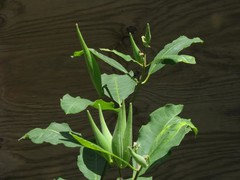
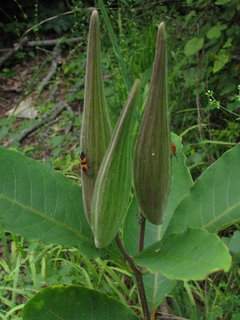
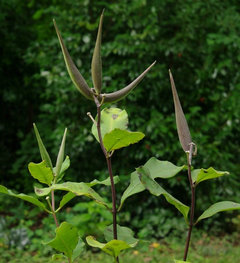
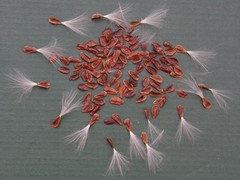
Would those of you who were fortunate to receive Red Ring Milkweed seeds from ctnchpr via Jeff recently, please come back and tell us how you fared with getting them to germinate, as well as the germination methods you tried? If one is able to locate seed of this milkweed, it appears to be quite difficult to get them to germinate. I would love to hear what method everyone tried with their seeds to use as a reference for future attempts at germination. My thanks for your time. Mary |
Follow-Up Postings:
|
- Posted by wildflowerman_2000 NC Piedmont Z-7 (wildflowerman_2000@yahoo.com) on Fri, Nov 6, 09 at 21:36
| Mary, I will be glad to pass along a report next summer with the germination results, either good or bad, and percentages. Hope everyone has a good winter and a happy Thanksgiving and Christmas. Regards, Mark P.S. Thanks so much to Jeff for dividing up & mailing the seed and to ctnchpr for supplying them. |
|
- Posted by mary_littlerockar 7b Central Arkansas (My Page) on Sat, Nov 7, 09 at 7:35
| Hi Mark, Thank you. I'll look forward to your report next summer. I've about decided to cold stratify my seed in the fridge for 8 weeks, placing half the seeds in a damp coffee filter inside a plastic zip lock and the other half in a damp potting soil & perlite mix, sealed in a plastic bag. The first of January, I'll place them in the house at about 70 degrees and see if I can get germination. This way, we'll have at least two different methods to compare. These small seeds are like little pieces of gold. I'm rather nervous about trying to germinate them for fear I'll waste them! I've searched and searched and just can't find much at all regarding propagating these plants. Thank you Jeff and ctnchpr for your generosity and good luck to all. Mary |
|
- Posted by mary_littlerockar 7b Central Arkansas (My Page) on Wed, Jan 13, 10 at 11:04
| Want to report on my progress so far and hope I don't jinx my little seeds! :-) I kept the 8 seeds I received in the fridge, resting in a damp coffee filter wrapped inside a damp paper towel and placed in a zip lock baggie. I took one seed out after a month and tried to germinate it indoors. Nothing so far. At 5 weeks, I took another seed out and tried to germinate it; nothing so far. At 6 weeks, I took two more seeds out and tried to germinate them indoors. Nothing so far. At eight weeks, I took the remaining four seeds out and planted them indoors under the same conditions. Within 7 days, all four seeds are popping up. Two are up but the seed covers have not yet popped off and the other two are still lifting the seed covers out of the soil but all four seeds are germinating. Now to see if I can keep them alive and growing! All the seeds were planted in ProMix potting soil but with the final 4 seeds, I covered them lightly in damp vermiculite rather than lightly covering them with the potting soil. Doubt that would make a difference but thought I'd pass along exactly what I did. Based on what I've seen so far, a cold moist treatment of at __least 8 weeks_ might be helpful when attempting to germinate Asclepias variegata seed - AKA Red Ring Milkweed. Has anyone else had any luck? Mary |
|
- Posted by wildflowerman_2000 NC Piedmont Z-7 (wildflowerman_2000@yahoo.com) on Thu, Jan 14, 10 at 10:32
| Nice to hear of your success. I have my seed still in cold/moist treatment and will plant outside in early March. Mark |
|
- Posted by mary_littlerockar 7b Central Arkansas (My Page) on Sun, Jan 24, 10 at 12:06
| So far so good. First true leaves are out and I can see the beginnings of the second set. As soon as they pushed off the seed coatings, I moved the seedlings out to the greenhouse so they're enjoying a cooler climate than they would have in the house. Mary |
|
- Posted by wildflowerman_2000 NC Piedmont Z-7 (wildflowerman_2000@yahoo.com) on Mon, Jan 25, 10 at 12:04
| Mary, Sounds like you are on the way to having plants. Keep us posted. Mine are still in the fridge waiting for spring. Mark |
|
| I wintersowed mine a couple of days after I received them. So they were sown in late October, before the weather got really cold. I hope that this will provide a similar cold/moist environment and they will sprout when it gets warmer! Becky |
|
- Posted by mary_littlerockar 7b Central Arkansas (My Page) on Wed, Jan 27, 10 at 17:52
| Oh, great news, Becky. Thank you for posting to let us know what method you're using. Now we'll have another method of germination to use for comparison. Hopefully, these seeds are viable and everyone will have great success. Please come back and let us know how they do. I'm still keeping my fingers crossed for my little seedlings. Every time I go into the greenhouse, they're the first ones I check. Mary |
|
| Good to hear the seeds are sprouting well for you, Mary-littlerock. I received 8 seeds in the fall and just winter-sowed them in 2-ltr bottles on February 3rd. 2 bottles with 4 seeds each. Will keep this thread posted on how they germinate. I've also got 1 small plant from the 2007 seeds, and am wondering how that will do this year after having been completely defoliated by slugs last year. |
|
- Posted by mary_littlerockar 7b Central Arkansas (My Page) on Fri, Feb 19, 10 at 11:59
| Update on my Asclepias variegata seedlings. They are continuing to grow. They now have two sets of true leaves and on two of the seedlings, there is tiny new growth developing along the stalk where the seed leaves are still attached. The true leaves look a bit like plants do that are in need of iron; veins darker than the interconnecting leaf tissue. I've never grown this plant so I don't know if this is normal for these tiny seedlings at this stage of their development. They were planted in and are growing in individual root trainers containing ProMix Potting Mix and are residing in a cool greenhouse. Keeping my fingers crossed for everyone's seed germination success this spring. Mary |
|
- Posted by wildflowerman_2000 North Carolina in Z- (wildflowerman_2000@yahoo.com) on Sun, Feb 21, 10 at 17:21
| Hi Mary, Good news. All the asclepias seed I have germinated in years past have the color you are talking about. As the weather warms up you can feed them with a dilute fertilizer(1/4 to 1/2 strength) and they will fully color up. Keep up the good work. It will still be a few weeks before I will plant out my seed that are in the fridge. Mark |
|
- Posted by mary_littlerockar 7b Central Arkansas (My Page) on Wed, Feb 24, 10 at 10:06
| Hi Mark, My thanks for the information regarding the leaf color. It is reassuring to know this is rather common with these little seedlings. Third set of true leaves have emerged and the seedlings are still standing up straight! :-) So far, so good. Can hardly wait for warmer weather and to be able to plant the seedlings out and watch them grow. We're still having nights below freezing so haven't seen anything in the way of green growth on the little wild redring transplant (transplant authorized by landowner of commercial property). Daylillies are putting up green growth, eyes of hosta and Lily of the Valley are beginning to show and buds are swelling on a new spirea 'SnowStorm' shrub but that's it so far. Birds are busy digging and singing so it won't be long now til spring begins in our neck of the woods. Mary |
|
- Posted by mary_littlerockar 7b Central Arkansas (My Page) on Tue, Mar 16, 10 at 17:57
| I'm back to ask for more advice. :-) My oldest Asclepias variegata seedlings now have four true leaves. Should I transplant them into a larger pot now? I have them growing in 5 inch root trainers (sides taper down to a small opening at the bottom). I think they're designed to supposedly air prune the roots of the seedlings. I don't know a lot about growing plants from seedlings so really unsure when I should transplant them into something bigger. Do I just leave them be until the weather is warm enough to plant outside? If they were in the wild, they'd have lots of room to spread their roots so I worry that they need more space to spread out. Mary |
|
| Mary, I would leave them until it's warm enough to plant in the ground. Maybe that won't be long. Some of my most robust plants are growing within the drip line of a massive White oak and an almost-massive Sweetgum. You can imagine the competition for root space there. They don't need much. I Winter-sowed my 8 seeds, nothing yet, but it's still cold. |
|
- Posted by wildflowerman_2000 North Carolina in Z- (wildflowerman_2000@yahoo.com) on Wed, Mar 17, 10 at 22:53
| Hi Mary, I would recommend you wait and plant them in the ground where you want to grow them once it warms up as per ctnchpr. I just planted my seed outside yesterday after 8+ weeks of moist/cold stratifaction. I'll keep you posted on their progress as promised. Glad to see ctnchpr active on this thread. Seems as though they have given lots of seed of A. variegata to folks over the years. I hope they get good seed set this year also. Regards, Mark |
|
- Posted by mary_littlerockar 7b Central Arkansas (My Page) on Thu, Mar 18, 10 at 11:11
| ctnchpr and Mark, my thanks for the helpful advice. They will stay in their root trainers until time to plant out in their forever spot. ctnchpr, my thanks also for the tip on growing location (and for generously sharing these very special little seeds). Ironically, we paid $1500 last spring to have some oaks trunked up to allow for a bit more light for my small garden area. Now I've trying to figure out how to provide some relief from direct sun for my little wild transplant! :-) If nothing else, we can build a little lath house to cover it. Right now my plan is to plant a couple of Asclepias physocarpa seedlings to the south of the wild redring, hoping it's height will provide nice dappled sunlight. That's another plant I'm anxious to watch develop this summer. It will be an annual for me but starting from seed seems to be quite easy, so shouldn't be a problem replanting each year if it does well and the little Monarch beauties like it. Hopefully, I will choose a better growing spot for my little A. Variegata seedlings! Mark, best of luck with your wintersown seeds. It's going to be a fun growing season. Mary |
|
| Mary, I'm sorry that I've misled you. I only gave that example to show how well they compete for root space. They don't need to be grown in the shade. Several of my plants get 4-5 hours of hot, West Tn midday sun. (Being from Little Rock, I'm sure you know what that feels like!) In fact, the plant that produced last year's only pod gets about 6 hours midday sun. There's also a plant that grows on the bank of Eastbound I-40 in Natchez Trace State Park. It gets sun all day, and is exposed to constant auto and diesel fumes. They're not dainty! |
|
| Two of my seeds have sprouted. They still have the seed shell stuck over the seed leaves. I hope the leaves will be able to pop out! I wintersowed the seeds and they are in a covered container for now. Hope more will germinate! Becky |
|
- Posted by mary_littlerockar 7b Central Arkansas (My Page) on Fri, Mar 19, 10 at 10:28
| Becky, Congratulations!! I'm so excited for you! The advice given to me was to let them be and don't try to help them. I'm rather new to growing plants from seed so not much personal experience but I can tell you that it can take a few days for the emerging seed leaves to pop the coverings off, based on my very limited experience with these little seedlings. They will manage, given time. Mary |
|
- Posted by sunnymicrobe 5a (My Page) on Mon, Mar 22, 10 at 21:42
| It has been very informative reading about other people's experiences with their seed. Mine were put in cold moist stratification for 8 weeks. I had one germinate after a couple of weeks. It looks happy in its milk jug. I had a slight problem with yellowing in between the veins. I cannot wait to plant it out. The rest of the seed was put back for some more stratification. I love my plant. Thank you very much ctnchpr for sharing the seed. |
|
- Posted by mary_littlerockar 7b Central Arkansas (My Page) on Sat, Apr 3, 10 at 11:38
| Today I'm planting out my A variegata seedlings. It is warm enough here the little wild transplant is putting up shoots so figure it is warm enough for the seedlings. I've been leaving the greenhouse open the past week, to give the plants a chance to adjust to the nightime temps. I think I will put a little collar around the base of each seedling, in case there's some crawling chewing insects that might make a dinner of the little plants. Other than that, they will be on their own other than watering. Will let everyone know how they progress. Woohoo, spring has sprung in my area! Mary |
|
- Posted by mary_littlerockar 7b Central Arkansas (My Page) on Thu, Apr 15, 10 at 10:34
| Update: The transplanted A variegata seedlings are still alive and I believe settling in as the two larger seedlings are beginning to put out tiny new leaves at the top. Also, please DON'T give up on your seeds. The seeds I tried to germinate early without a full 8 weeks of cold statification are now coming up! This gives me 7 seedlings out of the eight seeds I received. Seed germination is not an exact science, that's for sure. :-) Mary |
|
| I sowed 2 containers with 4 seeds each, and am happy to report that there is now 1 small sprout in each container! Looks like I'll have some new A. variegata plants this year. The one little plant in the ground hasn't come up yet, but neither has most of the other Asclepias. Only the A. tuberosa in a warm spot in the front garden is poking up. Hoping for lots of Milkweed and Monarch butterflies this year! I enjoy collecting the eggs and raising them indoors, but last year it was so cool and rainy in the Northeast, there were very few Monarchs butterflies in the region. |
|
- Posted by mary_littlerockar 7b Central Arkansas (My Page) on Sun, Apr 25, 10 at 10:02
| Terrene, I'm so happy for your success! Doesn't it make you feel good to think you're helping to propagate a milkweed that is on the decline in it's native element. Maybe one day we'll all be in a position to be as generous with seed as ctnchpr has been with us. My little seedlings continue to hold their own. I'm not certain how much growth they will put on their first year but as long as they're green and standing upright, I'm happy. My little wild A variegata is budding on a single tall stalk. Looks like two, maybe three little flower buds on the tip top of a stalk that is at least 24, maybe even 30 inches high. It's the oddest looking sight; the few leaves on the stalk appear healthy. So now to watch and hope it blooms and makes a seed pod. There were five other eyes showing at ground level some time back but they're no where to be seen now. I think something crawled up during the night and ate them! In hindsight, I should have placed a collar around the base in early spring, just to give it a chance to produce as many stalks as it could this year. All my little seedlings have collars made out of toilet tissue tubes and so far, so good keeping the creepy crawlies at bay. I hope you have lots of Monarch babies this spring and summer. I am hand raising some right now and I'll try and send them your way. :-) Mary |
|
- Posted by wildflowerman_2000 North Carolina in Z- (wildflowerman_2000@yahoo.com) on Wed, Oct 6, 10 at 22:32
| Hi Folks(especially ctnchpr), Just curious if ctnchpr's plants of A. variegata set any seed this year?? I didn't have any luck with the ones I got through Jeff but had some I got from others germinate well. Thanks so much, Mark |
|
- Posted by mary_littlerockar 7b Central Arkansas (My Page) on Thu, Oct 7, 10 at 8:11
| Hi Mark, No seed pods here. I had 11 nice sized blooms on my transplanted wild A. variegata and non set seed. My other little plants that were new this year did not produce blooms. It was a terrible summer 'temp wise', with successive days running over 100, so I'm just thankful the new plants managed to survive. There's always next year! Hope other seed recipients were more successful. Mary |
|
- Posted by susanlynne48 OKC7a (My Page) on Mon, Oct 11, 10 at 20:07
| Mary, it is so good to see you post! We miss you over on the BF Forum. I just wanted to add that a lot of folks had problems with any of the milkweeds bearing fruit this summer. I had none on my A. physocarpa or my A. curassavica, or my A. incarnata. I think it had to do with our horrible weather, too. Plus, I had so many milkweed leaf beetles and milkweed bugs, I just couldn't keep up with hand picking. Susan |
|
| I ended up with 4 seedlings from the Ctnpchr seeds this year, 2 seedlings from 2009 seeds and 2 seedlings from the 2007 seeds. For the heck of it I threw a bunch of 2007 seeds in a couple 2 liter bottles, and was surprised to get a couple sprouts! This is a challenging plant to grow, and my biggest concern for these seedlings is that they aren't going to be hardy in this zone, especially considering their origin in the southeastern US where this species is most abundant. But I've finally figured out this fall where to plant the A. variegata seedlings - at the southeastern corner of the house, adjacent to a little stone wall, sloping with good drainage and partial sun. This location, being close to the house and mostly protected from winter winds, will hopefully create a little microclimate that is a zone or 2 warmer than the rest of the yard. |
|
- Posted by mary_littlerockar 7b Central Arkansas (My Page) on Sat, May 7, 11 at 21:30
| Happy Spring to all! :-) I'm reporting in regarding the progress of my Asclepias variegata seedlings. All survived last summers hot summer and extreme cold this past winter. They seem to be fairly hardy, once rooted. One I even pinched off this spring, thinking it was a tiny oak seedling that the little squirrels had planted. It came back for a second try and by then, I recognized it. Woo hoo. So far, three of last years babies look like they're putting on tiny flower buds. My wild A variegata put up four stalks this spring and all have flower buds on them. We've had awfully strong thunderstorms this spring and even a bit of hail, which broke some of the leaves but the plants are still alive. I so want to baby them in some way but am trying to keep my hands off and let them become established and go their own way, as they would have to do in the wild. I'm so hoping for a seed pod this year and will let everyone know if one magically appears. How are your A variegata seedlings doing? Mary |
|
| Hi Mary, glad to hear your plants are doing okay. Unfortunately, mine do not appear to have survived the brutal winter we had. :( No sign of growth yet, even though I'm seeing growth on most of the other milkweeds. My seedlings of Asclepias exaltata and A. speciosa made it, even though the emerging plants are tiny. What a bummer. I would like to keep trying to grow this plant, although it may be a lost cause in this zone. |
|
- Posted by mary_littlerockar 7b Central Arkansas (mleek@sbcglobal.net) on Sun, May 15, 11 at 18:08
| Hi Terrene, I'm so sorry your little A variegata didn't make it. We had such a hot summer, then an unusually cold winter that I was quite surprised when my little plants came back this spring. I'm now beginning to watch for signs of a seed pod. Little flying creatures are few and far between around here this spring. Perhaps they were killed off during the extremely cold winter. I think I may try and hand pollinate a few of the blossoms. I tried it last year and had no success. I'll let everyone know how it goes. Mary |
|
| Mary, I planted out all the milkweed seedlings in the fall, and I don't think the A. variegata had enough time to get established. I wish I'd put them in the garage to overwinter. It also appears the A. purpurascens didn't come back either! Which is odd, because I have 3 year old purple milkweeds that were growing in the same garden, and are doing great and will probably flower this year for the 1st time. The 2nd year incarnata, speciosa, and exaltata plants are doing okay. The Asclepias species are really not that easy to grow, A. variegata seems especially difficult. |
|
- Posted by mary_littlerockar 7b Central Arkansas (mleek@sbcglobal.net) on Tue, May 24, 11 at 21:15
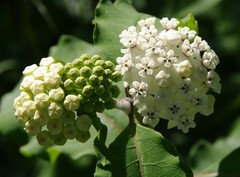
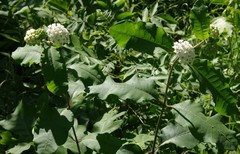
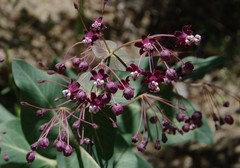
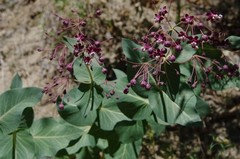
| I don't have any idea what the blooms might look like if they become pollinated but please, everyone, keep your fingers crossed that we get a pod or two this year. Here's the little wild A variegata this spring, more stalks and blooms than last year. Here's one of the babies, blooming this year. Other blooms didn't mature on two other baby plants that tried to set flowers. Mary |
|
| Mary, just wanted to say nice pics and your plant is looking great. Hope it sets seed this year. I'm still amazed that you found that little scrapper wild in a field somewhere! |
|
- Posted by mary_littlerockar 7b Central Arkansas (mleek@sbcglobal.net) on Fri, Sep 23, 11 at 12:37
| Just wanted to check in and let everyone know I didn't get one seed pod this year. If I was able to keep the plants alive through our terrible hot, dry summer, will hope for seed pods next year! :-) I wonder how ctnchpr's stand of RR MW did this summer? He lives in an area that also had terrible heat and little if any rain this summer. Anyone else have any luck? ~Mary |
|
- Posted by Mystic_Charlie none (My Page) on Sun, Feb 10, 13 at 9:53
| Hello Mary. I wanted to relay my experience to you for a very specific reason. You see, 2 years ago I obtained some seeds of A. variegata from a friend in Groton, CT who had obtained them from you. I think she gave me about a dozen seeds. Two years ago, I planted 6 of them, 2 seeds each in 2 gallon pots. Out of the 3 pots, 4 seedlings emerged. And then the slugs found them and devoured all completely but 1. This survived the summer largely gnawed on, barely, but never emerged from the soil this past spring, 2012. I germinated the remaining 6 seeds in 2 pots of 3 seeds each in 2012. I had all 3 germinate in one pot and 2 in the other, plus, I used slug bait to deter the voracious slugs in my yard. (I didn't want to do it, but considering the ridiculous level of damage they do to all of my native seedlings, I had to do something drastic). Amazingly, most of the little seedlings were subsequently devoured by Monarch caterpillars. They really seem to love the seedlings. You see, I had a large flat of Asclepias incarnata nearby, about 100 seedlings. The monarch butterflies found this and promptly about two dozen caterpillars appeared and I didn't have the heart to pot-out the incarnata. The caterpillars roamed about, eating all but a couple dozen incarnata seedlings as well as devouring most of the variegata seedlings. Very quickly, I might add. BTW: The bait didn't seem to bother the caterpillars at all. Apparently the seedlings don't take the poison up or they simply didn't ingest enough to bother them. I have been keeping the pot with the surviving seedling in an unheated attached garage to protect the young seedling, rarely going below freezing, but often close to that, but I do hope to find a suitable microclimate for it in my small yard. I stratified all of these seeds for a minimum of 90 days, and I consider that I got a reasonable rate of germination. Well, I only have the one seedling after 2 years, and it remains to be seen whether it germinates the second spring. I will try to keep you posted. Charlie. |
|
| Here is an interesting bit about how milkweeds get pollinated. Sounds tricky. |
Here is a link that might be useful: Milkweed pollinatin.
|
- Posted by wildflowerman_2000 North Carolina in Z- (wildflowerman_2000@yahoo.com) on Sat, Mar 2, 13 at 12:21
| Hi Folks, Been quite a while since I've chimed in here. Yesterday I was checking my seed containers and low and behold the seeds from 3 years ago are germinating. I have 6 of them popping up. I was floored to say the least. Any way I have been trying some new methods which seem to work much better for me.In the past I have been giving the seed a moist cold treatment either in the fridge or outside(winter sowing). By accident last year I placed several packets of seed in the fridge without any added moisture. I also left several packets (from the same group) outside exposed to the winter temps. I decided to just go ahead and sow them last spring in March and they germinated within 3 weeks. I think every single one of them! So this year I did the same thing and sowed them in early February and they germinated even quicker. The ones from last year that I gave moisture to only had a few seedlings to germinate. I'm now wondering if the moisture may be killing the embryos. I also did the same thing this year with the following species A. viridiflora, verticillata, purpurascens, exalta, asperula and incarnata with the same results although all these species took a little longer to start germinating. Just thought you all might be interested in my discovery. Mark |
|
- Posted by butterflymomok 7a (My Page) on Sun, Mar 31, 13 at 19:23
| Wildflowerman, I found your post quite interesting as I read another place this spring about moisture preventing germination of asclepias seeds. I think the information came from Native Plants in Texas. Monarch Watch is making a big effort to grow and make available a lot of different species throughout the US. I noticed that variegata is on their list, but not for my state. So, there is a push to get Asclepias planted throughout the Monarch migration flyway. I have variegata seeds in moist sand in the fridge. I'm hoping these seeds germinate this spring. I also read that the seeds should not be handled but you should wear gloves. And conditions should be kept absolutely sterile. I have stratified a number of species this spring using the damp sand method. However, some species did not germinate at all. I wondered about the source. But, it may be my methods. So, in the future I will try some new ways, including your way of just using cold. Hope to see someone posting that they get seed pods this summer. I have two variegata plants that have survived the gophers (they ate at least 6 plants). These should flower, and I will do some hand pollination. I hand pollinated a Purple MW two years ago and got an abundance of seed pods. I left the flowers alone last year and had no pods at all. I totally agree that asclepias is a challenging species to grow. Only the Phycocarpus and the curassavica grow easily for me, and these aren't natives and are annuals in my area. I currently have seedlings of pumila, ovafolia, common, Davis, speciosa, viridis, Sullivan's and others. My first batch of Purple did not germinate; but the seeds did not look good (bought them from the same online source as the other seeds that didn't germinate). The last seeds came from Prairie Moon Nursery. I always get good seed germination from their seeds. So, hopefully, I will get some new Purple plants. Purpurascens and variegata are my absolute favorites. Good luck to all of you who are trying to get this plant growing and seeding. And, thanks for sharing your experiences which help all of us in our endeavors. Sandy |
Please Note: Only registered members are able to post messages to this forum. If you are a member, please log in. If you aren't yet a member, join now!
Return to the Native Plants Forum
Instructions
- You must be a registered member and logged in to post messages on our forums.
- Posting is a two-step process. Once you have composed your message, you will be taken to the preview page. You will then have a chance to review the contents and make changes.
- After posting your message, you may need to refresh the forum page in order to see it.
- It is illegal to post copyrighted material without the owner's consent.
- HTML codes are allowed in the message field only.
- No advertising is allowed in any of the forums.
- If you would like to practice posting or uploading photos, please visit our Test forum.
- If you need assistance, please Contact Us and we will be happy to help.