Hello, My name is Russell, this is my first post. I manage a farm in Port Angeles, Washington, age 23, and have managed to get ahead of annual work to have time and surplus money to invest in a permaculture food forest design Idea i've been bubbling over for a while now.
To begin with, I live in zone 8b i believe (-8 deg last winter in the low spots) my design is going to take place on a mild slope down to that spot.
My idea is based on the design tests I did this year. It's really hard for me to think about explaining what i want to do so just hang with me a second:
I believe all gardens need to be designed for efficient accessibility (permies say duh) so that means I will be designing my hedges around my irrigation system, which can be either driptape for linear lined boring field work, or a layout to accommodate a sprinkler. Plus maybe if I fit in enough trees near the spinkler, maybe a variety will have that tree fall vitamin reaction from being hit with a sprinkler? hell maybe if i make the hedge dense enough I can just hose down the trees to canopy the moisture in. anyways
What I am designing is in two parts, one I want to create interconnecting circular mandala gardens with sprinklers in the center with the bottom side of the circle cut off due to being on a hill (highest point is south, goes down north). Plus these circles will be held higher than the decreasing elevation of the hill by cedar stakes painted with copper and layers of material starting from the soil having 5 inches of mulch on the side that touches the cedar walling, then alder branches, then cedar wall, thereby just acting as a thick mulch layer that has all the weight leaning against it. works right? if you are worried the trees will outlast the materials holding it to the hill, my solutions are simple: either swap out the steaks next to the previous ones in 10 years, for the crossing branches, just cut more and bend them to be released once behind the bracing cedar stakes. or maybe I should just minimize how much I tamper the soil around the trees.
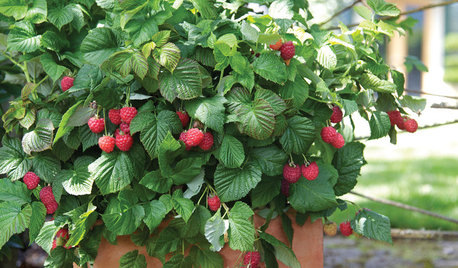
the plants for those would be in order to fill in every size to create a canopy, so here is my idea: In the front, depending on how much I want to really water these and how much clay is in the soil i choose, I'm thinking Strawberries and kinnikinik on the ground, raspberries in the front circle but maybe service berries to hug the tree? I thought about seaberries, but they get to big, need better deeper soil than whats there, and more sun/heat. PLUS I have learned to enjoy plants that fruit multiple times a year, so when we have wet springs like this one we don't loose all of that sector's crop.
behind the front "EDGE" plants would either be strawberry trees, edible varieties of mountain ash, or maybe paw paws but i already have those.
in the back depending on spacing I was thinking blue huckleberries, or maybe a fall yellow raspberry that will recieve more sun as it lowers below the tree branches as they will be lower down the hill too.
I have a lot of money to throw at this project,so give me ideas for plants and maybe edge hedge row design links or information. otherwise Imma just dig swale 'ditches' and redirect every inch of that hill to funnel into a planter cedar staked bed and make as efficient of a layout as possible.
just to let you know there will be an array of other plants in the ground cover mix, everything from clovers, vetch, to poppies and nasturtiums. I need ideas for low-impact vineing plants
2nd project:
The farm down the road is downsizing their blueberry crop, so im going to buy it up!
I have another hill, actually just next to the previously mentioned one, this one I would like ot tier down. is it ignorant to put blueberries on the same cedar stakes tier system, that gets roughly 85% sun. I sure have enough fire wood but was thinking about doing a string of pines in the very back next to where the forest starts. I'm a firm believer in keeping your needs close, so i plant alfalfa next to all my fields, so might as well have some pine trees jetting up next to blueberries, right? it's next to a gravel road anyways so wouldn't kill off much.
There's a lot to take in from wha ti have just typed, but here should be some good pictures of half the 'test' garden i designed, and how successful it was. to give you the details, I made the walls of eat bed by mounding up the dirt i the center, putting in cedar stakes, then with JUST alder sapling limbs, i just laid bundle ontop of bundle going from left to right laying it down opposite. This is designed to accommidate a sprinkler in 1/3 turn roughly, worked really well. I only watered the garden twice this summer yet it grew at the same rate as what i water daily in the field. I weeded it once and due to the density and clover there was only thistle and nightshade. PLUS the whole thing that made it work was clover, I put red clover in the higher back of the bed, and white in the southern front. I was finding mushrooms growing out of the bed walls in the end of july without watering it in weeks.
{{gwi:1141740}}
{{gwi:1141741}}
{{gwi:1141742}}
those are june pictures too, so everything is BEEFED up, it's nice to walk on fresh clover that falls a foot and a half, even going through my 2'5" wide paths on my belly is a mind kick.
So help a farmer out, if you have simple SHAPES for designs, or ideas on EDGES and how to MAXIMIZE the edge potential of food output, also a list of plants that thrive on the edges of thickets, LET ME KNOW. I can make anything I want and need your insight to come up with a finished project.
So thanks for your time, hope you enjoyed reading.
Russell
ps.www.tomorrowgardens.org





billy_b
Eyesaque
Related Professionals
Ashburn Landscape Architects & Landscape Designers · Middle River Landscape Architects & Landscape Designers · Springfield Landscape Contractors · Westwood Landscape Contractors · Coeur d'Alene Landscape Contractors · Doctor Phillips Landscape Contractors · Farmington Landscape Contractors · Galt Landscape Contractors · Hilton Head Island Landscape Contractors · Woodbury Landscape Contractors · 07920 Landscape Contractors · Woodbridge Siding & Exteriors · Prunedale Solar Energy Systems · Rialto Solar Energy Systems · Alum Rock Solar Energy Systemslyvia
GGGF