




|
| Hi All,
I searched the forums and didn't find an answer to my question, so hoping someone can help. Several of my plants (peppers, summer squash, tomatoes, etc.) are suffering from verticillium wilt. I can find tons of info on management and control, but what I can't seem to find is exactly what I should do now, being that it is only mid-July and I have yet to harvest much at all. Do I pull all my plants that show symptoms (probably 60-70% of what I am growing) to prevent spread, or should I let them go and try to harvest what I can from them? I will definitely pull if necessary, just trying to avoid if possible since it will mean a very, very small harvest this year. I chose to grow all heirlooms, and am paying for it with their lack of disease tolerance! What would you do? |
Follow-Up Postings:
|
| If indeed your plants have verticillium wilt the problem has already contaminated the soil and can stay virulent for years. I would probably let it go and salvage what I could, then consider lengthy crop rotations to something else or to another area for a while. hortster |
|
| I'm sorry, but that seldom occurs in a home garden. To begin with, we need images. Also, we need the details of what you did to prep the soil, or are they in containers? If the latter, what did you fill the pots with? And we need details of how the plants looked whwen the problem began, |
|
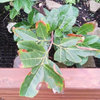
| Thanks for the replies. I will try to get some images up later today. Jean, I will do the best I can... I have plants in containers at home, as well as a community garden plot - both w/the same symptoms. The plants in containers are surprisingly worse. Everything was started at home from seed and looked healthy until about 3 weeks ago when leaf tips start browning in a v-like shape which then spreads upward. Leaves yellow one at a time, before wilting and dying. Lower leaves first. Plants have been fed with fish & kelp at 1bsp each per gallon every couple weeks or so. Also mulched with a 2" layer of composted horse manure. Planting mix was a 50/50 mix of Dr. Earth Organic potting soil (http://www.drearth.com/products/organic-soils/) and Master Nursery Gardener's Gold soil mix (http://www.masternursery.com/masternursery.cfm?Action=ViewDetails&Ite mID=261&Category=1). Plants watered on as as-needed basis -- when soil is no longer damp, they receive water. Watered at base of plant, not from the top. I am in northern NJ. Temperatures have been variable -- from hot and humid to cool and wet. Symptoms began in late June, a little cooler and generally wetter than it is now. Also, plants were all inoculated with a soil-drench of mycorrizhae (MycoGrow) at transplant, in addition to Actinovate - using soil-drench method. Plants are also foliar-sprayed with Actinovate and Exel LG every 10 days or so at lowest recommended strengths for disease prevention (this was all started prior to symptom development). Also, I should note that I am not an incredibly experienced gardener by any means, but I am not a novice either. All the methods I have described above have been used in prior years successfully with no problems and high production from what I have grown. For whatever that is worth. |
|
| siberian2, here is a good paper on verticillium wilt of vegetables with some good pictures. It may help you determine if your plants have the disease or if you might look for some other cause(s). hortster |
Here is a link that might be useful: Verticillium wilt of vegetables
|
| Thanks hortster. What is described in that paper sounds consistent with exactly what I am experiencing in my plants. |
|
| It would be unusual for both sites -- one in the ground, the other in containers -- to have verticillium. For container plants, much more likely is a water shortage. Also possible for garden plants especially when the temps are high and/or humidity is low -- the soil may be adequately moist but the roots can't supply the water to the tops fast enough. Also, what are other plots in the community garden doing? Same problems as yours? Or some similar and some fine. So please post pictures of of both sites -- that is if a tomato in community plot, also a tomato in a pot. And we need overall of each plant as well as a close-up. May be easiest to use an online storage site if you have it. |
|
| jean, thanks again for the response. I am pretty certain this is more than a watering issue, but I have managed to get some photos up if you can spare a few moments to take a look. Anyone's thoughts are much appreciated. I put a lot of work into the garden this year (don't we always!), so this has been quite disheartening for me. Photos of my plants are up at the link below titled "Siberian's Plants". In case that doesn't work, here is the permalink: http://s1239.photobucket.com/albums/ff508/Siberian22/ |
Here is a link that might be useful: Siberian's plants
|
| The images in horster's link re verticillium don't appear to me to be the same as your symptoms. Because your plants appear as if short of water, I believe the problem is underground. You might sacrifice one plant to determine what's going on. |
|
| Thanks. I could be wrong but, I have to say with the recent rain we have had, I find it hard to believe this is a water shortage problem. Also, the v-shaped browning of the leaves (which happened at the earlier stages, not a much now which explains why it was not in all the pictures) points to an illness. You may be right, so I will dig up a plant or two to see what I can find out. I know for sure I am watering enough, the problem would be with the plant itself in its ability to use that water. I don't know if there is anything I can even do to help fix that, but I will start with looking at the roots. |
|
| siberian, You said "I have to say with the recent rain we have had, I find it hard to believe this is a water shortage problem. " I understand. But consider that, if the root system is damaged or lacking, the top will wilt in spite of rain and sufficiently moist soil. And yes, we need to see the roots because we can get clues as to what may be happening there. |
|
| My water testing tool is a long, skinny screwdriver that I use as a soil probe. After a little trial and error to determine resistance in both wet and dry soils, your soils being different in pots and the ground, it is a handy device to determine to what depth the soil is moist. Having said that, if there has been root system damage for some other reason the soil can be moist but the plants may not be drawing enough water, so jean is correct in sugesting digging one or two up to take a look. Do a little "probing" as well. And to clarify, in my original post the reason that I stated "...if indeed your plants have verticillium wilt..." is because it would be unusual to have it in both locations unless the plant material and/or seed source was contaminated in the first place. There can be a number of other things that affect root systems - nematodes, high mineral salt concentrations, other fungal diseases, etc. Yes, pictures of the roots, please! hortster |
Please Note: Only registered members are able to post messages to this forum. If you are a member, please log in. If you aren't yet a member, join now!
Return to the Garden Clinic Forum
Instructions
- You must be a registered member and logged in to post messages on our forums.
- Posting is a two-step process. Once you have composed your message, you will be taken to the preview page. You will then have a chance to review the contents and make changes.
- After posting your message, you may need to refresh the forum page in order to see it.
- It is illegal to post copyrighted material without the owner's consent.
- HTML codes are allowed in the message field only.
- No advertising is allowed in any of the forums.
- If you would like to practice posting or uploading photos, please visit our Test forum.
- If you need assistance, please Contact Us and we will be happy to help.