
Return to the Woodlands Forum
| Post a Follow-Up
Shortia (Oconee Bells)
| | |
Posted by janie Z6 (My Page) on Sat, Jun 4, 05 at 8:15
| Does anyone have a reliable mail order/web order source? TIA. |

Follow-Up Postings:
RE: Shortia (Oconee Bells)
| | |
I have obtained them from 2 sources in the past and have been very satisfied with both. eco_gardens@msn.com(Don Jacobs, Decatur, GA) - Shortia galacifolia (Oconee Bells) Bovees.com (Bovees Nursery, Portland, OR) Shortia galacifolia (Oconee Bells) and Shortia uniflora (Japan Bells) BTW, Voles love them(Voice of experience!) Rb |
RE: Shortia (Oconee Bells)
| | |
- Posted by KWoods Cold z7 Long Is (My Page) on
Mon, Jun 6, 05 at 11:00
RE: Shortia (Oconee Bells)
| | |
| Razorback, can ya tell me what voles are and when is the best time to plant the shortia or is voles a varmint that will eat them up? Should I bother? They look so beautiful and also do you know if they stay green all spring and summer? |
RE: Shortia (Oconee Bells)
| | |
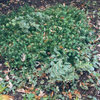
Voles are small critters that are often called Field Mice, but are members of the Lemming Family, not the Mus Family. They differ in appearance from a mouse by having a long pointed nose. They only eat the underground portions of plants; roots, rhizomes, psudobulbs, etc. and tunnel down near the crown of the plant by digging a small hole about the size of a quarter, There is usually no evidence, such as spoil, and since they seek cover under the foliage or mulch, the first sign of damage is wilted plants that soon die. Their natural predators are Hawks, Owls, and of course, cats, that deposit their carcass on your steps as evidence that they are on the job! Voles do not ordinarilly travel in full view of their predators, but tunnel through or under mulch or ground covers. To foil their free lunch, use a strip of hardware cloth(small metal mesh) anout 8-10" wide, installed vertically, 3-4" in the soil, 5-6' above ground, completely encircling the plant(s). In my experience, they will not climb over or tunnel under that. You will also need to protect new plantings from gray squirrels that will dig in any freshly disturbed soil, looking for seed & nuts buried by their relatives! I use a 1" mesh wire(chicken wire) to protect them until the soil has settled, after that they don't bother them. Oconee Bells are evergreen and the foliage turns a burgundy color during the winter, with flowers appearing in the spring. It is recommended that they be planted on a shaded slope, for drainage, but have seen them growing in the floodplain of a creek. Hope this helps Rb |
|
|
|
|