

100,000 Buckthorns to kill
I thought I would open this subject on my system for killing Buckthorn here in Mn. I have been working on my 3 acre plot for 5 years now trying to kill it all. There were about 50 large trees and many more small shrubs when I started. Cutting down the trees and shrubs opened up the canopy and subsequently, the plants suckered with 50 times more plants and the dormant seeds in the ground added thousandns more. So, my system now is to use strong doses of 2-4-d. I can get 65% 2-4-d at Fleet Farm for about $16/gal. Using a strength around 2%, I get the new growth in April and May before the native plants come up. This pretty well kills the new growth and most of the plant.
So, along with pulling by hand, digging with shovel, and dousing with 2-4-d, I estimate my total kill will be around 100,000 plants by the time I'm done(another 5 years, maybe).




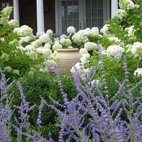


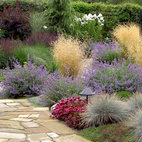
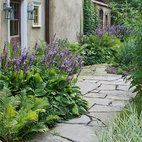


Thought I'd post photo of our west slope naturalscape taken from upper deck. Strive to eradicate thistle, Creeping Charlie, garlic mustard, common mullein while spot spray to keep vetch, leafy spurge, milkweed, etc. confined vs. spreading into the fescue. Yes, this year we're allowing fescue to self-seed before mowing. (Buckthorn belt at base of the slope out of range. We've cut down and stump-treated females while leaving males standing to provide weed and wildlife barrier.)
Update to my post from June 6th: From a distance, it looks like my spraying efforts from this spring were very effective. However when you look up close, particularly in areas that were carpeted by buckthorn seedlings, many of the seedlings are still alive. They are not actively growing, but they don't look dead either. I'm thinking another mass spraying is going to be needed this fall.
Very definitely more spraying needed. It's the seeds waiting for the opportunity to germinate that cause so much grief with this species. I believe the seed bank can be viable for , oh, maybe 50 years or so??? That's why I gave the title of this post as I was expecting 100,000 new seedlings to eventually appear. I wonder if there is any data on this plant's seed life time. i think if I were younger I would be looking at 50 years of effort on one plot of land.
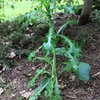
This post is timely in that yesterday spouse chainsawed overgrown thorny black honeylocust and female buckthorn tagged last fall that we did not get to. Cut BT at chest height and applied glyphosate, knowing we'd stump cut and treat again in autumn. Weed control requiring much less herbicide as fescue flourishing, loving recent rains. Since it's ALWAYS something now dealing with Japanese beetle outbreak in backyard. Anyone have experience using Bayer Advanced Complete Insect Killer? Soaked down offending grass two days ago but blades beetle-covered again. Perhaps takes time to be effective? Also can anyone identify these swaying-trunked volunteer trees growing like crazy in some places BT removed?
Does anyone know if the cut and glyphosate method works with seedlings, or should I just wait until fall and carpet bomb them with 2,4-D? Some of the woods is getting so thick that it is hard to walk. I'm still finding a few 1" type trees that I missed last year, and will be taking the lopper and buckthorn blaster to them over the summer.
On another front, the effort on wild parsnips seems to be working. I only found a few on Saturday in my 1/4 mile of ditch, but the neighbor across the street has just let his grow, and now there is almost nothing else there. Frustrating, because I'll have to deal with his seeds. My daughter just tangled with it in her own yard, and wound up at the doctor today with the burn blisters.
According to Minnetonka DNR, 2% glyphosate works for foliar spray of seedlings. I've been experiencing success using my 'standard Creeping Charlie mix': 1% Triclopyr-4 / 1% 2,4-D / 0.5% surfactant / Bayer Advanced All-in-One Lawn Weed & Crabgrass Killer concentrate diluted 0.4 cup to one gallon water. Mix allows me to be ready for most anything (except sedge of course) while safely allowing fescue growth.
I just rely on 2-4-d to treat anything with a broad leaf and doesn't leave a burn mark behind.
terrineff, I've seen those ditch trees many times in the past but I can't recall just what they are. One of the tree specialists on here should know., And, what do you have against sedge?
Nothing against native Pennsylvania sedge but rather invasive yellow nutsedge. Slope seeded with no-mow fescue literally choked out until I discovered Sedgehammer to kill its nasty rhizomes. Yes, had to reseed. Still a battle but significantly less present.
terrineff, the tree looks to be Box Elder (acer negundo), hard to say. Opposite leaves are typical of all members or the Maple family. The leaves in your picture are not fully developed, at close look the one maple leaf looks to actually be 3 leaves. That makes me say Box Elder, that and what I can see of the branches.
wait a week or two and give us a better picture.
To klunker: Thanks for your reply. Photo below from same species in different location. Tree is rapid growing and we definitely have box elder seedlings intermingled with BT seedlings. Better than BT though another 'junk' tree apparently.
New BT control method? Argh!
In a related matter notice round dead patch in foreground fescue caused by drift from glyphosate sprayer. I've been using atop clumps of reed canary grass, an extremely problematic invader this year. Has anyone found an applicator that would quickly apply glyphosate to individual blades to avoid collateral fescue kill?
Hi, Terrineff. As it turns out, just two days ago I picked one up. It is a foam dispenser from GreenShootsOnline. You mix glyphosate with water and a little bit of their foam additive, pump it up, and it lays a small blob of foam (with a blue dye indicator) right where you want it.
It seemed a little expensive, but I can say that it is very well made, and looks to be well worth the price as a good durable device. It holds about a quart of fluid. John, the owner and designer of the product, is located here in St. Paul, is a very nice guy, and really knows his stuff. He is fighting his own buckthorn battle at his lake place, and uses the foam dispenser along with the "frill" method that you have mentioned here, and also with cut and treat, laying a blob of foam around the cambium. Looks to be a good way to go with buckthorn. He has videos online doing these things.
https://www.greenshootsonline.com/collections/foam-herbicide-dispensers
I got the large version, and will be using it tonight to thin out the stiff goldenrod that took over my prairie grass planting in the back yard.
Another thing that I have used in the yard is a Weed Wand, from here: http://www.amleo.com/weed-wand-magic-applicator/p/WWA/ It is a cane with a valved sponge applicator on the tip. I've used it with glyphosate and dye to dab on some of the tougher ground hugging weeds in the yard. Currently experimenting with Charlie, but that stuff is tough. It leaves about a 1" diameter spot of glyphosate. This is similar to a Buckthorn Blaster or art marker, but with about a 3 ft cane which serves as a large reservoir. Also a good guy, with great customer service.
Both are different tools, and I'm glad that I have both.
Bill
Quick status update... after getting off of work this evening, I went through the prairie grass area in the back yard with the GreenShoots sprayer, and put a couple of blobs of glyphosate foam on every goldenrod that I could find. It worked like a dream, producing a rich lather that stuck to the leaves and stem. The blue dye is highly visible in the foam, so it was really easy to see what was done, and what needed to be. 32 ounces of foam goes a long way! I mixed 32 ounces, and might have gone through 12.
Then, I went through the mowed grass and hit the creeping charlie to test in that application. While I don't know if anything short of dynamite can knock off charlie, it was really easy to control where the blobs of glyphosate foam went.
One word of caution... it is fun to use, and easy to get carried away. I'd recommend walking into the bed of weeds. then walk out backwards, foaming behind you. Otherwise, you can paint yourself into a corner, having to walk through blobs of blue foam on the way out. Don't ask me how I know this! ;)
Bill, thanks, will order Greenshoots sprayers. Assume BT Blaster blue dye works as colorant. Own lifetime supply of Alligare Surface^ nonionic surfactant so will try in place of Blue Foaming Agent. On related note, do you think Weed Wand Magic Applicator would be great tool for killing low sprouting Oxeye daisies?
Check my July 3, 2017 post detailing mix I've found virtually 100% successful vs. Creeping Charlie this season. (Love your final tip!)
I'd think that the greenshoots foamer would work better on the daisies, but I don't have any here. Use the little leaves on salads, first. I'll give your mix a shot. Have to order some triclopyr for the buckthorn season, when I get the darned RV back from the shop. The weed wand needs to be pressed against the ground.
Bayer product added to the elixir is what makes the combination so potent against C.C. Dead, dead, dead wherever sprayed w/ no ill effect to grasses. Regarding daisies, first year here didn't realize Oxeyes are non-native invasive weeds and I ignored slope infestation. No doubt will be dealing with seed sprout forever.
Just a comment about the Reed Canary Grass: In my own controlled environment, I would burn off all the dead grass residue/detritus in early Spring where the RCG was present. Then, a few weeks later, only the bad grass would emerge from the bare ground and at about 6 inches in height, would nail with Roundup/glyphosate. This would turn out to be about 95% effective the first year.
Note:If you choose this method, do NOT let the fire get out of control. Don't ask.
Thanks Too Bill, I'm going to try the Greenshoots sprayer on small elm, mulberry, box elder and aspen seedlings in a grass area. I have been hitting these trees with spray of glyphosate but as typical I end up with small dead zones. This looks like a really good solution. Every time I take a walk out to inspect the flowers I'll take along the sprayer.
Also I'm going to go buckthorn hunting in my woods. fortunately I have very few buckthorn. But I may also hit some of the honeysuckle that is more common.
Thanks for the tips on the reed canary grass, Dandy-Line. I have a bunch of that and want to get rid of it to replant with a short prairie grass mix. I wonder about somehow mowing and raking it up, then burning the stubble with a torch. It would be awful to have one get out of control.
Yes-that sounds like a good plan. In my case, the area was too large to be able to manage it that way. But, the roundup is the cure all, and early enough in Spring to not affect the later emerging natives.
First report: GreenShoots foam pump vs buckthorn seedlings and saplings
Yesterday, I walked through the woods and foamed maybe a thousand or more seedlings and saplings. I used about a 50% mix of glyphosate and water, with about half of the recommended amount of blue foaming agent. I was able to selectively put a blob of foam on the seedlings and multiple blobs on the saplings, without any collateral damage. One nice thing about the foam blobs, is that if I did hot something by mistake, I was able to just pluck the mistakenly treated leaf, so that I am confident it did not damage the plant. On areas that were thick with seedlings, I pumped up the pressure higher and shot blobs of foam over the bunch of them. The blobs stuck to the leaves, and did not run off onto the other plants in the area.
GreenShoots made for me a longer than usual discharge tube so that I did not have to bend over to apply the foam. The tubing is high density polyethylene, and had a curl to it. I might try to slip a metal tube over it to stiffen it up a little, so that it can have more horizontal reach.
It will be a few weeks before I can report the effectiveness of the herbicide, but based on a buckthorn sapling that I found in my yard a few weeks ago and hit with the same mix with the Dawn foaming dish soap pump, I think they will turn brown.
A question for some of you pros... maybe wisconsitom... has anyone tried a mix of 2,4-D and glyphosate? From what I understand, they work in opposite ways - the 2,4-D stimulates uncontrolled growth, and the glyphosate stops the production of a protein required for growth. Maybe the plant dies of confusion. Or, maybe it is just me that is confused.
Yes, dedicated one sprayer exclusively to glyphosate + 2,4-D elixir. Use in areas where not currently anticipating desirable fescue migration such as slopes cleared for construction that fall outside required silt fence. Kill rate is excellent. Looking forward to attacking RCG with GreenShoots!
All of my buckthorn removal from last winter resulted in six large brush piles that i am going to be burning in place soon, along with a bunch of pines and spruces i removed and cut up the last couple months (all of which were choked out by the buckthorn). Question is, what should I do with all the ash? Would it be advantageous to spread it around the post-buckthorn bare ground (which will be planted with grass/wildflower seed next spring) or should I just dispose of it in the trash? Based on past experience I expect to have 3-500 pounds of ash (dry) when all is said and done.
There have to be a lot of nutrients in the ash, minerals that will be excellent fertilizer on your grounds.
A beefy thread indeed!
We own 3 1/2 acres of BT in Grant, MN. Also interested in eradicating.
Inviting comments on several non-chemical approaches:
Look forward to learning your experience and thoughts.
If they are very small, pulling them will work. Bigger ones can be pulled as well, but you will need a Bobcat or something. Cutting them multiplies your problem. Tools like the weed wrench might work on smaller ones if you try after a good rain when the soil is soft, but for me the stems just broke off. The "Buckthorn Baggie" approach might work if you have just a few, I have not tried vinegar. I have doubts.
This stuff is very tenacious. It re-sprouts from the root, and where there was one, there are now 10.
Maybe, try a very minimalist approach. Cut the buckthorn, and using a sponge-tip applicator or a foam pump, dab full strength glyphosate to the cambium layer. Using a sponge tip applicator like a Buckthorn Blaster, (basically the size of a roll-on deodorant bottle) you can work all day and not use it up. Put some dye in it, though, so you can make sure that you don't miss any. Be careful what you read about glyphosate. It is really pretty benign.
Why are you guys killing the goldenrod? I have a patch of multiflora rose and Japanese honey suckle that I chopped down in the spring, then cut again in the summer, and the tall goldenrod is actually filling in and outcompeting it now, and other native vines like rubus, Virginia creeper, and grape are moving back in. It seems like the goldenrod will help with getting rid of the invasive species.
In my experience it comes down to pick your poison. I too have 'used' Canadian goldenrod to choke out noxious invasives such as Canadian thistle and garlic mustard but CG is aggressive, spreading into fescue rather than the inverse desired outcome. I have found 2,4-D quite successfully allows fescue coverage migration; over time my plan is for smaller and smaller CG patches to exist.
Yes, I'm getting geared up for minimalism as I write this. Just bought a good pair of ARS pruners, hand saw, and holsters http://www.wood-avenue.com/default.asp. I have my buckthorn blaster https://landscape-restoration.com/ already but bought a holster for it as well. Hoping to pull and do "cut stump" to address up to 3-4" diameter saplings on about an acre where there are still natives around that I'd like to preserve. Am thinking about 1st pass pulling, 2nd pass two handed "cut stump", buckthorn blaster in my left, pruner or saw in my right. Go to town.
Larger trunks will require a chain saw but I'm not sure if I should move directly to the saw or use a brush cutter for the next largest stage before moving to the chain saw for the thickest pieces. Any suggestions? As mentioned above, the problem with these, is that one is constantly slowed down by having to swap out the equipment for the buckthorn blaster and vice versa.
I also have a couple of acres that I cleared 6-7 years ago and regretfully just left thereafter. It's just a solid sea of saplings now about head height. Too much to be done by hand and apparently, too tall to spray. Would you agree?
I'm thinking about mowing them next spring with a brush mower. I hear you bill_g_wisconsin(Zone 3) about the resprouting but I think I need to get the height down. Would you agree?
A bobcat is an idea but it would upset the soil and I'm afraid to think what that may mean. Besides, I'd think it would take multiple attempts. I'm thinking about $5k to buy the mower but the bobcat sounds multiple times more expensive and don't think I can afford it.
Most experienced people I know advise against the weed wrench. They say it's not worth the soil disruption. There are probably too many saplings for the baggies. Agreed?
My neighbor has sheep and said he'd buy some extra to graze but there won't be enough for the whole area so we'll have to partition the space for them. I know goats would be better but they're a lot to handle and relatively expensive to rent. He's used the sheep on his property and they seem effective. Any thoughts?
I think the most practical and effective removal approach would be to foliar spray the remainder unaddressed by the sheep the following fall or spring but my wife, a natural health care physician, and the same neighbor who has a decent sized organic vegetable garden near by are having big problems with the idea of broadcasting chemicals. It also pains me to think of all the little things that I will cause to suffer not to mention environmental upset and absorption by humans so I'm desperately trying to find a reasonable alternative.
What would happen if I just kept mowing one or two times a year? Or maybe a mow/graze cycle over a few years? Would the BT die off in time? Alternatively, the vinegar or some other natural product would be great if it worked. Apparently, its used in gardening but I haven't seen anything about it related to BT yet. Has anyone?
More to the minimalist approach, there are products like the Sideswipe Pro http://sideswipeinc.com/ and others which are to spraying like the buckthorn blaster is to "cut stump". I don't know if it would be practical to do 2-3 acres with one of these though. Any thoughts?
@ skip1909(6b New Jersey). the area of my yard that is planted in prairie grass is used as a buffer for the river bank. I wanted varieties with deep roots, to prevent the loss due to erosion. The seed blend that I got had stiff goldenrod, which became a monoculture in areas. It choked out all other varieties of plants. Further, the root system of stiff goldenrod is very shallow, defeating the purpose of the prairie grass planting. That is why I am removing it.
@ Pat & Bill Brown, might I suggest an approach? Priority 1, right now, is find the buckthorn trees with berries, and kill them. Do it right now. Stop the seed production. For the last few years, I have been doing this with a backpack sprayer using a blend of triclopyr and diesel fuel (2 gallons diesel, 1/2 gallon triclopyr), applied to the bottom 18" of the trunk at very low pressure, to where the liquid is just dribbling out. There is very little overspray, and any overspray can be eliminated by wrapping a piece of cloth about 2" long around the nozzle and tie-wrapping it on. This has been virtually 100% effective for me, as long as the triclopyr is applied all the way around and all the way to the ground. I was easily able to kill 3000 larger buckthorn in a day this way, about 1500 per sprayer load. The small thickets that you talk about are very easy to treat en masse this way, especially with the reach of the wand. The small ones don't take much juice - just hold it against the trunk and let it dribble down the trunk. 3 weeks later, brown and crispy. If you are uneasy with diesel or kerosene, there are some vegetable oils that work, too. The idea is to get it to soak into the bark and stay there. Oil makes it stick. The water based stuff just beads up and rolls off. There is some merit to leaving them standing after they die to block light from the existing seed bank, giving the seeds some time to deteriorate rather than sprout. If the buckthorn is within a few feet of a desirable tree, I'd switch to cutting and treating the stump. No point in risking losing the other tree.
Stop at Home Depot, and pick up a 32" Fiskars geared bypass lopper. Make sure it is the geared one. That will easily lop a 2" buckthorn, then just dab around with the buckthorn blaster. (I carry it in my shirt pocket). Easy to walk through the woods that way, and you would be surprised how many you can do in a day. I cut at an angle so that there are more linear inches of cambium exposed to dab. Also, virtually 100% effective, and uses just a few drops of glyphosate per tree.
John, from GreenShoots, suggests lopping the buckthorn at about 3 or 4 ft high, and treating up there. One thing that I have noticed is that the roots rot fairly quickly, and I can grab a 2" tree after a year and a half and break it off at the ground and pull it out. The high cutting might facilitate that well because of the leverage that it gives you. Also, for an old fart like me, there is some merit to not bending over all the time. John, and terrineff here, also suggest a method they call frill cutting (I think) where you whack at the bark near the base with a machete, and foam the cut area with glyphosate. Just a minimal amount is used, and it doesn't get anywhere other than where you blob it.
Give some of these a try, and I don't think you will feel like you have to be spraying all over.
Bill in MN with 40 acres in Wisconsin to deal with.
Thanks for your thoughts bill_g_wisconsin(Zone 3)!
I think that's right, I should get the productive females now to stop them from depositing another year's worth seeds onto the soil. Do you know approximately when they start to become viable in a woodland?
Re: saplings and smaller: I was initially thinking loppers and I've see Fiskars ratchet tools but I was talked into pruners and the high tech saw instead. I'll have to experiment but thanks for the tip!
3000 buckthorn a day is impressive efficiency.
I suppose the backpack sprayer and cloth idea is akin to the Sideswipe Pro approach except you get to carry more herbicide per refill and you're carrying the weight more easily on your back than with your arms. It seems a better application method for larger areas.
I guess I hadn't thought much about the environmental effects of the carrier. I kind of blew this question off thinking the herbicide mixed with it far more toxic but I suppose the herbicide may be more targeted. I need to learn more about this. Having only applied to cut stumps in the past, I used bark oil but that is also expensive. What are the environmental effects of diesel fuel? Which vegetable oils work?
Would you not admit, however, that basil bark treatment uses more herbicide than cut stump application? Only needing to address 3 1/2 acres instead of 40 with sensitive parties involved, this could make the difference.
Take care not to let that buckthorn blaster leak through your shirt! I bought a nylon holster hoping it will protect my skin but neoprene, plastic, or leather would probably be safer.
I just had a pro from one of the area's largest and most established restoration companies over here for a preliminary visit a couple of hours ago. He says the triclopyr in Garlon4 is the only herbicide to use. For any application, direct or spray. Hard to argue with your 100% kill rate but he says his glyphosate kill rates are much lower (98% vs 50%) and glyphosate is more broad spectrum so overspray is more damaging. If I wanted an herbicide different than the triclopyr in Garlon4, they wouldn't take the work. I heard the same from a conservation district staffer a few weeks ago but then again I had another pro, albeit more of a solo operation, say he only uses glyphosate. He hadn't heard of the off brand triclopyrs which should be worth further research. For spray, they mix Garlon4 with water and a surfactant.
I've read that cutting the stumps low leads to better kill rates but if kill rates aren't a problem, I've also seen cuts done at waist height. I'm with you on reducing the bending which is considerable in this project. It does make it easy to remove the stumps but still, that's another step. I guess one must decide whether one is comfortable leaving 3-4' stumps in the ground and possibly removing them or lower stumps without removal. Granted removal after a year or two isn't difficult but given the large numbers, doesn't that second pass for removal still amount to a lot of work?
Do you really get much shade from your dead buckthorn?
Where you at in WI? My wife is from Chippewa.
To Browns: LIsten to Bill_G. Wise man with extensive knowledge.. He absolutely nailed killing all females is #1 priority. Doing so at this point in their growing cycle I'd chainsaw or lop at chest/ waist height and stump treat. Ideally Oct-Nov you cut low and retreat. After seeing occasional resprout using glyphosate alone I've gone to glyphosate + Allegare Triclopyr-4 + surfactant in water 'elixir'. BTW, what is your ecosystem objective once BT contained (if you retain some males) or eradicated?
To terrineff: I hadn't really considered leaving the males but perhaps I should. We will need some under story trees. Doesn't it increase risk of future problems?
To bill_g_wisconsin(Zone 3): Would you mind including a photo of your backpack sprayer with cloth wrapping when you get a chance?
I hadn't considered keeping the males but I will need some under story. Won't the males increase the risk of future problems?
You would rather recut and treat than remove the stumps of previously treated females? Apparently, bill_g_wisonsin did not need to retreat. Rather his stumps would die and, after time, with a little effort, he would remove them. Why do you think you need to retreat?
bill_g_wisconsin(Zone 3) Would you mind including a photo of your backpack sprayer with cloth wrapped tip when you get a chance?
Has anyone tried just hinge cutting without chemicals? If so, please share results. My neighbor did on a couple of lots but then had his goats and sheep graze on them. It worked. Wonder what would happen with hinge cuts without the grazing.
Here's the theory: The plant starves while unsuccessfully continuing to feed and repair it's crown but is too damaged to survive. In the meantime, it neglects putting energy into new shoots.
In my experience, retaining select males does not cause single problem, simply an occasional trimming to maintain desired shape / height. In our wetland buffer zone males provide dappled shade that inhibits weeds and has allowed native ferns, mosses, and Pennsylvania sedge to prosper. Along east slope of our property which abuts County 61 Hwy /Shady Oak 'inherited' BT & black honeylocust provide lovely -- and sound muffling -- tree wall barrier. Please think through your eradication plan before clear cutting.
Useful BT flyers written by our city arborist (caveat in my experience is use Triclopyr + glyphosate combo to prevent resprouting = yet more chemicals);
http://eminnetonka.com/images/naturalresources/CHEM%20control%20of%20BTH%20Feb2016.pdf
http://eminnetonka.com/images/naturalresources/2015%20Buckth%20Workshop%20for%20Residents%20Sept.pdf
To Browns: "Even goats have their limits, however. Either they will have to come back again and again to kill off re-sprouting plants, or Minnetonka will have to use chemical treatments." [Note: quote from our city arborist -- her .pdfs cited above.]
http://www.startribune.com/minnetonka-is-the-latest-city-to-enlist-goats-to-clear-invasive-plants-in-parks/381834721/
LA's Getty Center gave up on use of goats to maintain the property's steep slopes after finding goats stripping away all vegetation caused unintended soil erosion issues.
To Browns: Read the materials I've posted written by Minnetonka's city arborist. This is the wrong time of year to kill BT trees as growth is directed upward into leaf production, not transporting nutrients --and herbicide-- down to the roots for over-wintering. Hence cut down and treat females now, destroy seed-containing branches, and expect to cut/ retreat mid-Oct to March/April, depending on temperatures.
@ Pat & Bill Brown I was not referring to the Fiskars ratchet lopper, I was mentioning the geared lopper - a different thing. The ratchet might be OK, I haven't tried it, but I can absolutely vouch for the 32" handle, geared model. It will easily take a 2" tree in one stroke.
I'll try to put the cloth on the sprayer tonight to take a pic. I don't usually use it that way, but have used it some. It does not cover the end of the nozzle, but rather, wraps around it overhanging by an inch or two, letting the nozzle shoot through the open middle.
To Bill_G: My understanding is if you 'Follow' me, I could message. Thanks.
@ terrineff - following now..
This might be an interesting read for some of us. A guy located near Hugo, MN took on a heavily infested 70 acres, and has the buckthorn under control. He used the basal bark method. One thing that I noticed is that his triclopyr blend was half of the strength that I used. Wondering if anyone else here uses that blend. I like the idea of stretching the triclopyr further, and will start mixing it to 1 quart triclopyr to 2 gallons of diesel and see how that flies.
https://eastmetrowater.areavoices.com/2016/12/19/farmer-in-may-township-wages-war-on-buckthorn-and-wins/
Thanks for posting, Bill. Haven't wanted to mess with diesel so no basal bark experience. As you indicated earlier, I have used Triclopyr-4 + glyphosate + surfactant for frill treatment on steep wooded areas where stump cutting impractical. I do like his technique of working sections biannually.
I couldn't do it alone without the basal bark method, terrineff. With cut and treat and the brush cutter, I could do a few hundred trees in a day, but the bigger ones were tough because of the saw blade diameter. With basal bark, those big ones took no longer than smaller ones, the lugging through the woods was easier with a backpack than with a big brush cutter, and when I was up to two sprayer loads, maybe 3000 - 3600 buckthorn killed per day. I don't think the oil hurts anything, and it really makes it wet to the bark. No beading off.
To Bill_G: Fortunately we have neither the density of BT trees nor acreage that you do (3+ acres of our property is pond). Spouse very skeptical of my abilities vis a vis diesel so I'm content with aqueous mix cut stump treatment. Spouse's fall project is to push farther away from the house killing any females encircling the pond.
Just for an experiment, terrineff, pick one buckthorn, maybe a 2 incher. Make yourself a little mix of triclopyr and Mazola in a small container. Paint the stem of one with a paintbrush, from about 18" up, all the way to the ground. It will take 3 or 4 weeks if it is going to work, but see what happens. I haven't tried Mazola yet, but can't think of why it wouldn't work.
Bill_g, I like the idea that an 8:1 ration triclopyr to oil should be sufficient. A fellow I met from Little Falls, said he was using a 2% solution triclopyr and that worked for him. He has a couple of 160 acre woods full of BT and at $100/gallon, he needed to conserve. I told him about the $70/gal I buy on Amazon.
My next effort will be using the lower percentage.
bill_g Good to know Fiskars geared lopper is a helpful tool.
A neighbor of mine recommended kerosene for stump cutting as sort of a compromise carrier; relatively cheap and relatively clean. Anyone think this a good idea?
Kerosene is also known as #1 diesel, except that the diesel version for road use has had most of the sulfur removed, and has about a 15% bio component, so it is probably cleaner. On the other hand, you pay road tax on the diesel.
From DOW on individual plant treatments with triplocyr: http://msdssearch.dow.com/PublishedLiteratureDAS/dh_0949/0901b803809493c6.pdf?filepath=ivm/pdfs/noreg/010-51023.pdf&fromPage=GetDoc
bill_g_wisconsin(Zone 3) Be sure to report back on your experiment with 1:8 triplocyr.
Anyone have a recommendation for a dye marker to be mixed with oils and triplocyr4? I was just about to use a bottle of "Mark-It-Blue" only to discover it's for use with water based solutions.
Personally I'd do test run using Mark-It but Alligare's Super Marking Dye claims to mix easily with any ingredient. [I use Alligare's Triclopyr-4 and surfactant products] http://www.alligarellc.com/alligare_super_marking_dye.php
I've used Mark-It, and usually use Turf Mark Blue because I like the larger bottle and measuring system. https://www.amazon.com/Turf-Mark-Blue/dp/B003ORSXR8/ref=sr_1_3?ie=UTF8&qid=1502131556&sr=8-3&keywords=turf+mark+blue
They mix, but I think I've seen some of the blue settle to the bottom of the tank. I shake my back to mix it back up.
Neither stayed visible on the trunks for more than a few days unless there was moss growing on the trunk, then I could see the color in the moss.
I'll try the Alligare product next time. Thanks, terrineff. I'm looking for something that will keep my hands blue for months. ;)
I too own Mark-It, not Alligare's dye product. Can anyone identify this late season weed with very shallow roots? Plot erupted where BT removed in wetlands buffer.
@ terrineff, I have a bunch of it, too, and have also been curious.
Maybe it's Cacalia suaveoleans. I made the mistake of seeding it once and now have trouble trying to control it.
See if it looks like this.
https://www.prairiemoon.com/cacalia-suaveolens-sweet-indian-plantain-prairie-moon-nursery.html
Otherwise, post it up on the Name that plant forum.
terrineff, my guess would be dame's rocket. Leaves look like it, but seems like there are too many leaves.
Not Dame's Rocket, does not flower. I also don't recall Cacalia-esque flowers last year. Thanks for suggesting forum question post which I will do.
More on Dyes:
Mark-It-Blue: Company tech support says not for use with oil based mixtures, only water.
Alligare Super Marking Dye: Company tech support says will work with bark oil but does not mix with diesel oil. They also sell a bark oil/dye premix.
I didn't find any other dyes that said they mixed with oils so I figured Alligare my best bet for use with triplocyr4 and bought some.
bill_g_wisconsin(Zone 3): Someone said in one forum he was using a 1:9 ratio of triplocyr and diesel fuel for basal bark application. fyi
Need Application Advice
Best application approach to areas where there a a lot of saplings, 3-4' high, dense but not dense enough to make broadcast necessary given other plants in area?
One pro said he would "spot-spray" another said he would use "cut-stump" but it seems to me spot-spray would involve a lot of over spray but cut-stump would be quite time consuming. Not yet having used basil bark treatment, it would seem to me that the trunks are too thin.
Those PVC/wick type hockey stick applicators are like spot spraying without the over spray. Are they not? I haven't seen much info on their use, however. How must the application be made - touch some leaves? how many leaves? Use the spray dilution ratios? Triplocyr4 still the best choice? All said and done, is it really any easier or quicker than cut-stump?
How would you approach this application?
Where are all the berries?
I actually started to get my hands dirty yesterday for the first time in some years attacking berry producing females as advised above. One thing that surprised me was that berry production is only in higher sun areas. There are no berries in my woods. Will they just arrive later or is this aspect of the work smaller than I feared?
Garlon4 vs. Alligare Triplocyr4
Garlon4 contains no petroleum distillates for more friendly environmental impact per DOW. Alligare Triplocyr4 does per Alligare rep. fyi
Canola Oil can be used to dilute triplocyr
per one user on web. My concern is how well it will penetrate.
My estimate is just wait as relatively early for berry production. Spouse recently chainsawed/ lopped females tagged last fall he didn't get to -- only way we knew female were those tags. As I mentioned, Oct-Nov he will cut to stump height and retreat (at least they're not fruiting). First year as we tackled backyard perimeter along our pond discovered what we term "The Mother of All Buckthorns". Appeared as if ancient Van Gogh-esque gnarled European olive tree.
I found one of those mother's too. I was cutting saplings for hours then I saw it. Took my breath away. Am going to visit it with a chain saw momentarily.
Some of these sun blessed berries around the property are pretty ripe, i.e. not too early to cut down but I guess I need to check periodically around the property for late bloomers.
Spouse had to tackle ours in multiple sections. As located in wetland buffer zone used Shore-Klear Plus aquatic glyphosate (18%) which successfully killed, no regrowth. Keep in mind fall /winter herbicide application is most effective time.
To Bill_G and dandy_line: Thanks for Houzz Name That Plant Forum suggestion. Believe responder from U.K. nailed it as American Burnweed. MN's invasive plant list reports present in Hennepin County. Interesting info:
http://extension.psu.edu/plants/crops/news/2014/07/weed-of-the-week-2013-american-burnweed
There were many of those big, gnarly beasts up to maybe 6-8" diameter at my place. Underneath them is the mother of all seed banks. Basal bark spraying killed the gnarly beasts 100%, though. They are all still standing from a few years ago, but they are dead, with no new shoots.If it was a multi-trunk hydra, I used a little more pressure to get the middle wet. Killed it just fine, too. Hit all the shoots, it will be brown in 3 weeks. With this method, they become just as dead in the spring as they do in the fall. If I whack them in the spring, there are no berries to worry about. In the late fall when the leaves were gone, I accidentally cut down a couple of wild plums with similar looking bark, so I like to do it when the leaves are on.
I cut down a clump of smaller ones with plenty of green berries this weekend, and foamed the stump ends. Berries are definitely out. I bagged the berries, along with the seeds from the two wild parsnips that I found.
I don't have the budget for Garlon brand, Pat & Bill Brown. I'm mixing it with diesel fuel, so adding my own petroleum distillates. ;] Go for the Garlon if you want. I've had to buy probably 25-30 gallons so far, and at the price they get for the name brand, I can't afford it.
Thanks for the ID. Here, "fireweed" is a whole different thing, a beautiful pink flower, just finishing its blooms.. The burnweed is not an invasive, according to Minnesota Wildflowers. Interestingly, one of the comments was that it showed up after clearing buckthorn. The leaves are actually tasty. Glad it is not garlic mustard!
https://www.minnesotawildflowers.info/flower/pilewort
To Bill_G. What I'm finding on Internet indicates another battle to fight. If left unchecked will spread from current wetland buffer location into the fescue and due to its late sprout date, pre-emergents ineffective for prevention. "It is absent or uncommon in intact,high-quality prairie fen systems." Guess we know we're not dealing with high-quality prairie systems at this point....
I don't want to exaggerate but believe our "MOABT" diameter was 18-24". MN DNR claims BT seeds remain viable for up to 5 years in soil so there is hope!
Whether to Leave Male BT in Place?
from my district conservation office:
"I would not leave the male plants unless you are really trying to prioritize. The leaves of buckthorn are known to be very high in nitrogen and can alter nutrient cycling. They are also known to be allelopathic (give off chemical compounds that prevent or deter other species from growing)."
fyi
Pick your poison, et. al.
Anyone know where to buy Garlon4 in quantities less than 2 1/2 gallons?
I buy Triclopyr 4 on Amazon for around $70 a gallon, shipped. I think it should be cheaper than that but this is the best I've found.
The brand name Garlon 4 only comes in 2.5 and 30 gallon sizes, per the Dow website: http://www.dowagro.com/en-us/vm/products/garlon-4-ultra
I looked around the net for info ion Garlon 4 contents. Found this which supposedly is from Dow chemical. Shows it contains petroleum distillates.
Re: Petrochemcial Distillates in Garlon 4 Ultra (current version)?
Yes, DOW promotes the absence of petrochemicals on their product page but I also found a MSDS sheet that listed kerosene as a primary dilutant which raised the same question. Here is the response from our local DOW rep:
"As I mentioned, there are no petroleum distillates used in Garlon 4 Ultra.
Instead, a methylated seed oil is used as a solvent. ".
She says I showed her an old MSDS sheet. It would seem that this was at least one of the changes made in the new and improved "Ultra" formula.
Here is the component excerpt from the Garlon 4 Ultra sheet:
Of course, this leaves a big "other" category accounting for nearly 40% of the product which it seems you're just supposed to take DOW's word for.
Re: Wick Application in Lieu of Spot Spraying
Anyone have any experience with this?
Do you broadcast spray? If so, is it possible to be specific about when?
I found that I got really good kill rates on new leaf growth in the month of May. It is early enough that most native forbs are still dormant and the new BT leaves are soaking up the herbicide.
Is good to know May is crunch time, I haven't sprayed in spring yet. I still stand by my late October spraying. And will spray in October again this fall. You can't time the market, but you can time the buckthorn spraying.
Good to know. Do you have a good history of total kill in the fall with foliar spray?
Fall foliar spray killed the buckthorn pretty well for me, but the ground became pretty much of a wasteland, with things just now starting to grow back in two years later. Burnweed, motherwort, more buckthorn, etc. At least it is easy to find the buckthorn now. Luckily, no sign of garlic mustard.
To Bill_G: Our experience is similar. Consider motherwort 'good' weed, pulled or sprayed burnweed could access. Today's project glyphosate blade-treat RCG, quackgrass, even few clumping ornamental grasses that popped up in the fescue. City seeded along Shady Oak boulevard in spring but drop-and-pray is no plan -- I've controlled the ragweed and trefoils but barnyard grass winning vs. fescue.
On a positive note, cranberry bush viburnums and three conifers planted by county ~2010 on slope west of Shady Oak experiencing explosive growth since I cleared encircling weeds last year. That slope was land of garlic mustard, Oxeye daisy, Canadian thistle, common mullein. Now primarily goldenrod or migrated fescue.
Motherwort is an invasive alien, that is destroying native woodlands across the continent. Are you for, or against the environment? I just have to ask, as you have grown tansy before as well. Hope you aren't encouraging others to grow these plants.
Re: Spraying
Seasonality - Both pros I spoke with spray in the fall. Unfortunately, I neglected to ask why. I'm thinking one benefit would be to allow more time for chemical to erode before the natives want to come back to life. DOW says the half life on Garlon4 Ultra is 30-45 days. I haven't looked at glyphosate. Anyone know?
Whether to Spray? - 2 years before natives return after spraying seems terrible to me and not what one would think given the above half life. What was your spray mix and ratios? How has this effected your decision to spray vs. treating the basil bark? Can you be specific about what point you resort to spot spraying (if you do it) and to broadcast spraying?
To Jay 6a: After four hours of partially back-breaking work (oh, ankles covered in burs somehow during my final pass too) pulling weeds on --in some areas 45' slope --yesterday literally laughed out loud at your conjecture. Recent rains promoted seed sprout of garlic mustard, ragweed, Oxeyes, burnweed, common mullein, Creeping Charlie, leafy splurge, etc., not to mention huge RCG issue in areas cleared by the city but not maintained for decades prior to us purchasing the undeveloped property in 2014. In my experience, one motherwort appears for every thousand or more garlic mustard plants. Hence gladly accept a few M. As to tansy, unknowingly purchased as nursery stock 7-8 years ago from central MN nursery now out of business so guess in the end 'they got theirs'.
Never even heard of buckthorn prior to moving here but go ahead and berate the many, many hours plus expenses we've dedicated to reclaiming MN naturalscape.
To Browns: From my August 3rd post, Page 1.
http://eminnetonka.com/images/naturalresources/CHEM%20control%20of%20BTH%20Feb2016.pdf
While getting discouraged that the weeds are winning on west slope yesterday, I stumbled onto weed-free patch of young yellow nutsedge. Am I crazy to consider leaving it untouched, actually encourage its spread, to choke out broadleafs knowing it can be effectively contained via Sedgehammer? Thoughts welcome (spouse deferred to group wisdom). :)
Re: Motherwort
Considered invasive by MN DNR
I know, gnomeabram and dandy_line identified 11/8/16 photo I posted. Agree with dandy_line only mildly invasive, certainly VERY minor player in our weed fields. Don't know what type of property you're reclaiming but outside of viburnum shrubs, 3 conifers, and narrow strip of seeded fescue every plant we 'inherited' is classified as noxious invasive weed. Hence my mantra, pick your poison. To that philosophy I'm now going to add Rome wasn't built in a day!
2 years before natives return after spraying seems terrible to me
I can believe this would happen when dealing with a thick copse of BT where sunlight had been shut out for many years. The natives wouldn't be very prevalent in that situation.
I saw natives coming back in the same year after spraying in the Spring. A few years later the woods was mostly recovered. Each situation is going to be different. This is not a simple process and can take many years to resolve.
Every alien plant that is currently wreaking havoc, was at some point in the past, rare and uncommon over here. Isn't it better to stay on the side of caution. Dandy, after ten years, how many of the 100,000 buckthorns are there still left to kill? If the situation seems humanly impossible to control, perhaps you could plant some native buckthorns so they can be incorporated into the gene pool of new generations. Just thought I would mention that some carriers charge for pdf file downloads, so if anyone puts on a link to a pdf could you please let us know beforehand.
About an acre of land on my property is established deciduous and conifer trees that had an under story of buckthorn. Now that the buckthorn is gone, I have a shaded moonscape instead of an under story. Budget for restoration is quite small. I was thinking of planting orchardgrass seed in these areas along with shade-tolerant wildflower seeds next spring, but my main goal is to prevent a weed infestation and worry more about natives later. Is this a sound plan? I don't expect any natives to return on their own since the land is part of a subdivided farm field.
Garlon4 Breakdown and Replanting
This from our DOW rep:
"These herbicides break down in many different ways – by light
exposure, saturated soils, microbial activity in soil and soil temperatures.
When the soil is frozen, there is little to no soil activity therefore the
herbicide is breaking down slower in those cold temperatures than it would in the summer when the soil temps are higher."
And DOW's advice to farmers but possibly somewhat relevant to weed busters:
"I would wait no shorter than 65 days to come back and plant a broadleaf crop. Before planting a broadleaf crop, I would highly recommend a soil bioassay test to be done."
(these are graphic files not .pdfs. I don't think houzz accepts .pdfs)
Gnomeabram, I don't know much about orchard grass, but my concern would be whether or not the grass would overtake and outcompete the wildflowers after some time. It's very interesting, and I want to read more on the subject. I would suggest you get more info on it too. Many restored prairies get overwhelmed with grasses because there are no browsers to keep the grasses in check these days.
I haven't done this, but should give it a shot - find a seed mix of trilliums, etc., flowers and plants that grow in the shade under trees, and scatter them sparsely. Eventually, they should fill in.
Thanks for the replies. I forgot to mention that, unfortunately, the area in question is surrounded on two sides by adjoining properties which are full of buckthorn right up to the property line. My fear is that if I don't immediately blanket this area with something like a grass it's just going to be consumed by buckthorn seedlings in a couple years. I do have plans for seeding trilliums and the like in other areas, but fear woodland plants would be doomed to fail in this kind of setting.
The damned stuff seems to come up everywhere. As I was going through the tall prairie plantings on my own property this summer thinning out the goldenrod, sure enough, there were 4 buckthorns. I have no idea where they came from, but they didn't care that they were growing in very thick, tall stuff. I've got them staked out now for the glyphosate foam blob experiment.
To bill_g: Currently running my own glyphosate foam blob experiment on small section RCG. Snapped some stems and applied onto sheath tip, others along leaf blades or at nodes. Foamer did not perform fully up to my expectation but if this works, much superior to the collateral damage from spraying. But unfortunately, much more time consuming.
Re: neighbors. I've pretty much eliminated burdock from our property but found sea of it under tree canopy of adjoining property to the south. In June sprayed his garlic mustard along the sidewalk and burdock down the slope. Checked yesterday, GM gone but second round of burdock. Sprayed again plus ragweed zone the county owns abutting our lot (i.e., Hwy 61 boulevard) but does not maintain. :(
To gnomeabram: Likely you're familiar with Prairie Nursery (where we procured our no-mow fescue seed). They sell "24 seed mixes inspired by native plant communities, using a balance of flowers & grasses". Website also indicates custom mixes available.
http://www.prairienursery.com/store/seed-mixes/page/1?_url=seed-mixes/&_page=2
Thanks terrineff, I had been looking at my options for restoration, and with those prices I'll probably end up doing this in phases. My current thinking is to plant a 10-15 ft strip of mowed fescue at all of the property lines and save the natives for the interior areas. I noticed another property in the neighborhood doing this and it looks nice and seems to be keeping neighboring invasives from creeping back in. Still a lot of cleanup to do this fall before I can plant anything. This pic shows one of the property lines I'm dealing with.
You could look for an untouched, natural woodland edge, that has a large variety of nice natives, and grasses, or sedges, or rushes. Then try to copy it .
Wow, does that look clean! So as not to search the blog, mind if I ask how long you've been tackling BT removal with concurrent invasive weed control?
I've been dabbling in it on and off since 2008. Eventually I concluded that approach wasn't working, and that a once nice property was becoming an overgrown wasteland. I got an echo brush cutter last year and clear cut everything. I've done two 20+ gallon sprayings of glyphosate/24d in spring with a third (hopefully last) coming in September.
Came to my attention I'd forgotten small section of desirable wildflowers near watershed district's drainage pipe. Apparently seeded by county after clearing out BT to provide maintenance access. (Post-bloom bergamot and milkweed.)
gnomeabram , which blades have you found to work the best on your Echo? I've tried a few, and lately have been using the kind with chainsaw teeth.
Bill, I've had really good luck with the Renegade 80-tooth carbide tipped blades sold on Amazon. Two of them got me through the entire winter. Just watch out, the teeth tend to fly off if you hit rocks, barbed wire, etc. I've never tried the chainsaw teeth versions. I use the stock blade for cutting stumps flush to the ground when i'm making trails for the mower...the original has many miles on it and still going strong.
gnomeabram, I've been liking the chainsaw tooth version. They obviously leave a bigger kerf so less binding. One problem, they only seem to come in 9" and 7". My Echo is 8". The 7" is probably the better choice, because of the grab of those big teeth. I've been gingerly using the 9", because of some of the larger diameter buckthorn to have to cut through. I have used the Renegade, and liked them. I bought a combo pack with an 80 tooth and a 32 tooth. The 32 worked better on the larger BT, and the 80 was great on the smaller ones.
I was dealing mostly with saplings under a half inch, so binding wasn't really an issue. The renegade is like a hot knife through butter. Anything I thought would require more than 2 or 3 swipes I passed over and came back later with my chainsaw. I like to deal with the larger stump separately anyways to be sure they get a good drink of glyphosate.
You are right. A hot knife through butter is a good description. My only trouble with the brush cutter was that it was too much fun, and working alone, I cut down too many at a time to be able to find all the stumps to feed that glyphosate to them. Found them the next year, though. :(
Day two of spouse cutting/ lopping swath of female BT hiding in plain sight along east perimeter. What we thought a fortuitous green screen between house and Hwy 61 will be decimated. Retreat stump project for October.
Read RCG is so aggressive it can choke out cattails. Surveyed our pond; sure enough that has happened along fully sun-exposed shore. Anyone had experience hiring professionals to eradicate aquatic RCG? [BTW, no feedback re: retaining yellow nutsedge as broadleaf deterrent so Sedgehammer wins the day.]
terrineff, That Reed Canary Grass is overwhelming but can be controlled. if you can remove all the RCG duff in the fall, or spring, then it is easy to see the new growth come up in April, before anything else comes out of hibernation. That's the time to nail it with Glyphosate(Roundup). I found that it needs to be done for a few years but can be eradicated that way.
Since the topic of buckthorn happily diverted to other ecological agrarian issues in this thread, this past summer. I decided to drop a couple of prairie photos to help myself feel better about myself and my buckthorn plight. Not that I own a camera, nor would claim to be a photographer but I do own a new fangled camera phone that I use for amusement. I eagerly await attacking the buckthorn mid-October with a chemical mixture and backpack pump sprayer after not having touched buckthorn for a year. (Oh to be deprived!) Believe it or not, October is just around the corner. Getting mentally prepared is vitally important, akin to going into battle against a bitter enemy. Amazingly, leaves on the trees are starting to turn already for reasons unbeknownst to me? Perhaps the shortening days are going to my head? Nevertheless, we need an official buckthorn battle cry and here is one to ponder...."I SEE THE LIGHT BEYOND THE BUCKTHORN!"..........Thanks for the release. Alas, I feel much better.
That is beautiful. I'm hoping the sunny parts of my yard look like that in a couple years, I'm planting nearly all the same wildflowers and grasses!
Thanks! Ours is in its 5th season. Don't get discouraged in the first couple of years. If you spot treat the thistle, pull invasives and burn each spring it will come. Well worth every bit of the work. Seeing the pollinators and creatures in their habitat is awesome. Soon though my attention will turn to the woods and the buckthorn.
A B, and anyone else, what is a safe way to burn? Some of mine is in desperate need, and I'm afraid of setting off the entire neighborhood.
Like you, I took a little break from the buckthorn. Well, it rained just about every time I went to my property. Tomorrow, I'll spend some time walking around with the lopper and Buckthorn Blaster. The last few weeks, I found about a dozen ten-footers full of seeds, that I missed when they were smaller. There must be a bunch of them that grew like weeds. Under the MOABs (mother of all buckthorns) there are some solid seedbank sprouts to spray, as well. It was good to have a little break and work on the thistle and the parsnips. Those have been massively cut back now.
Bill, I would check into if you have any non-profit organizations in your area dedicated to maintaining native prairies. There is one in my area who helps prairie owners burn their prairies in the spring. My prairie is about 2 acres and they can do it with a small crew plus me. They bring the equipment, water bladders, fire snuffers, drip torches, etc. I usually have all the fire breaks mown, then the weather has to be good. They bring a weather monitor to check wind speed and humidity. We usually burn into a light breeze and of course set a back burn. Usually only takes about 20 minutes. It does get hot but has never gotten away from us. I also have a hydrant on my property and a lot of garden hose. I call my neighbors and local fire dept. before hand so everyone knows what is going on. What I am told in establishing a prairie, a burn every year for the first 5 years and a burn once every 5 years thereafter. Sometimes only a partial burn is necessary.
A B, thanks. There does seem to be an organization favoring native prairie, the Andover Pollinator Awareness Project. I've written an email to them, and am awaiting a response. Hopefully, they can point me in the right direction. For my property in Wisconsin, which has a lot more that needs burning, I'll try the DNR. Maybe they can steer me to some help there.
AB, love to hear about some of the things you've noticed with the annual burning. Have any issues with small trees? or is it mainly to keep noxious weeds at bay? Which weeds does burning keep at bay?
I planted about 5/8 of an acre last fall and this summer its been weed central. I've mowed it 3 times this summer. I am not a impatient guy, I've planted thousands of trees, but to say this prairie planting looks dismal is an understatement.
I've got about 2 acres to plant this fall and i'm hoping for better results.
also how did you prep you area for planting? Herbicide? tilling?
Klunker, fire does seem to keep the noxious weeds at bay. After a burn in April, the earth is blacken down to almost the soil. I think this gives the native plants a jump start because the warmth from the sun is absorbed by the black ash. Also, the biomass from the previous growing season is burned off to open up the plants to more sun light. It seems the root systems of the native prairie plants are much deeper than noxious weeds, so are more adapted to survive a burn. It is plausible that the ash adds nutrients to the soil to become more beneficial to the natives. Some of the native seed cracks open from the heat of the burn to encourage sprout and I also wonder if the noxious seed bank is destroyed in the burn? I have noticed that thistle still pops after a burn, but it is very easy to see and spot treat with herbicide. The prairie is easy to walk as the plants are just starting to surface. It is my understanding the burn also inhibits the woody plants and will burn off saplings, wild grape vines and others. To prep, we made sure no chemicals were sprayed on our land two years prior to planting the prairie and we did a dormant seeding in winter just before the first snow. We broadcast seeded and dragged it into what was left of the previous season corn field. The first year the prairie looked dismal but turned the corner in it's second season with a mass of Black eyed Susan. Every year brings something new and there is always an issue to rear it's head. "They" say it gets easier after the 5th season, but I am somewhat skeptical. Hope that answers some of your questions.
One time, Ron Bowman, the founder of Prairie Restoration was a speaker at an engineering function that I attended. He explained that the native prairie grasses that we have evolved with regular fires. A few of those fires were naturally started, but most were set because bison collected when the fresh green plants came up after a burn, making them easier to hunt. The trouble with setting a fire like that was that there was no way to put it out, so they would be moved along with the wind and burn for days. He said that a typical area would burn every few years.
Did I read right, that thistle roots go down 16 feet? Maybe it is easy for them to survive a fire that way. I'm having pretty good luck with the thistle with a couple of blobs of foamed glyphosate on them.
One of the field techs from Prairie Restoration suggested to me once to establish the grasses first for a few years, and then put out the flowers. I just glyphosated about a half acre of canary grass yesterday, and will probably try to reestablish with grasses first. When I have put out seed mixes, it was hard for me to tell what was weeds and what was not initially. Maybe, with grasses first, it won't be as tough, and 2,4-D might be helpful initially. Has anyone else had any experience that way?
To klunker: What exactly did you plant?
To Bill_G: Initial weed control attempt I sprayed 2,4-D test area on Hwy 61 slope. Thank goodness limited area as didn't know to dilute its 63.7% concentration (love that obfuscated labeling). Denuded everything but over time the fescue migrated and now dense, only requires spot spraying for Oxeyes.
RCG horse of another color. Treated clumps where willing to accept collateral damage via sprayer, ongoing process treating individual RCG using foam dispenser (thanks for recommendation). My application technique has improved but it's a time-consuming (and on 45' slope, back-breaking) process. Afraid I don't see any other alternative where fescue already established.
To A B: Wish I could provide backstory on section of our property some entity cleared of BT and obviously broadcast-seeded wildflower mix (see 8/13/17 photo). Outside minor clearing to be done at water's edge area remains virtually BT and weed free. Discovered gorgeous blue-purple flowers last week, first time they've appeared, so there is hope for prairie reclamation over time.
On side note, Tom and I walked the neighborhoods surrounding Shady Oak Lake. Disappointed to see fields of untreated Creeping Charlie and groves of female BT. And an unknowing couple (executed teardown /rebuild) nurturing 3' ragweed as specimen plant in center of their lawn. Very next day young person walking by declared our yard "Awful!" to her companions. Well, I no longer take it personally. Actually progress has been heartening in light of what we 'inherited'. Persevere. Coping mantra? "Rome was not built in a day".
P.S. Fun to post while spouse out chainsawing female BT....
Went up to the lake this weekend with full intentions of taking the backpack sprayer out loaded with 2,4-D, to spot spray the zillions of buckthorn seedlings. Sure enough, I brought everything I needed except the 2,4-D. I grabbed a bottle of glyphosate by mistake. That is why I hit the reed canary grass the way I did. There were also some spots full of next years' parsnip bolts, so nailed them while I was at it. Then, took the loppers and sponge tip applicator out and found a few dozen buckthorn stragglers. All the big ones in the area i walked are dead, so it is maintenance mode there now. The larger areas in the back of the property are going to be a lot of work with maintenance. While I bought a gallon of triclopyr, maybe it won't be necessary this year. We'll see.
While I was out with the lopper, I tried hand pulling some of the buckthorn sprouts. Some came out good, others were pretty wiry and I could not get them out of the ground. A tool like a long handled geared lopper but with an oversized pliers head would make pulling the seedlings much easier. I wonder if there is something like that available.
The pin cherries are pretty easy to spot now, as are the plumbs. Maybe they will do better with the buckthorn out of their way. The biggest concentration of 1" type buckthorn that I had previously missed was tight around a beautiful 16" diameter black cherry. I'm glad that I missed the buckthorns there earlier, otherwise I might have lost that cherry to triclopyr.
terreniff,
I used this
https://www.prairiemoon.com/grand-diversity-mixed-height-prairie-seed-mix.html
seed mix from prairie moon, had a good showing of black-eyed susan, hard to find anything other than weeds. planted it in the late fall. in fact before we finished the snow was flying covering the already broadcasted seeds.
AB, thanks for the reply, no chemicals used for 2 years? I can't imagine a corn field with no herbicides and no weeds.
Sorry, just going by the best of my recollection. Prep was over 5 years ago so it is a bit of a blur. Instead of writing "no chemicals", I should have wrought, "no pre-emergents, and only non-residuals". Sorry I can't recall specifics but I do recall having the conversation. (No, I'm not a politician:) Anyway, whatever the farmer used or didn't use, we had positive results. Something to think about if you are transitioning from a corn field to a prairie.
This weekend I experimented with making a small buckthorn puller for the little ones. It worked great on the first one, but the wooden handle broke on the second buckthorn. I replaced it with a fiberglass sledgehammer handle, and now waiting for the epoxy to harden to give it another go.
Other than that, the lawn terrorist, Charlie Bin Creepin, has all but taken over the back yard. I tried a mix of Trimec and Triclopyr to see how it does. Probably have to hit it one more time in a couple of weeks, and will know next spring if it worked.
Next weekend, will head up to the lake. Buckthorn should be pretty visible.
bill_g_wisconsin(Zone 3
Will the weedwand you mention above work with triclopyr?
Pat & Bill Brown, the manufacturer is pretty responsive. That would be a good question to ask him. He would probably want to know if you are using the water or oil based triclopyr, and if it is oil based, what kind of oil you will be mixing it with.
Otherwise, they aren't all that expensive to try with. If you are using oil based mix, maybe dump any excess into a jar when you are done and save for next time, rather than trust the valve.
Glad to see new additions to BT thread. Last week when temp 70' sprayed saplings near perimeters of the yard and slope areas where BT females no longer present. With other fall yard work to accomplish, did not work my way into the ~20-25' wetland buffer zone formerly dense with BT brush and mature trees until Thursday. So disappointed to find great deal of resprouting at base of otherwise decaying 1" to 2" specimens cut to height of 2'-3' and treated with 18% glyphosate. From my notes seems it's now too cold for foliar treatment. Everyone, do I now need to wait until spring growth to treat? In your experience what % 2,4-D / Triclopyr 4 / glyphosate has proven lowest threshold which ensures eradication?
Driving through the neighborhood today, I can see clearly all of the buckthorn that my neighbors have. The neighbor with the biggest woods had a bunch last year, but I went through it with my triclopyr backpack, and I see almost none this year.
The "Grandpa's Weeder" modifications seemed to work to pull smaller buckthorn, so I ordered up some strong aluminum pieces to try making one from scratch. For anyone's information who might be interested, I bolted some small aluminum plates to a Grandpa's Weeder between the tines, and screwed a piece of 2x4 to the tail piece. Then, I removed the weak wooden handle, and epoxied a fiberglass sledge hammer handle in its place. Pulls the small ones, 1/4 to 3/8" diameter. Wow, do those things develop a set of roots!
I'm going for my 4th treatment at the Arboretum for this month. Still to do is a large stand of 2" small trees. Will use the chain saw and 2-4-d. Shouldn't take too much time to do.
I'm still using foliar spray on small ones that have such a small diameter stem.
terrineff, it appears that the original cutting at 2 to 3' must have been excessive hence the re-sprouting. I would think there's still time to do foliar spray using five to 10% 2-4-d.
To dandy_line: Thanks. With all our precipitation of late, find hand pulling saplings relatively quick work on slopes. Increased % glyphosate for recent cut & treats but believe adjunct herbicide essential going forward. Do you recommend 2,4-D over Triclopyr? Diluted to what % concentration if sole agent vs. in combination?
To terrineff: Regarding cut and treat, I use glyphosate ag strength straight up, except for a little blue marker dye. Cut them near the ground, dab heavily around the cambium. They do not come back. For foliar spraying, the Wisconsin DNR guys I have talked with recommend triclopyr, and I followed their recommendations, and tried triclopyr alone, and also mixed with 2,4-D (Crossbow brand). It definitely works. Be aware that it kills woody plants such as nice hardwood trees and other natives sprouts that might have already shed their leaves, so if you use triclopyr this way, be careful. I'm going back to Dandy_line's recommendation for stronger 2,4-D for foliar use because it will not kill the hardwoods or the upcoming, currently leafless, natives. Will still use triclopyr/diesel for basal bark applications if I need to, but next year will try a little lower concentration to save money.
It is going to be a cold and damp weekend in Wisconsin, but I'm going to try camping anyway, and try to take advantage of the buckthorn visibility with the other leaves down. If it is wet, I'll probably take out the backpack sprayer with triclopyr for the trunks, rather than spray 2,4-D. If it is dry, 2,4-D will get the nod. Then again, I might not feel like camping in the cold. Then again, there has been a whooping crane spotted in the area, and I'd sure like to get some photos, so it might be worth the long shiver in the sleeping bag. Maybe only 300 whooping cranes in the world. Decisions, decisions, decisions!
On another note, my bottle of Speedzone came in, and I sprayed 5 gallons of mix on the creeping charlie in the back yard. I hope it does something.
Progress in Minnetonka! Tom spent total of 14 hours last weekend and this chainsawing -- dropping branches and felling female trees -- then lopping brush. Views of our pond incredible vs. 2014. Many lessons learned. Uncertain if Facebook video clip posted by Tom generally accessible but here goes:
https://www.facebook.com/tom.stockert/videos/10207859622366725/
His accompanying comment: "Year four of brush removal...only four or five more years and we'll have it under control. Would not have been able to stand here last year let alone see the house."
Mixed 10% 2,4-D per dandy_line's advice to attack stump resprouts today. Thanks for all the wisdom mined from this blog, gang.
Terineff: Can't see the video without logging on to Facebook. Maybe you can try posting out on youtube? I for one would really like to see your progress.
Sharon and I spent about 16 hours attacking the stuff at the Arb this fall with very good results. They are very sensitive about one area that has their prized Showy Lady Slippers and this is the time of year that we can only be safely doing Buckthorn removal in that place. I used my chainsaw to remove a number of large-sized trees, and we only did open stump spraying. I'm anticipating seeing the results in future years.
Am cutting and stump treating an impenetrable buckthorn patch about 200x40’ of moderate sized trees probably averaging 2” in
diameter and 15’ tall, ranging small to 6". I’m left with one BIG pile of brush and would love advice on how to best dispose of it. Prairie Resto said they would cut, treat,
gather, and burn in this area if they were to do it but I didn't hire them. It’s a lot of debris to
move and I’m not sure what I’d gain by moving it. Can it be burned where it is?
Can I burn it myself? What do you advise for most efficient disposal?
See short video I made for you: https://youtu.be/2Ac_gOeBMdI
Can you just lop it and leave it? I know it is a big tangled mess, but that can be reduced quite a bit with a lopper. It seems to rot pretty quickly.
It may be worth lopping it to condense it some. I'd still like to burn it though and be rid of it.
This is the second time I've gone through my yard on a buckthorn cleanse. First time was about 10 years ago. I too thought that the buckthorn might have decayed but I'm finding a lot of carcasses out there. Not gone, unfortunately, just covered.
I have some spots where I pile it and know I can burn it safely. Usually don't make my burn piles much larger than a compact car. Also like the idea of leaving some nicely stacked brush piles for habitat for critters, usually in inconspicuous areas. Toyed with the idea of burning on a frozen pond, but not sure how the ash would affect the aquatic life? Just throwing that one out there.
I saw the video and am impressed with the amount of effort you put in. You have some large piles thereto get rid of. I see a bit of swamp grass there which will catch on fire if you're not careful, Once there is snow cover there won't be much of a problem with it getting out of control. The piles the way they are now will not burn well-they need to have larger concentrated mass in order to sustain the fire, so you may need to organize them into individual piles ,or else into one long continuous row.
I did a burn like that of a long row by waiting until the wind was just right so that it would feed the burn. Bur one must be careful not to set the woods on fire!
Wish I more tech-savvy -- tried to post pre-/post- property photos but unable to upload. Question: unwilling to accept bramble mess for multi-year process? Tom dedicated great deal of time and moreover effort to chipper/shredder work for two years. He now believes natural process of decay supersedes effort of cleanup. Though legally we could burn, not worth risk of spread/ unintended consequences. This fall he's concentrated on lopping downed wood as suggested by Bill_G. Coincidentally, while reordering BT Blaster spent time pursuing the website; their contention garlic mustard significantly more drastic threat than BT disturbing, no?
Yes terrineff, prospect of garlic mustard being more difficult to remove is disturbing. I'm fairly new to that battle. Am planning to burn alot of large buckthorn piles this winter. Local fire warden claims little risk with snow covered ground. Nor permit needed no matter the size if there are 3" or more of snow. fyi
Should One Cover Brush with Plastic?
This brings a question to mind. My fire warden and one or two others suggested covering the brush piles with a tarp to facilitate drying and eventual burning but I'd rather not if it wasn't necessary. Prepping these piles takes effort, the plastic sheeting is costing me $ hundreds, and we all know the planet doesn't need more of it. Does anyone have the experience to know whether I actually need to cover mature buckthorn cut in the late fall and early winter to be able to burn pile of it by the end of February?
To bill_g_wisconsin(Zone 3)
I just bought one of these Green Weeder and wondered whether it might help you with all your basil bark treatments. It seems like it should be a step up from a rag. Haven't used it yet but will keep you posted. Has anyone else used one?
Pat&Bill-it seems counter-intuitive to me that plastic would enable drying. Keeping the brush open to the air makes more sense.
I think that three months of drying is too short a time. However, if you time it just right where you have a brisk wind coming from the right direction, and snow cover to prevent serious wildfire, then it should burn down just right. The snow cover is essential because the pile will smolder for more than a few days after.
If you have some additional material to add to the pile, that would help also. At least at the start of the burn.
I always watch the future weather cast so that the wind direction and speed is just right. Then light it off and watch it burn.
dandy_line(3B (Northern, Mn))
To be clear, the plastic is just on top, the sides remain open. Many people around here, as well as myself, cover their fire wood stacks in this manner as well especially if they don't have a sunny spot for them. So, the idea is not completely foreign to me.
I take it you don't cover your brush piles then. How long do you dry them? Any particular time of year? What kind of wind speeds do you look for?
Forecasting wind direction is a bit tricky for me since many of my piles sit in a topographical depression but I will watch to see what I can do.
I would let mine dry a year or so. But it all depends on how much of an eyesore one can put up with. Brush piles have their benefits to the bird life too. Wind speeds ~10 mph. Like I said, it's tricky trying to avoid burning down the neighborhood. Late Spring when very dry is dangerous.
Chuckled reminiscing about our attempt to burn first year BT logs in newly purchased fire pit. Bust. Fortunately learned with current work encircling the pond to cut trees to ensure drop into marshy cattails rather than on land.
Re: garlic mustard. With the extended warm autumn discovered GM explosions in sunny to dappled areas heretofore untreated. Yes, glyphosate sprayed extensively during early November. Hopefully killed off that round of sprouts -- only 12+ years more seeds lie dormant.....
Sounds like we need a thread for garlic mustard.
I've been watching for garlic mustard in my 6 acre woods. Haven't see any yet, but another member of the mustard family raised it's ugly head last summer. I thought I had several nice new patches of Phlox throughout the woods, but this fall something didn't look right as the seed pods looked like garlic mustard and the leaves were elongated and green well into late fall. Turns out what I thought was Phlox is actually Dame's Rocket. Now I have another invasive on my list. I will attack by pulling when it blossoms, remove the plant material from the woods and dispose in the landfill. I'm concerned that there was a healthy seed bank left by last year's crop. Dame's Rocket is pretty to look at but from what I have read, is a nasty invasive in the mustard family that should not be left unattended.
I only burn in late summer. I find that any brush I cut through the end of May is ready to burn by the end of August. If there is grass growing around a brush pile I mow a 3 foot wide path around it all summer. As long as there hasn't been a drought, I can burn the brush pile in place without any worries, but still water it with a hose while burning to keep it from getting too hot.
It's easier to control the fire if the brush is placed in long narrow piles (10 ft wide at most) instead of a large circle. You light one end and let it it progress to the other end. I learned this the hard way last summer. I had a nice 20 ft diameter circular pile that I later threw a fallen cottonwood into. It went from a few embers to uncontrollable inferno with 30 ft high flames in about five minutes.
There's a guy a in my neighborhood who burns green brush year round, but he uses a ton of gasoline to do it.
@A B, I have Dame's Rocket too. Pulled some last fall, sprayed a little more, Also concerned about the seed bank.
Regarding burning green brush, gnomeabram, while I haven't done it in my woods in Wisconsin, I have at home. The key is having a hot base fire of dry wood, and throw it on a little at a time. I've done that with freshly dropped elm trees, knocked them down and completely burned them in a weekend. You can feed continuously, and it will take all you throw in, but don't smother it with a bunch all at once. With buckthorn, as twisty as it is, maybe best to use the lopper to reduce it down to single branches rather than a big, airy, tangled mess.
gnomeabram(SE Wisconsin 5B) - Am I correct to assume that neither you or your neighbor cover the tops of your piles to keep the rain off?
First I've heard of Dame's Rocket. To my knowledge have not spotted any here-- yet. Two informative articles, the first dating back to 2011 Michigan article "Public Enemy #2" [Note advice to beware wildflower seed mixes: Fuller said he often finds Dame’s Rocket seeds in the species mix of wildflowers offered for sale across the state. “Those ‘prairies in a can’ are wildflowers from somewhere, but not from the Midwest.”] and the second "Plants Gone Rogue" dated 2016.
http://www.mlive.com/news/kalamazoo/index.ssf/2011/06/public_enemy_no_2_invasive_dam.html
http://www.appliedeco.com/dames-rocket/
To Pat & Bill Brown: I just saw your message, for some reason I did not receive notifications on the last couple posts. Anyway, I never cover brush piles and have never seen anyone else around here do so. From my experience anything that is piled up by the end of May is ready to burn by the beginning of August with a week of dry weather.
I seeded my "prairie" in late December with the seeds the need stratification. I broadcast the grass seeds in the beginning of March hoping that frost seeding will work. I put "prairie" in quotes since I also planted 100 pounds of tall fescue. My goal is simply to avoid it becoming a weedy mess (don't have the $$$ for a true prairie establishment), if prairie plants actually grow over time that will be a plus. Will post photos if/when things germinate. So far conditions have been ideal for frost seeding, but germination is still a few weeks away.
Hi gnomeabram, Haven't been on this thread in awhile either. Seems to have gone quiet perhaps for the season. I've been fairly busy through some of the winter though. Check out my buckthorn piles:
There are 17 of them.
I mostly cut and stacked these in December. I forget who or where I heard it but someone advised me to cover them. Perhaps, so they'd dry quicker and be easier to burn later in winter before snow melt. Well, it didn't work. These piles still aren't burning well and need more nursing than they're worth. I'll probably just let them go until there is a few inches of next year's snow on the ground. They should burn then I figure. The advantage of burning in the snow is that if there is 3" or more on the ground, you don't need a burn permit. Otherwise, technically I would for these size piles. If I know it would take another season to cure, I would definitely have skipped the cost and hassle of the plastic sheeting.
It recently occurred to me that what I had previously been thinking about as a woods is actually a degraded savanna. A number of open grown oaks became a woods when they filled in with boxelder and buckthorn. So, recently I've been considering restoring the savanna and have temporarily moved on to felling boxelders and dead oak branches. There are a lot more piles yet to come.
Haven't really looked at replanting yet. What kind of $$$ were you looking at for the "true prairie establishment" you mention above? You've got me concerned.
Those piles are pretty small compared to the ones I make. We are in a semi-rural area, and generally don't have to be worried about burn permits (technically it's required here too, but I've never gotten one). I would think covering the piles would only trap moisture in. Getting the moisture to escape from inside the green wood takes the most time, and for the most part doesn't happen during the winter. If you wait until next winter to burn it probably would be advantageous to cover the dried wood before it snows next fall so that you can burn them with snow on the ground.
As for cost of prairie restoration, seed mixes cost upwards of $1200 per acre, plus the cost to prepare the soil. That's not something I'm in the position to do right now, but I've had luck in the past just sprinkling seed sparingly on the ground in the fall and winter and having wildflowers and grass fill in over time. The freeze-thaw cycle of early spring helps to work the seed into the ground supposedly. I'm hoping for a repeat of that, but on a much larger scale (1.5-2 acres worth vs a few hundred square feet in the past). I spent about $400 on wildflower and grass seed so far.
$1,200/acre, ouch!
Regarding the brush piles, when I have burned buckthorn, it has been in smaller piles, and it required me to lop it into smaller pieces, otherwise too much space around the fuel. A good pair of bypass loppers makes short work of it. I use the Fiskars geared loppers.
I had a 50' long pile of well dried downed wood and pine boughs a few years ago. I started at the down wind end and worked my way up by dowsing it with kerosene/fuel oil in spots. If i had started on the up wind end, it would have created a conflagration that would have brought out the fire dept.
bill_g_wisconsin(Zone 3) I agree about there being too much space between the wood, at least in its current flammability status. I have used loppers on the top and I've jumped up and down on all of them. Someone advised running a chainsaw through the piles but I've been hesitant to try that. If you were to lop more thoroughly, would you do it as is or would you pull the piles apart, lop and rebuild? Frankly, I'm hoping if I leave it alone and come back next fall when the wood is drier that it won't be a problem. Your thoughts?
dandy_line(3B (Northern, Mn)) Based upon your report, it doesn't seem spacing was problem at time of burning. What did you do, if anything, to compact your piles?
To gnomeabram: With as miserable a 'spring' upper Midwest experiencing, would tall fescue seeding work if disseminated once forecast devoid of snowfall?
Pat & Bill Brown, I haven't burned a lot of buckthorn, but when I have, it was my opinion that the fuel density wasn't high enough to support combustion. Those darned branches are so tangled up. I lopped and lopped, until it was greatly reduced. Then, I scooped it up and threw it in the fire pit. I'd probably rebuild the pile next to where you have it now. Use your best scouting skills to build it in a way that it will burn. Kindling on the bottom, plenty of good dry trunk wood for fuel for the main fire, and you may wind up standing by it throwing smaller twigs on top as you lop them. It has been my experience that with a decent fire with enough fuel, it will take the twigs and slash as fast as you can lop them and throw them in a good open flame.
Tom's considering strategic BT bramble lightening rod placement. :)
terrineff: I sure hope so! We've had a lot of days above freezing and nights below freezing since I broadcast the seed on March 2nd, which has resulted in a lot of frost heave at the surface. We got a few inches of snow the day after I broadcast, but only about a half an inch of precip the rest of the month. I'm contemplating putting down another 50 pounds of tall fescue or perennial rye once ideal germination conditions appear imminent. The ground is completely bare so seed/soil contact isn't an issue.
What brand tall fescue did you purchase? Upon researching seems would be excellent option for our naturalscape slopes.
Based on price only, I bought DLF K31 from Tractor Supply: https://www.tractorsupply.com/tsc/product/dlf-kentucky-31-tall-fescue-50-lb?rfk=1
Hey bill_g_wisconsin(Zone 3), I purchased those Fiskars ratchet loppers you recommended but the anvil variety for breaking down brush to burn. Am quite happy I did. Worth the $50 and more to me. Thanks much for the useful tip!!
Avoid using glyphosate and related products:
for french reader, glyphosate has a deep impact on your health and your pet's health: http://www.infosglyphosate.com/category/risques-sanitaires/
but hopefully there are alternative ways to get rid off weeds:
for pros: https://youtu.be/Cn5S9TiDcBI
and https://positivr.fr/desherbant-eau-chaude-alternative-glyphosate/
for private gardenners:
http://www.infosglyphosate.com/les-desherbeurs-thermiques-une-alternative-ecologique-au-glyphosate/
God bless you
Hey, Pat & Bill Brown... you had mentioned trying the "Green Weeder" https://www.smuckermfg.net/green-weeder-product-page Did you have any luck with that? Does anybody know of something similar, only with two pads that press together? I've got so many seedlings that are probably too thin to get wet by brushing a single pad against them, but if I could grab between two pads, I could make some pretty good tracks. Tried pulling seedlings today, and they kicked my butt.
Edit: Might have found exactly what I was looking for. https://www.mipn.org/clampertool/
Hey bill_g_wisconsin(Zone 3), Yes, I like the green-weeder. You have a lot of control over flow rate with the wand. For little ones, I'd have it just short of dripping and I think it'd work though I hadn't really used on that size much. Used more on 1/4 to 1/2" diameter stubs as a basal bark rub. I want them gone, so I cut them first with a brush cutter and had someone followed me with the green weeder attached to a backpack sprayer. I have analyzed closely but looks like we had a pretty good kill rate. Lots of black stubs everywhere.
The reason I had mentioned this to you is that it seems similar to what you were doing with the wand and rags and triclopyr/diesel fuel mix but it offers more control. If it works for your small ones, I suspect it would be quicker than the clampertool you linked to. Though I appreciate knowing about this tool as well and bookmarked it. Let me know how you like it as you use it.
If you buy the green weeder and use it with an oil mixture, you'll have to massage and pamper that sponge awhile when first using it to get it to behave properly. It didn't really work for us until the second day.
By the way, now that I've cut down all my plants, I've been advised by various pros to mow, approximately now through sometime in June for strongest impact. Next herbicide application will be in the fall.
To Bill_G: Relieved to see thread resumed. It's been challenging spring. Appears very little of my fall foliar spraying effective -- significant resprout of BT cut & treated first year using sub-optimal glyphosate concentration. Seeds themselves have not proved much of an issue. Instead two nemesis sallied to forefront: garlic mustard in areas excavated for highway widening prior to lot purchase and worse, Canary Reed Grass.
Quite interested in purchasing Clamper Tool to deal with massive headache of CRG invading no-mow fescue. To date clump spraying or labor-intensive dabbing individual blades with glyphosate effective but this spring CRG erupted with a vengeance en masse in several new areas. Without ability to realistically spot-treat only solution I see is kill it off along with no-mow fescue on south side of the house, then start over next year. Any advice from the group sincerely appreciated.
Just got back from my property, terrineff, looking it over to gauge the amount of work for this spring and summer. A significant crop of baby buckthorn seedlings. There are a few yearlings that I missed last year, as well, and probably some bigger ones that I haven't seen.
Regarding the clamper tool, I heard from the author of the article, and the clamper tool is a DIY thing. He says it is pretty easy - remove the suction cups, and replace with 2-1/2" PVC pipe caps that have been cut shorter. Uae a square sponge and stuff in pipe caps. I ordered the 40" size grips rather than the shorter ones that they had, thinking it gives me a little more reach radius. It has not arrived yet.
My plan right now is to mix a smaller load of triclopyr/diesel in the backpack, use on any larger buckthorns that I find, and use it also to replenish the sponges to use the clamper on all the little sprouts.
Regarding the reed canary grass... last fall, after most everything went dormant, the canary grass was still pretty green. I put glyphosate in the backpack and just broadcast sprayed. While I was discouraged last year, this spring, the stuff that I sprayed did not come back. I need to make a pass now to catch all the stuff I missed, then rake it or burn it, and get it ready to replant with a short prairie mix.
Bill_G: Amending post based Clamper contact person reply. Told not commercially available; let us know your experience once arrives. Worst of CRG appeared where battled sedge for two years, filled cartons and cartons dead Sedgehammer-treated material which allowed CRG to explode. (Apparently nearly all fescue seeded mid-November under steep slope mat washed away.)
Also must update "...seeds not much of an issue" comment. Ventured into wetland buffer zone not visible from house to treat resprout = greeted by major sapling explosion. At this time of year what do you recommend as effective glyphosate concentration? If fescue area, Triclopyr and/ or 2,4-D at what %?
Terrineff-For saplings, I used 2-4-d at 5 to 10%. I suggest you have a mask on when doing it, and in low wind conditions. Hit the new leaf growth. May is the best time to do this as the natives know better than to stick their heads out of the ground until June or later.
For Canary Reed Grass, I had the luxury of being able to burn off the old growth in Spring and then when the new growth come up, about 6 to 12", slam it with Glyphosate, about 10% solution or so. The native grasses were not up yet so there was no residual damage using this method.
Since burning is not an option for you, then mowing should work, either in Fall or else early Spring. It should take a few years or so to totally erraticate, I think.
Thought I would post an update on my post-buckthorn recovery efforts (prior updates can be found earlier in this thread). On March 2nd I broadcast 85 pounds of K-31 tall fescue, and a few pounds of prairie grasses on the entire area, based on the concept of "frost seeding". The weather worked very much to my advantage over the next month and a half, with several snowfalls as well as many days above freezing and nights below freezing. This really worked the seed into the ground with no additional effort on my part. My only concern with the late start to spring was the possibility of a lot of the seed being eaten by mice, turkeys, etc. I decided to spread the remaining K-31 (15 pounds) as well as 50 pounds of perennial rye on May 1st as there was a long-duration rain event in the forecast followed by warmer weather. By May 10th there was a green cast to the entire area. It really started to take off during the hot weather of the past week and a half. I'm very happy with the results so far, the only downside being an explosion of garlic mustard, which I wasn't expecting (but probably should have). My plan is to let it go this summer and mow it when it blooms next spring. I also have some prairie flower seed mixed in and hope some of it emerges over time. Here are some before and after pictures.
Awesome!
Congrats!
To gnomeabram: Ah, garlic mustard, seems bumper crop this year. Do you plan to spot spray? I've been applying 2,4-D using Hudson battery-powered Insta-Spray. Were I inventive, believe designing foam or other material 'sleeve' to slip over the curved tip end of identical model used for glyphosate application would allow direct contact with CRG blades and minimize collateral herbicide damage. Anyone have a clever suggestion?
I'm hoping not to spray anything this summer unless an area becomes totally consumed by weeds. My goal is to wage a war of attrition on the the GM by mowing it before it can re seed, I think that's the only realistic way to avoid collateral damage.
On a positive note, I've seen very little of the buckthorn seedlings re sprout. The 30 gallons or so of triclopyr/24d I sprayed last summer seems to have really been effective. Hopefully the grass can become established before the seed bank wakes up.
"War of Attrition" is my strategy with garlic mustard as well. Only am using a brush cutter at the moment for greater specificity.
Packed four wine shippers w/ Canadian goldenrod & GM pulled by hand on slopes where county planted a few wildflower clumps & viburnums post-highway widening. With size of our property, hand-pulling not viable plan. Yes, county's annual 'plant and pray' fescue seed drop in highway boulevard is no plan. First Creeping Charlie showed up in that vicinity = sprayer in service. Neighbor asked if I'd come in contact with supposedly present poison ivy. Internet PI photos don't appear something I've encountered; are others finding it prevalent? On positive note, first year our pond encircled by lovely lily water colonies. Wonder if clearing out all that buckthorn pollution altered (i.e., improved) the aquatic ecosystem.
Well, I finished modifying the 40" EZ Reacher to go after buckthorn saplings. With a scissors, I cut a couple of aerosol can caps down to about a half inch thick. I drilled a hole in the center, and bolted the little cups on in place of the EZ Reacher's little suction cups. Really simple to do. I cut a sponge into two circles, a little larger diameter than the cups, stuffed them into the cups and wired them place with a straightened out paper clip. The idea is to saturate the sponges with triclopyr/oil and wipe the trunks of the saplings. They could also be soaked with glyphosate or 2,4-D and used to wipe the leaves. Maybe I'll try both. It will get a test this weekend. I'll post an update on how it works.
The thing is really light to carry, and seems like it ought to work well. I'll probably also carry the Fiskars lopper and a sponge tipped applicator with full strength glyphosate and a little blue dye.
If anyone wants to try this, I'd suggest Gorilla taping the two halves of the handle together first. It seems to want to pop apart pretty easily.
On another note, my neighbor just posted a picture of several large wagon loads of wild parsnip that she pulled, with plenty more to go. She said that it grew in much, much thicker than last year. If my property is loaded, too, it is a higher priority than buckthorn saplings. Damn!
@ terrineff, if you have not seen poison ivy, once you see it for the first time, you will recognize it forever after. The shape of the leaves remind me of Boxelder leaves, but they are darker green and look like they have a coat of wax on them. Sometimes online, they show it growing in vines. I've never, ever, seen that in MN. Usually they are just a foot or so tall, and grow along the edges. It is pretty easy to get rid of with 2,4-D and dish soap or some kind of surfactant to wet the leaves. Whatever you do, DO NOT burn it!
To bill_g_wisconsin: See EZ-Reacher for sale online, having difficulty picturing how you intend to utilize. Need to carry herbicide to continuously dip sponges? Perhaps could attach photo of your device. Bought cosmetic sponges for my 'innovation' attempt -- affix atop Insta-Spray tip to hopefully absorb herbicide when power activated, then dab wet sponge onto CRG blades. Will let you know if works.
My issues besides CRG? Yellow nutsedge explosion, Black Medic infestation on sunny north slope where fescue is challenged, and the usual suspects though GM relatively under control. Winning the battle in limited areas such as NE slope beyond seeded yard.
@ terrineff, going to have to figure out about the juice on the sponges. From what the person in Michigan said, you don't have to apply it too often, as it is really efficient with its use. I'm visualizing starting out carrying a quart and see how far it goes. Initially intending to pour it on each sponge as necessary. Not sure if I'll have a chance this weekend - the report from neighbors is that I will be really busy with the parsnips, which have an urgency to them because they are in full bloom which means seeds soon if I don't whack them now. Also, playing music at the Pipe Dream Center there Saturday night, and it is always embarrassing going in there with blue dye all over. LOL
No update this week on the EZ Reacher mods. I didn't get to try it out..
The wild parsnips were a higher priority as some of the flowers were already turning to seed. Pulled about 1000 of them, bagged the flowers, cut the roots off, and cut the stems up. Avoiding the sun for a week or so. Gloves were soaked. I hope it was perspiration, not parsnip juice! My neighbor next door pulled about 3 trailer loads at their place, and the neighbor across the road has nothing growing in their ditch besides parsnips. Arrghh!
If anyone ever tells you that 2,4-D takes them out when sprayed in the late fall, don't believe them. I sprayed the snot out of them last fall, and the fairly small area that I sprayed had by far the most bolted plants this year, maybe 500 of them. So, 2,4-D is a fail. The noxious weed specialist in a northern MN county that has an awful problem told me that the herbicide "Escort" has been about 95% effective for them, when sprayed after this years' bolts turn brown.
To bill_g_wisconsin: Whew-- thought I'd found wild parsnip patch but fortunately not it. I see Escort is branded formulation methylsulfuron-methyl. Ordered MSM granules last year for goldenrod but found 2,4-D and even foot-stomping at base effective so never reconstituted. Let us know how well MSM works on WP.
Experiencing issues with GreenShoots dispenser. Pump action gone on the one used 2017, a new one never 'foamed' from start. Did you experience degradation of ability to dispense foam and/or plunger sticking in depressed position? Think use of Alligare surfactant rather than their Blue Foaming Agent contributed to eventual pump failure?
@ terrineff haven't had a problem so far, using my own surfactant as well as theirs, but I haven't yet tried it this year. I was wishing I had it here today, going after the goldenrod in my prairie grass, but the dispenser is up at the lake. Probably will bring it home this weekend. I noticed that the area where I blobbed a little glyphosate foam on the goldenrod last year is almost devoid of goldenrod this year.
Where did you buy your MSM? It seems really expensive, but a little goes a long way.
I might try 2,4-D on the goldenrod with the EZ Reacher. I did find some buckthorn in my yard today, so can give the reacher a go right here at home.
You might try calling the guy who makes the GreenShoots product. He lives in St. Paul. I've met him, and he seems like a good guy. He might have some insights.
Battle continues. Recently lopping and treating immature females that hid in plain sight. Seems only fruit upon reaching sufficient age/ size. Tom cut down female box elder in wetland buffer and argh -- came in covered with bur seeds. Been maintaining visible portion of buffer rather well but had no idea virtual explosion of gnarlys hidden by goldenrod. Can anyone identify culprit pictured? Full grown it can reach 4-5'. Bad year for spiders too, suffered bites under clothing despite using Off! Time to try Deep Woods formula unless a better recommendation. Thanks.
Need a pic of the basal leaves, but it could be Geum canadense, a native that produces gobs of ticks that will stick to clothing, even skin. I pull them up all summer long before they start clinging to me. Take a good look at that plant so you can identify it in the future and remove before it forms those ticks.
Wow...seeing that picture was like deja vu for me...you only have a few leaves in the picture, but it sure looks a lot like Hackelia to me.
Hackelia is a biennial, my post-buckthorn yard is full of the first-year basal version. I asked about it on the "name that plant" forum, since the basal version looks an awful like echinechia. Luckily I found a second year plant a few weeks later that made it possible to positively identify it. https://www.houzz.com/discussions/weed-id-pleaseconeflower-lookalike-dsvw-vd~5370485?n=30
I've got a bunch of the same stuff growing. Tough to pick those ticks.
For the bugs, try permethrin. I buy it on Amazon, 36% concentrated. Mix it down to 1/2%, and spray it on your clothes - saturate them, and let them dry. It is good for 5 or 6 washings. But keep it away from cats. If you have bare arms, you will still need the repellant.
Also, for clothing, you could try military surplus ripstop BDU pants. Nice, light but very strong fabric, dries quickly, and here's the key, they have a ribbon on the bottom to tie the cuffs around your ankles. Also, plenty of pockets. I found some to fit me at McGuires Army Navy online.
Bingo. Hackelia virginiana. Being biennial, no wonder totally missed its 2017 growth in newly-cleared BT area. Few weeks ago cut seeding plants on west slope at base and direct-applied glyphosate. Multiple cartons boxed for trash disposal. Now that I know first year specimen (row 3, second from right link below) guess what I treated today? 2,4-D is listed as effective -- what's been your experience?
BTW, Tom gave permission to admit he was wearing shorts and had to resort to cutting off leg hair to remove hundreds of gnarly burs.
https://www.google.com/search?q=hackelia+virginiana&tbm=isch&source=iu&ictx=1&fir=otyxQ4Zth8wTPM%253A%252CFnY-IFcWcrIM8M%252C_&usg=AFrqEzd2JZJePR5Rt3O-TA8HdbrgdANN7A&sa=X&ved=2ahUKEwjekdG0w9jcAhUO-lQKHeckD6UQ_h0wDXoECAoQDw#imgrc=_
We're sold on Insect Shield for tick, mosquito, and other insect repellent. If you don't know about it yet, I recommend you check it out: https://www.insectshield.com/Default.aspx
Much of slideshow old news to this group but worth a glance: https://eminnetonka.com/images/projects/Natural%20Resources/naturalresources/InvasiveWeedsSlideshowJune2015.pdf
Pat & Bill Brown, yes, that is the 1/2% permethrin I mentioned. And, it really works! Great choice! It doesn't just repel the ticks, mosquitos and flies, it kills them.
I am out in the woods and weeds a lot, and am living with the after effects of 20 years of untreated lyme disease, so I spray my clothes regularly. Instead of buying 6 ounces of 1/2% solution for $9.99, I buy a quart of 36.9% solution for $23.00. It makes 74 quarts (about 2,360 ounces) of 1/2%, and lasts me several years. That treats a lot of clothing!
Permethrin is a synthetic form of pyrethrum, which is made from chrysanthemum flowers. Pyrethrum is the white dust that you puff on broccoli, etc., to keep the aphids and cabbage worms off. Permethrin is what is used in flea and tick collars for dogs. Cats can have seizures from it, but it is not harmful to humans. They say to not spray it on your skin, only because the oils in your skin break it down quickly, making it ineffective. I find that spraying it on my hat helps with some of the circling bugs, too.
bill_g_wisconsin, Sounds like you're familiar but just in case, Insect Shield benefits are that the permethrin is permanently integrated into the material.
Sorry to hear you have Lyme's. I'm sure I don't need to tell you it's a terrible affliction.
I'll read up on the insectShield. It is nice that it lasts a good long time.
The lyme disease is past tense - I got it when I was 16, had it treated when I was 36, and am now 66. So all that is left is the arthritis and the stainless steel replacement body parts.
Here is my August update (see June 2nd reply for previous update): My frost seeded tall fescue and perennial rye has done very well this summer, which has featured warm temps and a good amount of well-timed precipitation. Unfortunately I've seen very little in the way of prairie flowers or grass from the $200 worth of seed I broadcast last winter. A lot of garlic mustard and Hackelia virginiana sprouted along with the grass and I was planning on dealing with it next spring when it flowered. However, while surveying the area a few weeks ago I discovered an explosion of crown vetch. I thought I had finished it off last year with 24d and triclopyr but it seems to have just laughed that off. I knew I had to mow it ASAP and considered renting a Billy Goat brush cutter from HD. That proved to be infeasible, but my research uncovered what turned out to be the perfect solution: a walk behind line trimmer. It set me back about $350 with 300 ft of line but after about 11 hours of work over 5 days I was able to mow the entire yard. It made short work of the biennial weeds and stray buckthorn seedlings as well. The only downside is hitting all of the old buckthorn stumps hidden under the grass is kind of unnerving and causes the line to wear prematurely, but its pretty cheap stuff and easy to replace. Over time I hope periodic mowing will kill off the crown vetch, but I've given up on the idea of establishing a prairie for the time being.
In weird way your experience actually encouraging that "Rome is not built in a day". Many comments to post but hour is late and shoulder sore from yesterday's goldenrod cut-and-bag.
My take on trying to establish "wild flowers" in the raw is: The weeds always win.!
I went thru all the gyrations 15 years ago and my method now is to start the seeds in prepared beds, or indoors. Only then do they get out into the wild where they have to fight it out with the ever present weeds, but also with the their fellow thugish "natives".
Some species that are easy to become established are: Bee Balm, Yellow Primrose (Oenethera), Rudbeckia, Aster, Cup Plant, Tall Correopsys. I'm sure there are many more.
But-never plant Sun Flower!
Stiff sunflower and Canada goldenrod took over my prairie area. I do have other flowers in there, such as wild bergamot and golden alexander, but it is hard to find them through the 7 foot tall sunflowers! I've been manually pulling the goldenrod, which seems to make room for more sunflowers. I suppose they have to go next. One of the highlights is the 9 or 10 foot tall cup plant that I planted as a plug. It took a number of years to establish, and had to spray it with Ropel in the spring to keep deer from eating it for a few years, but it is doing well now!
That walk-behind string trimmer sounds like a good idea, and might help with the occasional burning required - cut it first, then burn the piles.
gnomeabram, if this the first year after seeding, what you are seeing is normal. It takes a little while to establish. What is fun is that every year comes up a little differently. One year, it will be loaded with black-eyed susans, the next year the bergamot, and something else after that. Have patience.
Edit: After looking at pictures of stiff sunflower, I decided that is NOT what is taking over my prairie area. What is taking it over is cut-leaf coneflowers. They have an amazing number of flowers, and the whole area is now yellow. Some are approaching 8 ft. tall. Not sure whether I need to thin these out or not. Right now, they are loaded with honeybees and lots of other kinds of pollinators.
Thanks for the words of encouragement! Bee Balm is actually the one wildflower I could identify in the field - but it was completely surrounded by crown vetch so it had to succumb to the mower. It would be a nice surprise if some coneflowers or black eyed susans make an appearance next year, but there's no evidence of them sprouting so far so I'll temper any expectations. As long as I can keep the weeds in check with the trim mower I'll be a happy camper.
Time to join the conversation. Crown vetch issue first season after fescue seeded but now rare. 2018 brought bumper crop of black medic and yellow foxtail. Happy to report Spectracide Weed Stop or much less expensive (from concentrate) Q-4 Plus Turf Herbicide effective against both. Recently stumbled across 9-leaf-per-branch shrub-looking plants. Oops, identified as invasive Japanese knotweed. More tri & gly. Cut, boxed, and stem-treated Hackelia until seed burs too nasty to box (three pairs socks, one pair shoes trashed), then spray & pray.
gnomeabram , Tom bought GreenWorks G-Max lithium battery powered line trimmer; is that what you're using? As fescue should not be mowed during hot weather has proved effective way to trim seed heads and weed grasses while maintaining yard aesthetics.
Photo taken last August. Bramble pile UR is buckthorn. We "inherited" the wildflowers, quite weed free, while to left dense BT thicket. Suspect when city removed section of BT gain access to lake system drainage pipe the neighbor (we are first resident owners of property) seeded wildflower mix. No other area on grounds look like anything like this. Ray of hope?
terrineff, good to hear your crown vetch declined so quickly, mine was such a thick carpet I can only hope for similar results. My tool of choice is the "Remington 22-Inch 159cc Gas Wheeled String Trimmer Lawn Mower" and spool of Cyclone .155" line from Amazon. I also have an Echo PAS brush cutter and weed-wacker attachment, but I probably would have killed it (and myself) using it on this scale (about 2 acres to mow)
Hello. Hopeful knowledgeable people can identify plants photographed today on our property. [Attempt to attach 7 returned error message so split into two posts.] #1 pink blossoms,new in 2018 (cranberry viburnum behind). #2 stood 5-6' until flowers overweighted. #3 grows along shady perimeter of male BT thicket (future project, females cut). #4 small example of 9-leafed branches projecting off central woody stem also appeared this year.
Part two. Is #5 first-year stickweed (sandwiched between motherwort and BT? #s 6 & 7 taken three city blocks apart -- either or both poison ivy? I was able to identify band of white snakeroot in bloom for the first time on my own. :) Many thanks in advance.
Hi. It would help to get close ups of the flowers, but, my guesses:
1. Obedient plant
2. Sunflower
3. Lobelia syphilittica
4.. Asian honeysuckle
5. ?
6/7-definitely P.I.
IMHO the natives would be nice to have. What's P.I.?
Poison Ivy. DRATS! Dandy_line, what's your top herbicide recommendation to take out PI?
Poison Ivy control is just more of the same old. I'm now thinking of a 2-4-d + Glyphosate cocktail. I still have it everywhere on my property.
I read PI native to MN oak savannas and woodlands, is beneficial to soil conditions. Will spot treat to eradicate site #1, restrict migration into boulevard strip of decomposing leaf mat on western edge of property #2. As both sites feature mature trees will default to 2,4-D first rather than triclopyr (Ortho Poison Ivy Killer 0.7%) or glyphosate. Learned couple interesting facts:
Songbirds: Notably bluebirds, goldfinches, warblers and woodpeckers --which are bountiful here --eat the grayish-white [PI] berries poisonous to humans,
Goat Tidbit: Goats and sheep acclimated to feed on poison ivy can be used to reduce large populations. Grazing by goats has been shown to be useful in forested areas where hard to use equipment. LA's Getty Center initially used goats for underbrush control on their steep slopes but the goats proved too effective, essentially clear-cut which caused severe erosion during inaugural winter rainy season. Bye, bye goats.
When I bought this house a long time ago, the yard was full of PI. I just used 2,4-D and a wetting agent, killed it quick, and hasn't come back. Some folks say they have better luck with the glyphosate, but it will kill anything in the area that is still green. I have not tried Escort, but that is supposed to be an excellent selective broadleaf killer. Just guessing that a good wetting agent is key with those waxy leaves.
Re: "I read PI native to MN oak savannas and woodlands, is beneficial to soil conditions. ..... Learned couple interesting facts: Songbirds: Notably bluebirds, goldfinches, warblers and woodpeckers --which are bountiful here --eat the grayish-white [PI] berries poisonous to humans,"
Good to know PI is also constructive.
Yes. Will contain spread from treed western slopes we never tread on and let songbirds feast now that most buckthorn berries gone. :)
bill_g_wisconsin : Thanks for surfactant tip. I've neglected to add to Q-4 Turf dilution of late.
It's always something..... http://www.grandforksherald.com/business/agriculture/4491458-palmer-amaranth-found-north-dakota-and-group-effort-needed-control-weed
Has anyone found a surfactant/adjuvant for triclopyr4 + water that they are particularly happy with?
Weed-Dweeb me admits glad someone resumed autumn BT thread. As our property not basal bark tmt candidate, purchased Triclopyr 3 not 4. Has worked well for buckthorn, box elder, broadleaf weed eradication in areas not in immediate proximity to established trees. Use Alligare brand surfactant. Today's 80' + no wind allowed foliar spraying of buckthorn saplings, motherwort, first-year stickweed and more. Very curious to hear others seasonal observations.
If you live near a Tractor Supply, I've been happy with this stuff: https://www.tractorsupply.com/tsc/product/farmworks-80-20-surfactant-1-gal?cm_vc=-10005
I think all commercial surfactants are essentially the same, just dish soap without the suds.
I decided to try the herbicide Milestone to deal with my crown vetch problem, and am very happy so far. Mixing at a rate of just 6 milliliters per gallon (measured with a syringe), after a couple of weeks its all shriveled up while the surrounding grass is completely untouched. Much better than triclopyr, which in my experience nukes grass nearly as badly as glyphosate. Milestone I guess has a 2-3 year residual, so I won't be expecting any prairie flowers for a while but I can live with that. I'm thinking of using it for the lawn to get rid of creeping charlie, if we can get some some dry weather before winter sets in.
I had about a half gallon left over at the end of spraying the crown vetch and used it on a "wall" of buckthorn that exists on one of my property lines. I'll report back next year if it had any effect.
I wonder about MSO (methylated seed oil) as a surfactant. It mixes well with water, and wets pretty well. When I've talked with the county folks who have been battling wild parsnips with Milestone or Escort, that is the surfactant that they recommend.
gnomeabram, for what it is worth, when those County folks want the residual, they use Milestone and Escort mixed. When they don't want the residual, such as for areas with ladyslipper flowers, they just use Escort.
Getting ready to take a shot at Charlie myself. A herbicide rep told me that a very effective blend is about 2 ounces per gallon of Weed Free Zone, with one ounce of Triclopyr. He used MSO as a surfactant, if I remember right. I'll give it a try, but wonder if anything short of nuclear war can kill off Creeping Charlie.
To bill_g: Posted 7/3/17. Experiencing success using my 'standard Creeping Charlie mix': 1% Triclopyr-4 / 1% 2,4-D / 0.5% surfactant / Bayer Advanced All-in-One Lawn Weed & Crabgrass Killer concentrate diluted 0.4 cup to one gallon water. Mix allows me to be ready for most anything (except sedge of course) while safely allowing fescue growth.
2018 Mix evolved to 1% Triclopyr-4 / 1% 2,4-D / 0.5% surfactant / Q4 Plus Turf Herbicide concentrate diluted 2.5-oz. to one gallon water. Single treatment effective, even heretofore "untamed" area disturbed by road construction and bordering neighbor doing zero weed control. Bonus is Q4 also effective against yellow nutsedge = no need to rework area using Sedgehammer sprayer.
Thanks to those of you that responded to my above question about a surfactant/adjuvant for triclopyr + water! As a disclaimer, except for stump treating buckthorn with triclopyr last year, herbicides are all quite new to me. I regret not taking that biochem class in high school. Not wanting to remain ignorant, I did some more research and found some helpful articles. If you too have interest, you could try:
https://extension.psu.edu/adjuvants-for-enhancing-herbicide-performance
http://psep.cce.cornell.edu/facts-slides-self/facts/gen-peapp-adjuvants.aspx
https://www.fs.usda.gov/Internet/FSE_DOCUMENTS/fseprd496999.pdf
To bill_g_wisconsin, MSO is mentioned as a common surfactant. They fit into a class based on concentrated vegetable oils and used in the following products:CLASS Destiny
(methyl soybean)
Cenex/Land O'Lakes
Dyne-Amic (silicone methyl vegetable)
Helena
Meth Oil (methyl soybean)
Riverside/Terra
MSO
Loveland Industries
Sun-It/Scoil (methyl vegetable)
Agsco
In fact, DOW builds them right into Garlon4.
My local store rep, suggested I use bark oil if I have it already. I'd guess this is similar. Apparently, these oils assist with penetration of the waxy protective sheath on the leaf's surface.
I've learned that there are many types of adjuvants but that the surfactant type most commonly suggested for triclopyr is a nonionic surfactant (NIS) and that there are just a few of type of these that are common. Apparently, these are typically wetters-spreaders and most are quite similar as stated by gnomeabram(SE Wisconsin 5B) above. Not living near a Tractor Supply as mentioned by gnomeabram(SE Wisconsin 5B), I finally opted for the generic Alligare NIS "Alligare 90" as most likely mentioned by terriniff above.
I wonder if it would be a good idea to use both the bark oil and the Alligare 90. Any thoughts appreciated.
terrineff,
When you say: "Charlie mix': 1% Triclopyr-4 / 1% 2,4-D / 0.5% surfactant / Bayer Advanced All-in-One Lawn Weed & Crabgrass Killer concentrate diluted 0.4 cup to one gallon water."
Is the Bayer Advanced All-in-One Lawn Weed & Crabgrass Killer concentrate an additional component or is it what you are using as your surfactant or is it the trade name for the ingredients that precede it? Ditto for the Q4 Plus Turf Herbicide concentrate in your 2018 mix. If additional ingredients, what's the percent dilution?
General Question:
If a recipe calls for a certain percentage of an active ingredient but that percentage is only part of the product, does one use the percentage of the product or the active ingredient?
For example: If a recipe calls for 1% 2, 4-D and my bottle of 2, 4-D says it is only 50% 2, 4-D and 50% other stuff, do I use 1 gallon or 2 gallons of the 2, 4-D product in 100 gallons of my final spray mix?
Browns: Yes, Bayer All-in-One or Q4 Plus but one component of the final broad spectrum mix; 2.5-oz Q4. added to one gallon water also containing, by dilution, 1% Triclopyr-4 / 1% 2,4-D / 0.5% Alligare surfactant. No issue mixing components or maintaining in solution.
Re-read 100K blog from its beginning. Packed with excellent information, links, photos, success stories. Fun to read my personal accounts of progress 2014-17. Hoped to 'come out of the blocks' killing buckthorn this fall but unfortunately weather not cooperating --- rain, rain, rain.
Our other fall project is planting 1' - 2' bare root shade trees, ideally Northern Catalpa, hackberry, Kentucky coffeetree, magnolias, hickory, sugar and Korean maples, perhaps buckeye or Eastern redbud. Does anyone have experience with WI's Reeseville Ridge Nursery? Any additional recommendation for rapid growers from bare root? Thanks!
Yes-I have gone back and re-read some of it too. And you have been a great contributer along the way.
Good tree candidates all. I love the blossoms on Catalpa and Ohio Buckeye. I got some volunteer Buckeyes from my neighbor and the growth is phenomenal-at least 2.5' per year when watered well.
Thanks for endorsement of Ohio buckeye. We saw mature examples at Chanhassen Arboretum, was not certain sufficiently fast grower. Were I younger, wouldn't be an issue....
Re: terrineff "Hoped to 'come out of the blocks' killing buckthorn this fall but unfortunately weather not cooperating --- rain, rain, rain." I coomiserate. Am waiting to spray buckthorn leaves on plants cut last winter and mowed early summer.
Current intentions include triclopyr 4 and 2, 4-D mixture. I've been advised by Steve at Hugo Feed Mill advises an 8 hr window of dryness (since he sold me the amine form of 2, 4-D, Would need less for ester.) and lows above 45 degrees.
I'm guessing that the temp constraint has more to do with leaf vitality and acceptance rather than herbicide condition but I neglected to ask.
Though things should dry out starting tomorrow lows are forecast to remain in the mid 30s and below for the 10 day forecast.
Do you agree with these constraints?
My research found foliar application temps ideally 53'-77' for glyphosate, 65'-85' for 2,4-D. Did not find specific temperature range for triclopyr 4 though if plant not actively growing, negligible herbicide uptake by foliage. Note statement on fall applications; i.e., uptake mainly by roots:
https://www.techlinenews.com/herbicides/herbicideperformance2014
Thanks terrineff, read the article and happy to be introduced to this website. I plan to study much of it.
When does anyone think buckthorn stops growing actively in twin cities area? If the leaves are still green, does it mean it's actively growing?
Not sure 65-85 degrees is in the cards this year yet but I am seeing upper 50s by the end of next week. Will go for as warm as I can.
I've recently embarked on another buckthorn removal project, this time at my mother's house. I decided to try out the Weed Wand Magic applicator for applying glyphosate to cut stumps under 2", and so far am very happy with it for this purpose. What sets it apart from similar devices like the Buckthorn Blaster is the easily-actuated valve that dispenses the liquid into the sponge. With the BB you always have to press HARD to get the valve to open up, which results in quick destruction of the dispenser and sponge if you happen to misjudge your target. I've done several hundred buckthorn stumps so far with the WWM and the sponge still looks as good as new.
There are only a couple of caveats I've found: For stumps over 2" it's still faster to use a disposable sponge brush, but luckily I don't encounter many of those since I removed the mature trees 10 years ago. Also, you have to store the device upside down, mine spills about a teaspoon of liquid per day if I forget.
I purchased mine at Forestry Suppliers: https://www.forestry-suppliers.com/product_pages/products.php?mi=69081&itemnum=18022&redir=Y
Glad to see thread resumed. Hoped to find WWM use video online but only photos. As I'm relegated to lopping or sawing, how handy would usage at waist height be? Spent time yesterday reviewing blog % conc. herbicide recommendations for stumps / "woody' 2'-4' (diameter 1/4'-1") / foliar / saplings. Seems @ 55' too cold for 2,4-D. Settled on 8-10% glyphosate or 5-8% triclopyr for foliar. Feedback? Also what's proven most effective to finally defeat hydras sprouting at base of otherwise "dead" 2'-3' stumps?
Sunday spot sprayed 1'-2' saplings in wetland buffer. As reached zone adjacent to swamp grassland stumbled upon motherload field of first-year stickweed. Thanks for identifying 8/5 burs photo query, immediately knew dealing with Heckelia. Wonder how well glyphosate will take out but at least now know where to monitor for further 'explosions'.
Found this cute little gem blooming in area we suspect seeded with wildflowers. An idea as to its identity?
Rudbeckia triloba, aka Brown Eyed Susan. Save the seeds for next year. Set pot w/seeds under snow in Feb or Mar. Transplant to a remote spot with good soil and water., sun A biennial, it will surprise you with , maybe, 1000 blooms in 2020.
@ gnomeabram, I like the Weed Wand, too. The great thing is that a person doesn't need to bend over to use it. I broke the applicator end, and the manufacturer sent one to me right away. Great customer service!
To dandy_line: Thanks. Wish I could distinguish leaves from undesirables with 100% certainty throughout its growth cycle. Fortunately these found in area which rarely requires any herbicide.
By any chance can you advise as to optimized "hydra" eradication?
@terrineff Do you mean stumps are at waist height? I think that WWM would be good at any height since you don't have to use much pressure to actuate the valve. I did have one hiccup today with it. The valve got stuck open (must have pushed it a little too hard) and I lost a few ounces of glyphosate. I took it apart and inspected it. The design is actually rather elegant...the valve is a single piece of plastic with three legs that are twisted to keep it in compression like a spring. It's not a perfect design but it looks like it will hold up. Pushing it from the back side popped it back into position and it was good as new. I'll try to post a picture of it tomorrow.
@bill_g I made a handle for the buckthorn blaster, as well as similarly designed bottle daubers and molotow wide markers I experimented with, so I could use them without bending down. It worked fine in theory, except that the valves were so hard to actuate that if the sponge slipped off the stump there was a 50/50 chance it would be damaged or destroyed. That's why I'm sold on WWM.
terineff, Not sure what you mean by Hydra? Hydrophyllum virginianum is a very nice woodland plant that generally covers the forest floor. I"m don't think you want to eradicate that do you?
To gnomeabram : Yes, stumps at knee to waist height. Web photos just demonstrate pressing directly down in center of broadleaf weed, look forward to your photo. Some reviewers do indicate clogging with debris and leakage issues.
To dandy_line: Sorry, hydra as in explosive regrowth around base of seemingly dead BT. Use of lowest recommended % glyphosate our first two seasons resulted in ongoing kill attempts. From what little info online only solution is total recut and treatment of the main stump, foliar or individual branches cut & treat ineffective. Has that been your experience?
Terrineff, use full ag strength glyphosate, don't water it down, and mix a little dye in it so you can see that you got it solidly all around the cambium. I cut at a 45 deg or steeper angle, so there is more area to suck in the glyphosate (and it is easier because I don't have to stoop to lop it.). This has to be done July and later, when the sap is going down to the roots, not earlier when the sap is coming up.
Where you have a "hydra", spray the bottom 18" thoroughly with triclopyr and oil, problem solved. It has worked for me on even the monster ones, where each branch was 4" diameter.
It seems to me that if I try to do a minimalist solution, I should expect minimalist results.
To bill_g_wisconsin: While city's class taught us BT neophytes a good deal, BAD advice as to % herbicide effective. Primarily I'm tackling < 3" stump diameter resprouts; where broader surface area, absorbed sufficient herbicide to be toxic. What % concentration triclopyr do you apply? Thanks.
Here are some photos of a replacement head of the Weed Wand Magic. The first one is a side view, the sponge is about 7/16" thick.
The second photo is the business end of the applicator. Part of the reason I think it's easier to actuate is because the actuator itself is longer, about 5/16" long, so the sponge needs minimal compression to make it work. Also, the actuator is exposed, unlike competing products where the actuator is under the sponge, I think this helps reduce the change of it jamming.
The third picture is the inside and shows the design of the actuator mechanism. It's a single piece of red plastic. As you push the actuator, it rotates ever-so-slightly clockwise as it is pushed in, and rotates back when pressure is released. The only way it gets stuck is if you bottom out the sponge, which is pretty easy to avoid once you get a feel for it.
@terrineff: I was thinking about your Hydra issues, and realized that I personally have found very few hydras over the years, having cut thousands of buckthorns. Are most of your hydras coming from trees you cut at waist height? Maybe the herbicide is not travelling all the way to the roots when it's applied at this height. I've almost always cut everything right to the ground and experience minimal regrowth if I treat with glyphosate right away. You might want to invest in a something like the Echo PAS-225 power head + brush cutter attachment, it makes it easy to cut right to the ground without bending over.
I don't remember the original concentration of Triclopyr, but the full strength stuff is maybe 63%... then I mix 1/2 gallon of that triclopyr with two gallons of diesel fuel. The article posted here about the guy in Stillwater that took on a woods-full and won was mixing it 1:10 if I remember right. Usually, with the backpack sprayer, I ran very little pressure, so it just little more than trickled off the end of the wand. With the big hydras, I pumped it up so I could get all of the middle. Everything.
Long couple weeks BT work....
gnomeabram : You are correct, hydras primarily lopped knee to waist height 2016. By 2017 knew to utilize undiluted glyphosate for cut & treat. [BTW, no way Tom would allow me to use power tool but a good idea us working in tandem.]
bill_g_wisconsin: Thanks for Triclopyr tip, applying directly to hyrda trunk + new branch cuts and leaves surrounding base. Will monitor and post results.
Skimmed blog back to 2015. Did not get clarity as to effectiveness of fall foliar spraying. Seems spring superior, has that been group's experience?
Word-to-the-wise. Be aware one can reap headful of stickweed burs bending to retrieve lopper or applicator. Necessitated hair removal in multiple clumps, though at one point feared might need the mess cut out. Always a new adventure.
Those stickers are a mess, but could be worse. (off topic alert) A neighbor, new college freshman this year, had someone sneak up behind him while in the shower, and pour a bottle of super glue in his hair. Required hair removal to remove both of his hands from his head. Couldn't put on towel, couldn't use key to get into his dorm room, etc. I suppose that could have been worse, too.
Hard to think how. The idiot watch too many YouTube videos? https://www.youtube.com/watch?v=uQFp4n1zCWA
Glad to see the good work continues. Hats off to all of you. I got into the woods and did a foliar spraying of my buckthorn (trunks less than 1” in diameter) last week. Used the 26 oz. of 41% glyphosate plus 3 oz. 2-4d per 2 gal. of water formulation that I had descent results with last year, also added a teaspoon of liquid dish soap and isopropyl alcohol. Accomplished my first fall prairie burn on Oct. 24, which was a partial burn of about a 1/2 acre. All my previous burns have been in the spring. I’m 5 years into the invasive battle and wonder if there will ever be a reprieve? If nothing else, it is a hobby that keeps one occupied and physically active.
Welcome back, Big B. Read your posts Tuesday searching for fall BT foliar spraying info. Couple questions: Does 2,4-D component kill now or in spring when rising temperatures stimulate growth? Also what is purpose of isopropyl alcohol?
Seems there will never be true reprieve. Love your upbeat sentiment viewing the work as a hobby activity. I refer to the effort as my therapy -- gets me outdoors and engaged with sense of accomplishment for small but visible victories over the gnarlys. Previously posted my mantra in this process has become "Rome was not built in a day".
Hi Terrineff, I added 2-4d to the mix per recommendation of this thread. So I can not honestly say when or how it kills the buckthorn? My hope is that with good timing and with temps in the 50-60s that it goes to work immediately before the leaves drop. We had a good dry week here last week and the temps were moderate, the buckthorn was standing out as deep green as most everything else was going dormant. So I am hoping that the green leaves absorbed the glyphosate in addition to the 2-4d. Last year‘s sprayed areas that I sprayed with this formulation seemed to have about a 90% kill rate with mostly only dead buckthorn stems left in those areas. As for the dishsoap and isopropyl alcohol, what I have read is, the soap helps with dispersion of the chemicals across the leaf and the alcohol cuts through the waxy protective coating on the leaf and allow the chemical to be more easily absorbed. Agitation of the spray canister is important, as the 2-4d will settle to the bottom if not shaken, I suppose the same is true for the soap and alcohol? Anyway, I am someone who tries to pick up valuable tips from online sources and the “old timers” and DNR types in my area that have experience in this sort of thing. in my case, much of it is trial and error, with hopefully not too much error. I agree, there is no better place, than to be outdoors in nature enjoying the peace and solitude.
That is a good thought about the isopropyl cutting through the waxy coating. I wonder if that helps kill Creeping Charlie as well?
If nothing else, I hope it gives the buckthorn and Charlie a helluva hangover!
If I read it correctly Big B, you are using approximately 10% chemical to water mix. Sounds about right for foliar spray.
Up here, the very last of the leaf shedding is over for the year. I managed to spend about 6 hours in the woods this week in the major public park, a lot of it on hands and knees to eradicate what I could. I had to leave behind a large area of a few thousands for next spring.. It will be a long running nightmare in my head all winter long knowing that they are still there waiting for me.
I know the feeling dandy. Yes there is always next year to follow up on what a person couldn’t get to this year. I looked back in this thread. In October of 2016 I was attempting my first foliar buckthorn spray and you set me straight that my first spraying attempt was only a 1% glyphosate solution, not a 10% as I thought. Thanks to the good people who post on this thread, you and they walked me through the math and got me up to a 10% chemical to water mix. It was a good lesson to learn.
Dandy, hows it going in Minnasota? I was wondering. Do you know the maximum amount of comments that gardenweb will allow on a thread? I wasn't even sure there was a maximum amount but I just read it somewhere. Thanks!
Hello Jay. I have no idea how many is the limit. I can't see why there would be a limit anyway.
But, I notice that this blog no longer is anchored to any topic. It appears the original "Native Plants" no longer exists and we are just hanging on by a thread to something generic. Garden web sold us out!
Folks are still here, though.
Curious what the thoughts are - do you all think that we should look into moving the discussion to it's own website?
Not tech-savvy, can the entire thread be transferred to new website? Admit being confused by "original 'Native Plants' reference as I stumbled upon this blog accessed via Houzz.
What I meant is that under Gardenweb there were lots of different forum types. At this point I cannot even find the directory of these forums anymore. At the top of this posting it simply shows "plants". Houzz itself has nothing to do with plants, We just came along for the ride when they bought Gardenweb.
I'm not suggesting we abandon this site, only that we are getting submerged into what Houzz is doing in spite of us.
Dandy, I have a lot of extra seeds. If you see anything you like, I'd be happy to share. I only have a few seeds for each milkweed I'm sowing so I'm planting all of those. Had a lot of Monarch caterpillars this year. Had to run to the nursery and buy 8 more milkweeds to feed them all.
Jay-I have seeds that you don't show on your list that you would like I'm sure. Do you have woodland areas?
Can you send me a PM so we can arrange a trade? I cannot find any info for you to be able to email.
Dandy, I haven't heard back from you. Do you still want to trade? I hope so! We can do it here, if you like. There doesn't seem to be much else happening anyway lol. But you still lead in number of comments lol.
A comment to keep the thread alive during dead of winter.
Now that we are winning the battle against the evil empire of BT, we need to replant with new shrubs and trees. Each one of us in Mn have a county Soil and Water Conservation District and their job is to help us reclaim our land by providing a plant sale each spring. Plants are sold in bundles of 25 and are extremely cheap, about $1 to $1.25 each plant. They are bare root so require pampering for a few years but the price can't be beat. Orders must be in by the end of February. Since we all pay for our own SWCD by way of taxes, it is up to us to receive the benefits. You can find them in the ph book or online.
I have probably bought close to a thousand plants by now. Examples are: viburnums, birch, spruce, fir, tamarack, cedar, and more.
Just my own suggestion. I hope everyone sees this while there is time to order.
Thanks for the reminder, Dandy! Last year, I did this and planted some viburnum and pin cherries. Unfortunately, I don't think that any survived, but probably because they needed more sun than the locations where I cleared buckthorn got. This year I'm going to try a bunch of wild plums, too.
What have you had the best luck with deeper in the woods?
I think the problem is that all of the bare root plants require attention for the 1st year at least. They need to be planted in a nice hole with loose organic soil and require watering during the dry months of summer. And don't forget about deer predation too.
My best success has been Balsam Fir but they get watered every summer. The past few years I've gotten 2+ feet of new growth each year to where I realize now that they were planted too close together. I have acidic soil though so that helps a lot. The chokeberry and viburnums take 5 years or so to bloom and set fruit. Do NOT buy the so called 'Red Splendor' crab apple unless it is for a windbreak as the cultivar does not come true. I made that mistake 15 years ago and they still sell it that way. Be careful of American Plum because it acts like it's a woody sunflower, ie, it will spread everywhere.
Tamaracks are spectacular around a swamp or kept watered. Of course Birch are aways welcome as well as Spruce and Cedar(but if anyone has Eastern Red Cedar on your property, kill it now!). Also Elderberry, Serviceberry, & Dogwood shrubs will provide bird feed.
I think my Elderberries are superior for bird life and recommend them to everyone. They should be real low maintenance too, ie, plant them and forget.
I can provide seed for most of these plants next year if anyone on the list wants some.
Glad to see this thread is still alive and well. I'm entering year 2 of murdering invasives and beginning to think about planting as well - mostly for 2020 but some possibly this year. I thought the invasive process was challenging to get my arms around but am beginning to think that there will be even more involved with planting.
Am planning a mixed meadow and woodland restoration on several acres of long over grown oak savanna.
One question I have is, if one has several acres of new plants comprised of seeds and plantings, how does one actually water it all if the only spickets are at the house over 100 yards away?
Another question is how to do this without spending all my time or retirement funds.
Well, I put my new woodland plants in a sheltered nursery bed close to the house for a year in order to let them grow some roots. The 2nd year I move them to new areas(with roots) and then manage to find a way to keep them watered for another year. My situation is worse than most in that I only have about 2" topsoil and nothing but sand underneath. A good soaking rain only lasts about a week before it is depleted.
Getting plants at the SWCD is what saves the retirement funds!
In 2007 I was able to take advantage of the Carino Nurseries "cooler sale" (unsold trees at the end of shipping season) and I was able to pick up 50 serbian spruce and 50 concolor fir (both 3-0) for a grand total of $39 including shipping. I bedded them for 2 years before beginning to plant them in the yard. To combat a severe deer infestation I made 3ft diameter "cages" out of 4ft high poultry netting for each tree (an substantial investment, but well worth it). I watered them for the first couple of years after transplanting during the dry stretches. Fast forward to today, sadly Carino Nurseries is no more, but about 70 of those trees have survived and thrived, most are now in the 10-20ft height range.
For this spring I've ordered 50 2-2 eastern white pines from Pike's peak nursery to plant mostly into post-buckthorn property boundary areas for screening purposes. I've found white pines do much better in rocky soil.
Dandy, have you ever tried hydrogel crystals with your plantings? They absorb water and hold it for a while. Maybe that will help your plants in that sand until they get better roots. I used some in my bucket garden last summer. In a 5 gallon pail, they recommend only a few tablespoons of gel because it swells to many times its size with water. It doesn't last forever, but maybe helps with a head start. That might be why all of mine died, too. I don't have a well on the property with which to water anything.
In 2019, opening a meadow in my woods, started this fall with a hillside area that was previously mature sumac, buckthorn, eastern red cedar, and other brush and undesirable grasses. Piled the slash into burn piles. Since we’ve only had 4-6“ of snow this winter it has worked out to burn the piles without much worry, as the snow cover on the ground provides a good buffer around the fire and keeps the fire intensity down. This fall, harvested 2 brown paper grocery bags of native wildflower and grass seed from my prairie restoration and will seed the burned out areas left by the burned piles. Hopefully, the prairie seed will take and if I keep this process going into the future, my vision is for a beautiful meadow in the woods. My philosophy has been to do most the work with hand tools, as it gives a person time to think and plan in the drawnout process. (also replaces a trip to the gym for a workout). I do resort to a chainsaw when a tree with trunk of greater diameter than 6” needs to be felled, but I love my Corona pruning saw and Fiskars loppers. I’m sure I’ll have follow up work to do when the sumac tries to resprout.
Cheers to the Warriors in 2019!
Thanks for the tip on bedding plants in a maintenance convenient location for a year or more before planting in their ultimate locations in the field! I did not know that was how it was done before you described it. Dandly_line incubated for one year, Gnomeabram for two, is there an optimum age or size for the move?
Hydogel crystals sounds like something worthy of consideration. My soil too is mostly droughty sand.
Our local conservation person says the buckthorn degrades the humus more rapidly than it would otherwise. Something to do with injecting abnormally high nitrogen levels. The humus should deepen with the buckthorn under control as the leaves fall from the deciduous plants. I'm told I probably don't have enough fuel for a controlled burn at present but perhaps in a few years.
Thanks, dandy_line, for reactivating what I term 'BT Blog'. Read thread back to my 10/9/18 bare root inquiry. Obtained Reyserville Ridge fall '18 catalog but ultimately decided against ordering; with mild temps plus winter rain seems would've been ideal fall to plant. I see March our next planting window. Based on blog info believe we'll try two-pronged approach -- portion nursed near house for 1-2 years, remainder sink-or-swim. Tom's a believer in soil augmentation though some websites claim it hampers root proliferation outside the prepared hole.
Thanks for tip on Elderberry. Learning a member of the sambucus family, decided must plant. Will add to smokebush trees which survived lack of watering and deer ignore. From RR plan to order Northern Catalpa, Kentucky coffeetree, hackberry, hickory, peach-leaf willow. Also various varieties of magnolias and sugar maples, in particular Korean maple. Property has very long viaduct which channels overflow from nearby small lake into our pond, keeps soil moist virtually all summer and could prove ideal area for bare roots.
terrineff, That pond area can be a support for numerous "wet spot" plants. Some of the most beautiful wild flowers are in that zone, like Hibiscus, Queen of the Prairie, Asters, Rudbeckia, Joe Pye Weed, Goatsbeard, Iris, Lily, Marsh Marigold, orchids, etc. Shrubs include Button Bush, Winter Berry, Dogwood, Tamarack, etc. Once you get the reed canary grass eliminated you could have a real showcase water side garden.
The elderberry's are real fast growing(fruiting in 3 years) and will fill in quickly plus provide for multiple of bird life.
To dandy_line: More good info. Confused Tamarack with Tamarix (ugly), glad to know it's member of the larch family. Believe there's 15-20' one growing on pond's opposite shore. Owing to hungry deer population avoid dogwood. Have you grown Button Bush or Joe Pye Weed from seed?
If garlic mustard desirable I'd have been gardeners' envy. Lived here two years before ventured into viaduct area where GM explosion. Sprayed a section fall 2016, entire viaduct area 2107. 2018 very little GM, rather various asters and bergamot appeared along with patches of fescue. CRG for some fortunate reason not nearly as much of an issue in 2018 either.
Yes I grew BB and JPW from seed successfully. and also Elderberry. I can send you the seed. Button Bush is hard to find zone 4 genetically. I have some Z5 from a swap that I'm hoping will flower.
That would be cool. Prairie Moon Nursery sells buttonbush for $25 per bare root!
Didn't find Hennepin County has SWCD program but adjoining Carver County does; one need not be a resident to order. Inconvenience though driving to Young America MN to retrieve on an assigned date ($10 daily fee for late pick up) but may be worth it. Considering ...
I sent you a pm, but forgot to fill in the msg hdr. Hope you got it
The pickup dates are always on Friday//Saturday. Shouldn't be a problem for most, unless you're out of town or something. I see that Carver has a deal with groups of plants which is a lot more convenient than 25 at a time. I bought the Red Splendor crab apple one time, all 25 of them and it was a big mistake. Ended up killing 23 of them because they were seed grown from a grafted cultivar. There was no color to the leaves, etc. I've complained but nobody listens. Anyway, the price is right. My Balsam fir are approaching 10' tall now in 6 years time.
Do you have any bald cypress trees that far north? Hey I was just remembering those pornographic cactus pictures I posted on this f orum lol. I figured not too many people would see them, but I wouldn't do something like that now.
I don't remember anything about erotic cactus pictures! Bald cypress only survives much farther south of here, Ill and Ind I guess is as far north. They must be a lot like Tamarack up here, being a deciduous conifer.
Dandy, I tried doing that animal identification, but I had trouble changing pictures. I'm telling you here because I don't want to appear over there. Why did you say my thread was viral? I've haven't seen it on youtube or anything. Because of the comments? It's just that I have a big mouth lol. I thought that Tamaracks and Larches were different species, but aren't they both the same? Do you have a trade list on your homepage? I think I'm going to finally do mine, and then in the spring add all my other plants to it.
Dandy, did you get all your seeds winter sown?
Dandy, I was looking around and I found Packera aurea, (Senecio aureus) seeds at Toadshade nursery.
Dandy, this place called Mountain Gardens has Packera surea plants.
https://www.mountaingardensherbs.com/
Hi, gang. Spring work beckons. Ready to place order with Reeseville Ridge Nursery (WI) for bare root hackberry, Northern and Chinese Catalpa, littleleaf and Redmond Lindens, tamarack. Better to request April or May delivery? Thanks.
Hi and happy spring to you. Sounds like you are getting all ramped up to do lots of planting. In your zone, late April would be a good time.for planting. I assume they will be bare root so they will need pampering the 1st year or more. Have you seen how beautiful the northern Catalpa are in bloom in your area? I used to have one when I lived in Excelsior area and the blooms and aroma were exquisite. I'm still waiting for snow melt to finish up here. A few more days is all and then my under snow seed pots can emerge.
The battle continues. Bare roots are in, no lindens but dozens viburnum, nannyberry, elderberry, and three Catalpa varieties inc. Bungei. 'Virgin' area of scrawny buckthorn attacked last fall sprouted garlic mustard carpet. Argh. New weed rearing its ugly head on west slope. Vines sprawl 3'-4', stickily attach to gloves if hand pulled. Can anyone identify? Thanks.
I've seen that vine before. Not sure what it is. Wild cucumber is similar in color, but has bigger leaves. You are right, this stuff will wrap up pants legs pretty solid. Sticks to everything.
Saturday, I went up to the property to see how things were coming along - took the parsnip shovel to about a quarter mile of the wide road ditch and powerline area. Just a few hundred wild parsnips this time - way better than last year, when I bagged the seeds and cut up the stems and roots of thousands
.
Buckthorn seedlings are out of hand in a few spots that I checked. Going to have to time one of Dandy_line's 2,4-D runs this fall, I think. I'll try some with the sponge grabbers and triclopyr, but some areas are too thick for that. Since there is really not much else in the thickets, maybe 2,4-D now would work there.
There are a few viburnum finally growing! Can't wait for them to get bigger! Thanks again for the seeds, Dandy.
Next trip, going to try some MSM on the Canada thistle, if I can figure out how much chemical goes in a backpack sprayer. I think a little goes a long way.
Hi guys,
That weed is bedstraw, genus "galium" but there are a bunch of different species. Per my superficial understanding at the moment, I believe all or most are native but aggressive.
I'm now starting my second growing season after a first pass, last spring's mowing, and last fall's foliar spray of buckthorn. I've made a big dent but there are still alot of buckthorn out there. Thinking about forgoing a planned mowing this spring but waffling in my commitment. A lot of other weeds are now stepping up, including garlic mustard, burdock, thistles, brome grass, reed canaray grass, stickseed, motherwort, bittersweet, creeping charley, dandelions, stinging nettles, and yes, bedstraw and who knows what else. I'm just becoming acquainted with all these things.
On the upside, there are a lot of nice natives as well. Consequently, my reluctance to mow. I'm thinking I'll pull everything individually but I'm intimidated by the commitment. I guess I'm in freak out mode phase 2.
Been looking for good procedures and methods to speed up the process or removing individual herbs. Bought the Fiskars stand up puller last week and spent yesterday assessing hoes. Wanting to keep soil surface disruption to a minimum, however, I think I'm left with only the Fiskars weeder, a garden knife, and mostly my hands for much of it. I own a brushcutter purchased to address buckthorn seedings and saplings for larger areas and a mower for even larger monocultures but there isn't much of this anymore. I will follow also with a foliar spot spray again this fall. Let me know if there are any other mechanical weeding tools that you really like. Bill_G, what's a parsnip shovel?
I plan to seed one of these falls but find the best timing difficult to guage. The conundrum, as I'm sure you are aware, is that weeding is easier before introducing a bunch of new species that I'm trying to pamper but introduction of desirable species can also help by competing with the weeds. I suppose timing this is one of the artistic ingredients inherent in this process.
terrineff, hope your plantings are coming along well. I've been advised to hold off on planting woody perennials until after tending the sowing for a year so that I don't have to mow around them.
Bill_G,
" I'll try some with the sponge grabbers and triclopyr, but some areas are too thick for that. Since there is really not much else in the thickets, maybe 2,4-D now would work there. "
Are you talking about spot or broadcast spraying? If spot, foliar vs cut stump? You may know better than I but I've used 2 methods for masses of little ones. One is spraying, the other is to cut them down with a brush cutter to below their leaves where the trunk is just tall enough to have the right flexibility to bend when you brush them with a basal bark wipe.
If spraying and, you haven't used it before, I'd advise being careful with that 2-4-D/triclopyr4 concoction referenced above. I used it last year. Granted, I was a total beginner when it came to herbicides but, for the life of me, I couldn't keep it off me, despite increasing ppe as the season progressed. I had several whoozy episodes and consequently would recommend a full suit. 2-4-D is more hazardous than triclopyr so despite a fairly good kill rate, I'm thinking about just using the triclopyr this fall without the 2-4-D. Given that the triclopyr promises a good kill rate anyway. Is the 2-4-D really necessary?
Hello to another brand new season of Buckthorn killing. Nice to see that most of the gang is on board again. Be careful with that spray! A respirator is a good idea, timing the wind direction is also important. I like to have a light breeze available so i can be upwind when applying to foliage.
I went at it in the Brainerd Arboretum forest last Friday. They have 800 acres of land and some of the bad stuff got a foothold for a long time because there was never anyone monitoring the heath of the land. I'm finding that it isn't just Buckthorn, there's also honeysuckle and prickly ash infestations. But I think their worst invasive now is Japanese Knotweed It isn't widespread like the others but where it has a foothold is going to be very difficult to remove. The Showy Ladyslippers are their pride and joy, but they are in real jeopardy. I'm not sure they can be saved!
Thanks for coming on board everyone.
ps: saw a bear in my backyard this morning
@Pat & Bill Brown, what I'm talking about as "sponge grabbers", you know those long "grabber reachers" that us old pharts use to pick things up off of the floor? They have a grip handle at one end, and a pair of suction cups on the other? I modified one of those, removing the suction cups and installing sponges, so I can grab and wipe the saplings with triclopyr in the sponges. I built it, but haven't tried it out yet.
Regarding broadcast spraying with triclopyr - be really careful around your trees. I used a product called "Crossbow" one year. It is mostly 2,4-D with a little triclopyr. Inadvertently, I took out a nice stand of butternut trees by getting the overspray on the bark. I did not spray them, just the wind drift did it. I still kick myself every time I walk through that area. 2,4-D alone would not have done that.
I'm in a similar predicament concerning mow vs. no mow. About 75% of the tall fescue and perrenial ryegrass I frost-seeded last spring is lush and thick this year and beginning to put out flower stalks. A few weeks ago I mowed all of the garlic mustard as it was beginning to bloom, and it is now flowering on new growth (similiar to a buckthorn "hydra"). Not nearly as prolific as the first wave, but still significant. Also starting to get some wildflowers (hopefully) beginning to show, but so far the only one I can identify is wild bergamot. I've decided to go with the brush cutter and surgically remove what garlic mustard i can in areas that aren't showing any potential desirables. Hoping to get some Indiangrass, and big/little bluestem to emerge through the fescue/ryegrass, but no signs of that yet.
In shaded areas, have a few carpets of garlic mustard seedlings appearing. Kind of discouraging since these must be old seedbank.
@Pat & Bill Brown, the parsnip shovel is a modified shovel designed to cut off the top of the root of the wild parsnip plant, thereby killing it. I think mine is called a "parsnip predator." You could make one, but it might be just as easy to buy one. It works well. I tried it on a bunch of burdock when it was in the area, too. Don't know if that kills burdock or not, though. https://www.theprairieenthusiasts.org/content.asp?contentid=254
@dandy_line, I hear you on the prickly ash! Buckthorn is pretty wily stuff. Mine seems to be able to recruit prickly ash to surround it. Nice thing about the prickly ash is that in the fall, if you lop it, it doesn't grow back. It is also susceptible to basal bark spraying. It doesn't need as big a dose as buckthorn. Those of us on warfarin or other blood thinners have a special place in our heart for prickly ash. That special place is the left ventricle, where our blood used to go before the prickly ash drained it all.
I'm totally amazed at how much area some of you are trying to manage. Can't fathom what I would do with 800 acres. I'm overwhelmed with just four.
Biil_G, sorry to hear about your Butternut trees. I've been spot spraying around oaks, elm, and black cherry. Haven't sprayed them directly, at least much, but probably got some over spray on them. Been lucky so far but will be more careful. Assuming no drift, how much space do you think one ought to give them?
Thanks for the Parsnip Predator! My Fiskars Stand Up Weeder is only getting about half a burdock root. Don't know if that will kill the plant or not. Will keep the predator in mind. Heard good things about the Prairie Enthusiasts. Do you have much prairie?
gnomeabram, I would use the brushcutter on medium sized areas of 2nd year garlic mustard too. I would caution you to go back and pick out any smaller groups and individuals you miss by hand though. They come out so easy and once you pull'em there is no more reflowering. I guess it's important to get every last one of them. I put about 15 hours into this so far this spring and glad I started relatively early. Am just now starting to see seed pods. I thought rye was an annual used for early cover and would die out after a year. Did you not experience this?
Dandy_line, Nice bear! A good sized one. Must've been fun.
Happy to see rapid responses. Pat & Bill are correct. Asked master gardener at my gym, she immediately knew bedstraw. Said difficult to pull without snapping off at base, then any residual root material quickly regenerates. Two pre-emergent herbicides plus glyphosate and quinclorac are effective; dicamba and 2,4-D provide partial control. Appears DoMyOwn quinclorac in order -- and I'll be prepared for inevitable crabgrass outbreak too.
Woody perennials are planted on our non-buckthorn-plagued east and north slopes, cleared when county widened roads about decade ago. Placed wire cages around them not for critter protection but to provide visual clue when I'm out spraying the nasty-s.
To bill_g_wisconsin : I read MSM should not be used in close proximity to desirable trees and shrubs. Glyphosate spot-treatment knocked most out on our property in single application.
terrineff, just noticed "yellow bedstraw" is an invasive species on the MN noxious weeds list. Hope that's not what you have.
Terrineff, you will really like how well the quinclorac works on crabgrass! Turns it red, then gone.
Pat & Bill: Appears 'new' weed is the annual Galium aparine or Sticky-willy. Great, an annoying complement to our ongoing stickweed battle.
@dandy_line, regarding the showy ladyslippers, I called Cass County and asked them what they are doing about their wild parsnip, tansey and canada thistle infestations. They said that they were having very good results using a mixture of Escort and Milestone, applied in the late fall. They also said that they don't use the Milestone in the mix in areas that have ladyslippers because of its persistence, but when they spray only with Escort in the late fall, the ladyslippers do just fine. Maybe there is hope for the ladyslippers using something that doesn't have a long residual in the soil.
terrineff, do you mean "stickseed"? are they the same? We have a lot of both the bedstraw, I believe the same species, as well as stickseed among so many other things. Per above, seems like you intend to use Quinclorac preemergent herbicide on the bedstraw. Do you need to wait until next year then or just spray whenever? How are you addressing the stickseed?
Let me refer you to Houzz blog initiated by gnomeabram June 2018: https://www.houzz.com/discussions/5370485#24079729. That is stickweed, AKA bur-spinning Hackelia. Nastier to remove from clothing, etc. but being biennial, I find controllable if first-year growth eradicated using my standard CC mix [refer to blog dated 10/5/18].
Mulching newly-planted elderberries appears bedstraw grew 1' overnight so brought out the big gun, glyphosate. Quinclorac label provides no guideline as to % dilution or oz. per gallon -- does anyone know concentration for broadleafs?
Photo of spouse's in-front-of-the-TV project, inexpensive chicken wire cages threaded together with 3' plant stakes. Protective plus alerts me while spraying.
Well, took a lap around the front of my property with a backpack sprayer full of MSM. I couldn't wait for fall, because the canada thistle was really coming up thick, and thought I'd give the new stuff a try. When I paid something like $60 for 8 ounces, it made my wallet pucker, but it takes only 0.1 ounce for a 2 gallon sprayer tank, if I did the math right. We'll see how it works. The thistle was especially thick in last-year's glyphosate scorch marks.
Hit a bunch of little buckthorns with Trimec, foliar application (also had a little triclopyr - it was leftover creeping charlie mix), to see how that works on buckthorn. Sure took out the charlie that I hit with it! Found a couple of big buckthorns that I somehow missed before, and will cut and treat in July.
Well now I'm confused. Some of these chemicals are new to me. What is MSM, Milestone and Escort. And yes-2-4-d may be more hazardous than some of the others. Maybe someone with knowledge of herbicides can enlighten the rest of us. I'm sure they are all dangerous, some more than others.
I ran across them while researching parsnip control. I think it was the Invasive Species person in Todd County, near you, that first told me about them, and I checked with a few others who also use them - Cass and i think Becker counties. They use them effectively with a late fall spraying the ditches to control parsnips, tansy and canada thistle. They seem to be intended for lawn spraying, where the idea is to not harm the grasses. I see writeups on them for use on restored prairie.
Escort is a brand name for the generic MSM.
Milestone is a brand name, as well, but it has another ingredient (aminopyralid) that has a very long residual. but seems to have a very good effectiveness on thistle. It looks like the smallest quantity available is a lifetime supply, starting at about a hundred bucks.
I'd like to hear about these a little more, too. Not sure either works on buckthorn.
That MSM- Metsulfuron Methyl looks very potent. I wonder if it kills Creeping Charlie. I haven't found a total list of species. Your information sheet lists all the different species.
It is so tough to mix a batch in a squirt bottle, because the amount of chemical is so low. I can say that I had pretty good luck with Creeping Charlie earlier this spring, but as a result of a mistake. I was going to mix a couple of gallons in the backpack sprayer, using Weed Free Zone plus triclopyr. I misread the measuring cup, and instead of two tablespoons of WFZ and one tablespoon of triclopyr per gallon, I used two ounces and one ounce of triclopyr, so I was 1.66 times too strong. It yellowed the grass, and the creeping charlie turned brown and crisped up in a few days. After more charlie came up, I mixed it according to instructions, and so far 5 days later, charlie is showing no stress. So maybe somewhere between. I used MSO with both mixes as a wetting agent.
Looking at the MSM label, they do talk about using it on ground ivy. There is a spring strength, which is stronger than a fall strength. They list the strength to use in spring as 0.33 to 0.5 ounces per acre. I'll have to guess how that translates per gallon for the sprayer. I think they say to spray 20 gallons per acre of the mix, so that would be 0.03 to 0.05 ounces per gallon. At that rate, a 2 ounce bottle would make (40) two gallon loads in the backpack sprayer! So it is inexpensive to use. The invasives person for Cass County suggested dissolving it in hot water before pouring it in the mix.
Good news about this approach might be to not give the grass a 2.4-D overdose.
I took the plunge on a quart of Milestone last summer to deal with Crown vetch. It's been very effective so far at a rate of 4ml per gallon of spray (measured with a syringe - a quart should make 236 gallons of spray ). It's advertised as being friendly to habitat restoration because it doesn't affect grasses and forbs (see: https://www.corteva.us/products-and-solutions/land-management/milestone.html and https://www.techlinenews.com/articles/2015/long-term-control-of-crown-vetch-at-a-wisconsin-wildlife-refuge ). I sprayed some on creeping charlie last fall too and so far it isn't coming back. I like it more than Triclopyr, which always seems to scorch grasses. I even sprayed some in the lawn and it's working better than granular weed-and-feed. Last fall I sprayed a "wall" of buckthorn on the property line (dont' tell the neighbor) as an experiment, and so far there is a noticeable patch of dead brush in the area. I've been hesitant spraying near forbs even though its supposedly safe, but I'm not that confident in it just yet (aren't creeping charlie and crown vetch technically forbs?) I may experiment with it in the next few weeks.
Thanks for the report, gnomabram! That is encouraging!
Is MSM a powder or a liquid?
The MSM I have is granular. Little cylindrical bits, much smaller than rice.
Used a backpack propane torch on patches of year 1 garlic mustard yesterday. Kind of liked the process. Like backpack herbicide application but organic, of course. Time will tell whether it was successful.
Update on Milestone (Aminopyralid) application. Using a concentration of 4 ml per gallon spray has resulted in nearly 100% kill rate of buckthorn seedlings spot sprayed on June 3rd. Hard to even tell where they were, the leaves have shriveled up and blown away. Plan on more spot spraying as time permits. Seedlings sprayed last fall have not budded. Also sprayed entire lawn with same concentration on June 2nd with near 100% kill rate of all broadleaf weeds including creeping charlie. Despite concerted effort to stay away from trees, a healthy 5 ft tall norway spruce in the yard apparently has been killed by the spray. Will only spot spray this herbicide going forward.
Thanks for the update on Milestone, gnomeabram. Sounds like it is worth buying a bottle, even for its spot uses. Milestone has a residual effect in the ground for a few years. I wonder if it also whacks the seed bank. It would be good to hear if the seedlings do not come up next year.
Just reading the label of Milestone, it does say that it controls conifers, and many other woody plants, so it looks like you are right in keeping it well away from desirable trees.
My update on MSM herbicide (generic for Escort), I mixed it 1/10 ounce per gallon in the backpack sprayer, per instructions, and added MSO as a wetting agent. Maybe I got something wrong, or maybe it is slow to act, but after a week every broadleaf in my yard still looks healthy.
Such good info -- love blow torching GM! In May told Tom south viaduct area nearly free of weeds but last week = GM carpet. Heckelia rearing its ugly head, first burnweed emerging. Glyphosate quickly killed first round stickweed. Now attempting to treat RCG w/o collateral damage. How's everyone addressing RCG?
County doing nothing to control their weed boulevard abutting our property. What does the gang suggest as broadcast spray for foxtail, ragweed, trefoil, quack- / barnyard- /crabgrass?
The residual effect is concerning , that's why I'll only spray it in areas that are still heavily infested or only have grass surrounding it. Seedbank control is an interesting concept, I'll keep a close eye on the area I sprayed last fall, it should have a substantial seedbank. So far that area is barren which is encouraging.
As mentioned in an earlier post Milestone is supposed to be safe around grasses and "forbs", but so far I haven't found any literature specifying those "forbs". However, I can vouch for the fact it has no effect on grass. That, combined with its control of creeping charlie and crown vetch, are the reasons why I now prefer it to Triclopyr / 2-4-d. Any cut-stump treating I confine to fall/winter when glyphosate works best.
Terrineff, I'm glad you mentioned the heckelia. Last summer I was overrun with first-year plants, but surprisingly only about 5% appears to have survived the winter. The only explanation I can come up with is the mowing I did in mid august last year must have mortally wounded it. Perhaps mowing would help with the other invasives you're dealing with.
gnomeabram: Like the mowing idea but not practical for our infested areas. We spread Hi-Yield pre-emergent w/ Dimension on the county's strip but spring "clean-up" crew came through apparently disturbing soil allowing weed cover to completely take over. Why the h--l county didn't place hard surface when widening Highway 61 is beyond me.
City of Minnetonka's June newsletter warns residents about four invasives moving into area: Asian bittersweet, common tansy, narrowleaf bittercress, Valerian. Does anyone know if this patch, new in 2019, friend or foe?
That looks like Viola/Pansies to me. Or am I not seeing the photo correctly.
Keep your eye out for Tansy! It has taken a big hold up in the north. You will see it in August on the road sides, with big clusters of gold/yellow flowers. I have taken it upon myself to police hy 210 near my place 2 miles in each direction and eradicate any Tansy I see.
dandy_line (Z3b N Cent Mn), the roads that I saw in the leech lake area were filled with wild parsnips and tansy. And I mean filled! Tansy was one of the other things that was well controlled, they said, with the Escort (MSM) and Milestone mix in their fall ditch sprayings.
Hopefully that's the magic bullet. But tansy's a forb. Right?
I don't know whether it is the Milestone or the MSM or both that are effective on the tansy. I got the impression from Becker County that the MSM by itself was the key, although I have yet to see the MSM work here. When Ir read the data sheets about what they mean by "forb," I got the impression that they mean the deep-rooted types. I think it was Becker County that said they add the Milestone for canada thistle control, and leave it out when there are ladyslippers in the ditch. This week, I talked with the folks at the Anoka County Conservation District, because we are going to be working together to try to stem my riverbank erosion. She told me that she avoids Milestone (aminopyralid) because of the residual, but uses Transline (clopyralid) instead. The Transline datasheet seems to indicate that it can persist for a while, too.
Whoa, my head is spinning. Bought granular MSM couple years ago for goldenrod (2,4-D / hand-pulling effective), never used -- time to try? Milestone so costly too bad we bloggers can't share quart. Seems additional concern warranted re: tree and shrub kill potential. Look forward to reading more updates before ordering Milestone or Transline.
dandy_line: No, not viola or pansy. Will keep an eye on that patch.
Correction: Glyphosate took out Catchweed Bedstraw /"stickywilly".
Well-it has the look of creeping charlie to it also
dandy_line: Definitely not CC, know that nasty. These leaves much larger.
terrineff, it is worth a try. I may have screwed up by using MSO instead of a nonionic surfactant. Maybe will try hitting it again. I'd love to hear how it does on your goldenrod.
I'd be willing to split some Milestone with you. I did buy a small bottle of clopyralid (Thistledown) to hit my canada thistle with.
bill_g_wisconsin: If we can figure out logistics I'd happily purchase small quantity. Post apparently unclear; I'm using 2.4-D plus hand-pulling to eradicate goldenrod as fescue footprint expands. Presently retaining some stands to temper spread of more aggressive weeds.
MSM update: It has been a couple of weeks since I sprayed a lot of canada thistle with MSM. I went up to the property to see how it worked, not expecting much. There is a lot of thistle there. After it was sprayed, some had brown tops and most of it was chlorotic. I don't know if that means it is eventually going to die, so I hit it again, this time with a blend of MSM again, but with some Thistledown (cloropyralid). Hopefully, next time I go up there, it will all be toast. I also had a few (less than a dozen) wild parsnip plants, which I hit with the same mix. All of the effort seems to have been worth it. Last year at this time. I pulled a thousand or more parsnips. Last time, I sprayed a little burdock with the MSM, and it was a little chlorotic. This time I found the motherlode, and hit it with the blend. There were a handful of buckthorns out in the open, which I doused with the mix, so I'll keep you all posted on how they did. Cut and treat buckthorn season starts next week. Today was too darned hot to even think about it!
Edit... I also used it on some goldenrod in the prairie area at home. Upon examination, now, two weeks later, the goldenrod leaves are slowly yellowing. Maybe it just takes more patience than I have.
More education. Chlorotic added to vocabulary. Can you post clear photo(s) of wild parsnip? Unable to discern from online images if two clumps on our property desirable or 'the nasty'.
Techline Invasive Plant Mgt Oxeye Daisy control post: "...field studies looked at effectiveness of herbicides.. Applications were made bud to bloom stages. Results show Milestone® herbicide at 4 - 7 fluid ounces per acre (fl oz/A) provided good to excellent control of OD for AL one year following treatment. Addition of 2,4-D to Milestone did not improve control. Metsulfuron-methly at 1-ounce product per acre (oz/A) provided similar control of mature plants. However, in some studies OD seedlings reinvaded within year after treatment on metsulfuron plots; shorter soil residual with metsulfuron herbicide compared to Milestone may have allowed. Opensight® herbicide, which combines aminopyralid (Milestone) and metsulfuron-methyl in a dry, water-dispersible granule formulation, effectively controls OD at 2.5 - 3.3 oz/A." Has anyone used Opensight?
Also any success with Deer Out / I Must Garden / Bobbex deer repellents?
@terrineff There are other yellow umbrel flowering plants blooming now. I have several clumps in my yard and several at the lake of golden alexander. Very similar flower. The golden alexander, though, is about knee high. Three of the parsnips that were flowering at the lake were bolting, on their way to 4 or 5 feet tall. The only photo I have of the parsnips right handy is this, of a rosette. Eventually, it will send up a big stalk, maybe a half inch or more in diameter. The golden alexander's leaves are different.
Regarding deer repellant, try Ropel on plants you do not want them to eat. There is nothing more vile tasting on the planet. Other than my cooking, that is.
Found another photo - a small load of flowering / bolted wild parsnips in the back of my car. You can see the size better here.
Wild parsnip, the evil one:
Thanks, what we own is not that. Just edited post to inquire about Oversight herbicide. Expensive but 1-2 punch in granular formulation. Huge plus: "Labeled for use in riparian areas, non-irrigation ditch banks, seasonally dry wetlands and can be applied up to the water's edge of areas such as ponds, streams, etc."
The rain stopped long enough to run in back and get a photo of golden alexander. The clump of leaves is dead center on the screen, right under the flower,
Golden Alexander - The good one:
@terrineff, the best that I can tell is that Opensight (aminopyralid like Milestone plus MSM like Escort) is the blend that the county invasive species control people told me about. They left out the aminopyralid component when they didn't want the long residual, such as in their ditches filled with ladyslipper orchids. What they said is that the MSM component, when used in the fall, has a short residual pre-emergent effect in the spring, then it is gone. The aminopyralid component is in the soil for a long time.
I sprayed a similar blend yesterday, MSM plus clopyralid (thistledown), aimed mostly at the thistles, but also hit the few parsnip areas and burdock. My thoughts are that having the components separately gives a little more flexibility for when you want to use one or the other or both.
bill_g_wisconsin: Thanks, Golden Alexander clumps what we 'inherited'. And Milestone it is as also labeled for use up to waters edge.
One other quick observation on the MSM - it really does seem to take patience. In the area that I sprayed in my back yard as an experiment two or three weeks ago, not only is the goldenrod turning a little yellow, but I noticed that it has not grown vertically. The sprayed stuff is about knee high, and the stuff I didn't spray is now about half again as tall. I'm anxious to see if the sprayed stuff flowers when the rest does. The grasses have not been affected. There was a little bit of split leafed coneflower in the sprayed area, which appears to be curling a little. That stuff and the goldenrod have been choking out the grasses, so maybe there is hope of getting some deep roots growing.
Just getting caught up on the thread now. I'd love to share some Milestone, but some family members are just now starting to get interested in habitat restoration and I'll probably be sharing with them in the near future.
Got a chance between rain drops to check out the desolate area of buckthorn I treated with milestone last fall and this spring and noted a few buckthorn seedlings have emerged in the past week or two. I'll keep an eye on these to see if residual takes care of them.
I was hoping to spray more areas this week but forecast looks rainy.
A few years ago I had good short term deer repellent results with Plantskydd. however, its extremely expensive, messy, and short acting during the summer. Supposedly its just blood meal (sure looks/smells like it), however off-the-shelf blood meal doesn't dissolve in water even if you put it in a blender. I'd sure like to know what their trick is. Considered getting blood from a butcher but never followed up on it...not sure they would even sell it given all the goofy cults out there.
gnomeabram : Ready to purchase my own quart Milestone. Did you order through Keystone? Ditto sentiment about rain. South viaduct area inland from pond remains garlic mustard carpet -- or perhaps the second wave after having used up some old Weed-B-Gon. Seems residual effect of Milestone desirous in that section. From sidewalk above spotted thistle midpoint of the viaduct in area too swampy wet to access. Bring in the goats??
Found two good-sized BT that had a sex change setting berries in perimeter where we maintain the males as a screen, for now. Good to know can cut & treat next weekend.
gnomeabram, have you tried that off-the-shelf blood meal in the blender with a little MSO or other adjuvant or "sticker"? I'd guess that it would be a suspension, maybe just needs to get wet. From what I've read, make sure it is blood meal, not bone meal.
terrineff, when there's something strange in your prairie grass, who ya gonna call? Goat busters?
terrineff: I got my Milestone from Amazon, but it appears Keystone is about the same price. The price has dropped about $15 since I bought my quart. Lucky you!
bill_g: I tried vegetable oil and dish soap neither of which had any effect. It was like trying to puree sand. The water gets a slightly red tint but 99.99% just sinks. Tried several brands of blood meal too. Plantskydd, on the other hand, dissolves with little effort.
gnomeabram: Ordered via Amazon for same-day delivery but too wet to spray. Excited to use your per 4-ml per gallon conc. on county blvd + GM carpet. How close to the affected Norway spruce were you spraying? Hand-pulled and bagged weeds on two slopes today. Goldenrod sprayed in May w/ 1% 2,4-D shriveled dead, in wet soil easy to pull up entire root system. Rain's stimulated seed bank though, primarily common mullein and oxeye there.
More BT sex 'conversions' along property's west perimeter. Guess what project Tom will be working 4th of July weekend....
I was trying to stay a good 6-12" away from the all the trees but as i recall there were occasional wind gusts that day. I hope to autopsy the tree soon to rule other possible causes. Make sure you measure the milestone with a syringe. As for the amount to use, when researching the effective amounts in various forums these were the numbers I recorded in my notes: 7ml, 2.5ml, 2.5ml, 4ml, and 2.5ml. 4ml seemed to be a good middle-of-the-road number for me but you may want to try the 2.5ml if you have any hesitation. I mix mine with surfactant and rain water, but I haven't found any literature comparing rainwater vs tap water for this herbicide. Good luck!
I'm really curious about this whole BT sex change theory...I'll be checking mine out soon. I removed all remaining berry producers along the lot lines last year.
gnomeabram: Milestone came with clever fractional measuring 'side spout'; I utilized @ 0.4ml. One gallon mix covered all boulevards and selected areas >4' from trees. With small remainder tried GM test patches along viaduct where virtually no desirable natives. Eagerly awaiting results on county blvd strip which is ragweed, foxtail, trefoils -- virtually nothing else.
ELA post on glossy BT: "Breeding system is a monoecious condition where both male and female reproductive parts are consolidated into the same flower on the same plant. Therefore, it takes only one glossy buckthorn to produce a colony of reproducing plants if left unchecked." We swear if dominant females removed 'male' BT will begin producing berries.
Yeah, I've had this trumpet vine, Campsis radicans for maybe 20 years and I've been trying to get rid of it for the last 10 years and it just wont die. Can anybody help me out? It' already busted one fencepost.
And to think I tried to grow that plant and failed. I'm just lucky I guess.
Jay-a good dose of Glyphosate, 5 to 10% solution should kill it for good.
One man's treasure is another man's weed. Laughed reading your comment, dandy_line. North CA-living sister couldn't believe I was growing pot of King Tut Papyrus. 'Inherited' some in her yard and claims "even Roundup won't kill it"
Guys, Milestone beginning to do its thing on boulevard weedfest. Continue to post re: zonal experience near trees as for now plan to maintain 3' rule.
Terineff: Tell Sis to use concentrated Glyphosate, and NOT Roundup.
Just wanted to give a quick report on a couple of things...
For Canada Thistle, I used a blend of MSM and clopyralid (Thistledown brand). A week and a half later, the thistles that I sprayed are brown and down. Didn't hurt the grass. I tried to avoid things like milkweed, so don't know if it survives, but I doubt it. I sprayed a large area of burdock. It is looking a little peaked, slightly yellowing, but not down. One that I missed, though, has bolted.
The week before that, I sprayed a handful of wild parsnip with just MSM. As of yesterday, some of them had actually sent up flowers, but the plants were stunted. Bolts were maybe a foot high. And it was definitely parsnip, not golden Alexander. When I pulled them out by the roots, the root was quite small, maybe half inch diameter and an inch long. But there were only 5 more total bolts on my quarter mile of ditch! The effort seems to be succeeding!
Finally, I went through the back yard last week using a blend of quinclorac (Drive XLR8) and triclopyr. The triclopyr was at 3/4 ounce per gallon. Wetted with about an ounce per gallon of methylated seed oil. It put quite a hurt on the crabgrass, and several patches of creeping Charlie were already brown. Some others survived. Probably has to do with how heavy handed I was with the spraying wand.
Oh, and to keep it on topic, since it is July, I started lopping and treating some buckthorn stragglers that I had found.
bill_g: Based on blog advice began taking out those 'newly-converted' BT. Sweaty job! Knew good-sized two in east perimeter -- ah, no, make that a dozen plus smaller ones for me to lop-treat. Broke chainsaw, replacement needed before tackling rest of property.
Bare root Northern / Manchurian / bungei Catalpas growing rapidly. Highly recommend. Elderberries also flourishing, bare root nannyberry and Red Feather viburnum slow growers as is hackberry.
@terrineff, what diameter are those big ones? I'd like to get my hands on some larger, straight buckthorn trunks to make a guitar out of. It is nice looking wood, and pretty dense, so should be a good use of it.
Maybe an interesting discussion would be if anyone is using their buckthorn wood for anything. I used some a few years ago to make place holders for my daughter's wedding reception - used a battery circular saw to rip the buckthorn in half, then used the same to cut a slot in the top to hold a card, then cut them off to length. I'm also tempted to make a few wooden cooking utensils, such as spoons and forks from buckthorn branches.
bill_g: Nothing of significant diameter. Tom cut previously felled BT into small segments to decay on the ground. In related story, proud of two specimen trees in the former BT belt that is our wetland buffer. When began this odyssey could not even discern the trunk bases despite 50'- 60' high. In light of EAB disappointing to learn they're ash. April applied Ferti-lome Tree & Shrub Systemic Drench (imidacloprid) around base per instructions. 2020 will pay professionals to treat via systemic tree implants which promise 3-year protection. Many smaller backyard and buffer zone ashes, likely will treat as wait for Catalpas to gain sufficient maturity. Sad deal. What are others doing to slow/mitigate EAB fatalities?
http://mspmag.com/arts-and-culture/ash-trees-emerald-ash-borer/
When I moved into this house, terrineff, my trees were mostly elm, with a few ash The yard had a dozen large red oak stumps, so I know what happened there. The elms are about gone, and the ash still stands. What I did with the elms, is that every time I took one out, I put something else in, be it hackberry, river birch, black cherry, red or sugar maple. I wish I would have put in more sugar maple, but everything has grown fine. I'll probably plant sugar maple when the ash goes.
Sprayed about 13 gallons of milestone today at my mother's place, mostly crown vetch flare ups, creeping charlie, wild grape vines, garlic mustard sprouts, and of course buckthorn seedlings. Stayed far away from small trees!
Also examined the property line buckthorns where I had removed all of the berry producing trees last summer. Several more trees are producing berries this year, so I guess my plan of keeping a non-berry producing buckthorn screen might not be possible. I'll remove them again this year but beyond that the screen will be compromised.
All of our ashes were killed in the last 5 years. Decided early on not to try saving any of them. Still have two or three I need to remove. Two of the largest ones were located near the powerlines in the backyard. I happened to be on site when the power company was surveying for tree trimming a few years ago. I pointed them out (it was early spring) and they agreed to take them down free of charge. Best luck I've had in years.
Gn: Want to 'Like' but too depressing. So much in this odyssey two steps forward, one step back. Ah no, one step forward, two steps back....
@ gnomeabram, could you let me know how Milestone does on the creeping Charlie applied at this time of year?
Update on July 9th Milestone spraying. Went through a protracted hot/dry spell since then which may have reduced/delayed effectiveness. Effectiveness seems to be better in areas with more shade. I'll update again in mid-to-late September, when i plan to spray again.
Buckthorn seedlings: 75% wilting, a few completely withered. 25% unaffected
Creeping Charlie: 25% yellow/wilting, 75% unaffected
Crown Vetch: Near 100% withered
Wild grape: 75% withered or yellow, 25% unaffected
Garlic mustard seedlings: 50% wilting, a few yellow, 50% unaffected.
Also, two more 5-ft tall norway spruces appear to be succumbing to June 3rd lawn spraying.
Attempted to remove fruit bearing buckthorn on property line, only to find a lot more of it. Decided against removal since it would compromise screen. Truly an evil species!
Hello gang, time for an update. Milestone experience checkered. Misread first application to be 0.4 oz, not ml, added to gallon and used that concentration on boulevards. Virtually 100% broadleaf kill with no effect on fescue or grass weeds (the latter unfortunately). Residual is still keeping broadleafs at bay. Switching to 0.4 ml effective against ragweed, burdock, garlic mustard, and birdsfoot trefoil but not plantain, clover, stickweed, woodsorrel, or leafy spurge. Increased to 0.75 ml with marginally better results; 100% ineffective killing splurge roots and no apparent residual effect. Have others experimented with higher concentrations?
Help is appreciated identifying weed grass below. Suffered huge infestation which forced killing large swaths on west naturalscape with glyphosate. Dealing with it spreading into adjacent fescue lawn too. Certainly would be great if it's vulnerable to selective herbicide.
Very good report. I can't name the grass but I would think that if it's there now, it will be there again in the future. You must be over run with reed canary grass, like everyone else.
The .4 ml is much smaller than the .4 oz. ,4 ml is about .01 oz so your first spray was much stronger than the 2nd, about 40 times stronger. That should have given you a higher kill rate.
Don't mean to turn blog into weed forum but "Eureka!". After years trying to identify 7/26/19 weed grass stumbled onto NC State Extension website. It's green foxtail. Fortunately annual spread by seed, not rhizomes. Most effective tmt. pre-emergent (which we did) but didn't know reapplication necessary every 4 to 6 weeks during summer. NC says GF controlled by Q4 Plus Turf so no more glyphosate scorched earth vs. hand pulling extremes. NC link with very useful herbicide dilution chart: https://content.ces.ncsu.edu/green-foxtail
@ terrineff, have you tried a longer acting pre-emergent, like Barricade? I just ordered a generic called Resolute 65 WG (Generic Barricade) from DoMyOwn in order to take on the crabgrass next year. They say that an application that is strong enough late in the fall will last the next growing season.
To bill_g_wisconsin: Interesting. In spring Tom spread granular Hi-Yield Turf & Ornamental Weed & Grass Stopper w/ Dimension per label instructions on blvds and fescue slopes. Can't proof a negative so wondered how effective when needed to buy Milestone to knock out pervasive trefoil and ragweed. Now knowing most weed grass present two foxtail varieties I again question efficacy. Only Barricade reservation? Convincing Tom he must use sprayer rather than spreader. Let us know what % conc / liquid volume per gallon you use.
@ terrineff, it is not so much how much to use per gallon, but how much to use per 1000 sq. ft. I read about people using a smaller amount and doing two applications, and others using the larger amount once.
There used to be a product on the market called Green Sweep that had a really long pre-emergent time, and it worked really well. It went on a hose-end sprayer. But Scotts bought them, and the product disappeared.
This stuff goes a long way. I paid $85 for the bottle, and it should last well over 5 years for me. I think I'll mix a gallon and a half at a time, put 1000 sq ft worth of chemical in it, mark off a 1000 sq ft run and spray it all out. It will take about 20 of those to cover the half acre of grass. I'd rather use a tank sprayer behind the garden tractor, but don't have one of those.
Sprayed another 8 gallons of milestone today, thought I would post another follow up on the effectiveness of my July 9th spraying:
Buckthorn: At least 75% seedlings and resprouts are dead, including new seedlings that appeared this summer. This was very encouraging considering the time of year the spraying took place. Some 20-ft tall buckthorn along the property line I sprayed last fall appear dead, many others have sparse and curled leaves.
Crown vetch: Everything that was above ground was wiped out, however most of it resprouted from the ground since my first update, albeit wimpy-looking. I sprayed it all again today. At least it wasn't able to flower/seed.
Garlic mustard: 0% effectiveness. Going to spray weed-b-gon on this soon, the 2-4d/dicamba combination is supposed to be effective while not affecting grasses.
Creeping Charlie: About 75% effective. Although I found new patches nearby which I sprayed today.
In other exciting news, I finally have some Indiangrass and Big Bluestem flowering amongst all the tall fescue I frost seeded together in March of 2018. It's pretty sparse but it's better than nothing.
It is update season, I guess. This weekend I'll head up to the lake to see if the time is right for hitting more canada thistle with Thistledown, or parsnips sprouts with MSM. Thistledown was about 100% effective on the canada thistle plants that I hit. Now to go after the ones I didn't see before.
For what it is worth, those areas of canada goldenrod that I sprayed with MSM earlier this year as an experiment are devoid of goldenrod now. The grasses are doing a little better.
I wish I was living there (Burnett County, WI) so that I could time the buckthorn seedling applications. Maybe that is something we can do for each other is keep the group posted on when that golden week or two are when the buckthorn hasn't shut down, but the rest of the plants have.
Yes, update season. Tom spent past three Sundays opening up entire north pond view, lopping remaining 2" -4" diameter BT along the water. Decided leaving males to morph into berry producers = waste of time so clear cutting. In lessons learned, wishes he'd cut & treated from shoreline inward as pre-decay bramble piles blocked access to much of what could finally deal with now.
Regularly spot treat Heckelia, tough stuff to kill as find shriveled leaves fighting to reemerge. Handful of 2-yrs spinning burs but 1-yrs rampant. Milestone or Triclopyr seem most effective. Weed assumed stinging nettle is something else as encountered the real deal -- an aptly named plant! Garlic mustard has primarily been issue in open non-naturalized areas far from house. gnomeabram, check out Milestone results on GM explosion using 1.0 ml per gallon in photo below.
More desirables appearing or filling in -- Great Blue Lobelia, white snakeroot, asters, bergamot, catmint, hyssop, Rudbeckias. Short unidentified plant has filled in areas of wetland buffer but as widespread in U of M Arboretum's Shady Wildflower Walk hope it's "a good thing".
terrineff- I'm perplexed by the results you got against the garlic mustard. I'm using 4 ml milestone per gallon and it hasn't phased them. Using dye and surfactant too.
GN: You must have quite the tenacious GM in your area! Perhaps hit area in photo
with 1.5ml /gal, highest conc. I've mixed. (Surfactant is standard adjunct in all my herbicide preps.)
Bill_G: Ordered generic prodiamine, thanks for the tip. Serms I'll be the one applying pre-emergent going forward. :) Are you planning late fall application?
Fabulous weekend to murder buckthorn. Tom found our previously ignored 45' west pond slope dense with females. What was to be quick in-and-out turned into two solid days work. While he manned chainsaw I spot sprayed saplings and cut & treated resprouts (WAY too many) in wetland buffer plus clustered along Cty Hwy 61 viaduct wall. Discovered garlic mustard explosion there hidden under cover of expired wildflower plants; hopefully weather such can get back there with broadcast sprayer and glyphosate once more this fall.
Hope others find time to post update as blog is constant source of learning for me.
Great comments. You are going to be vastly rewarded in future years after the natives come back again.This is the best time of year to be able t locate Buckthorn, and spray is most effective also.
I haven't been able to get to the Brainerd Arb this fall, but the next time it warms up for a few days I aim to be there. There's an area around "Monet's Pond" that I first started cutting BT about 5 years ago that now has the most beautiful stand of Winter Berry. It had never appeared before so it's a nice reward for me to see its recovery.
@terrineff, regarding the late season pre-emergent, yes, I'm planning on doing at least some of it. In the front yard along the road, it seems that no matter how early in the spring I hit it, it is already too late. I killed a lot of crabgrass there over the summer, and re-seeded with fescue, so just waiting for that to get as big as I can before hitting the pre-emergent. It will make it tough to fill bare spots afterwards. In the back yard, no matter how much crabgrass I killed with quinclorac, there was more coming up.I want to do the whole thing this fall, but it backs up to the Rum River, which has been very high all summer. It was well into the yard just a week ago. I'm leary of spraying because I think there will be a big spring flood, which can put the whole yard under 8 feet of water.
bill_g_wisconsin: Wow, do you have challenges. We deal with minimal crabgrass, primarily foxtail, so I'll wait until spring to spray pre-emergent. And now knowing foxtail killed by quinclorac at 2-3 blade stage will stay on top of infestations.
dandy_line: Wonderful news about winterberry. In fact, you've inspired spring 2020 plan for that no doubt BT berry-laden 45' slope -- Carver County sells 18" Juneberry bare roots @ 25 for $35. BTW, recently found first black cohosh plant on the property. Yah!
terineff: That's phenomenal that Black Cohosh would spontaneously generate on your property like that. The native seed bank is still there just waiting to germinate once it has the chance. I'm getting new stuff all the time now. It seems there's a lot of Pagoda Dogwood seed I didn't know existed here. Can't wait till they grow up.
I took a look at the Carver cty SWCD site and see they have some nice selections that even mine doesn't have. You might want to also take a look at ; River birch, Arrowwood, and Elderberry. And, think how spectacular some Tamarack would look down by the pond in fall. You might consider going in with some neighbors to split it up too. Just a thought, I love these plants!
I'll send you some Winterberry seed too if you want. Same with the other contributors to this forum.
Planted 24 each Nannyberry and Elderberry from Carver. 20-N survived, 23-E. E's went nuts on a mostly sunny slope. In fact outgrew 2' circumference cages so Tom fabricated 3'-ers. Then deer decided foliage tasty. Now 6' chicken wire fence surrounds area, likely to be in place for couple years. N's very slow growers by comparison. Ditto Red Feather Arrowwood and Manchurian Viburnum. Tom planted 6 bare root Tamarack to encircle our pond. All but one presently hidden by marsh grass or weeds. U of M Arboretum has replaced most of their tamaracks (beetle or fungus infestation?). In fact specimen tree section still posted as Larch is now populated entirely by gingko. [Are you concerned about deer damaging those pagoda dogwoods? We've given up on all willow varieties unless caged.]
In the sad but true -- and it's always something -- vein any information as to city / county / state action plans to address inevitable loss of all ash?
Re: Spraying at Cool Temps?
Hello all,
I'm back to buckthorn. I see many of you are too.
I stump treat plants above waist height but due to my attention over the last couple of years, the population I now face consists mostly of shorter stump re-sprouts and 1 or 2 seasons of new growth. These I spot spray. The spray mix I've used consists of an aqueous solution of Garlon4 Ultra, 2-4D, a couple surfactants, water treatment, and dye. Pretty close to a formula provided earlier in this thread.
Glancing through above, I see Terrineff was actively spraying weekend of 19-20th. Yes, it was warm but I delayed spraying for fear of harming natives many which didn't seem quite dormant yet. Did a fair amount of stump treating though. I now regret I may have misspent that time.
Despite juggling life's other priorities, I have, never-the-less, managed to spray a couple of times since the end of last week. Unfortunately, I still have most yet to do and am feeling hamstrung by the cooler weather forecast. I'm in the St Paul metro area looking at highs mostly in the 30s and lows in the 20s for the 10 day forecast getting even colder toward the end. I'm reading that the effectiveness of systemic herbicide sprays at these temperatures is very low.
I really don't want to give up a kill this season but I see no point in wasting time and money not to mention poisoning my soil without result. Do any of you have experience spraying at these temperatures? What would you advise?
If you are stump treating, use triclopyr mixed with oil. (I use diesel fuel). It works all year, including all winter. There will not be any resprouts if you get the bottom 12-18" all the way to the ground and all around.
But, once the leaves are gone, be careful... cherry and plum bark can look a lot like buckthorn, too.
And, if the buckthorn is close to a bigger tree, just cut it off and treat the cut stump with glyphosate. No sense risking the big tree to the triclopyr.
I believe there is still a lot of fall left for us. Normal highs are still in the 40's for a while yet, which means we can still get out there. Stump treating can be done anytime, and as Bill stated above, Triclopyr with diesel fuel is freeze proof too.
I took out a goodly amount of BT last week at the local arb and am seeing more and more how the native stock is returning once again. where there the invasives once stood.
Interesting to note that where I live, there is no Buckthorn visible anywhere and yet every year I manage to pull a few small saplings out on my property. I worry that I may win my battles but the community might lose the war.
I'm aware I can stump treat all winter long. Done it. I've just been cutting close to the ground then treating the cut surface of the cambium though, usually I don't leave taller stumps and I haven't treated 12-18" as bill_g recommends. 4" in diameter and above, I've ground down and buried. These don't come back either. The sucker regrowth is a longer story than you'd probably like to read but it's a reasonably small percentage and given the speed with which I originally tore through the stuff, I'm not that upset about them.
I was not aware that triclopyr was significantly harder on trees than glyphosate. I'm learning to be more careful around them but I don't think I've had any casualties of concern so far that I'm aware of. Will keep in mind though. bill-g - Do you carry both herbicides on you in your woods? With different applicators? How does that work exactly?
I hear your warning about confusing saplings and smaller with cherries once the leaves are gone. After hours of working through thickets at as fast a pace as one can handle, one must be careful not to cut first and ask questions afterwards. I am sad to say I may have done in some cherries with my brush cutter and perhaps a couple other desirable species as well. I don't think I have any plums around. At this point, I am cleaning out a lot of small invasive plants with the sprayer, less than 12" tall, anything I can identify as invasive really. It is sometimes difficult to be certain with these little ones too, even with the leaves on. I think I'm infested with winged burning bush as well and there are some others that I still haven't identified. Let me know if you know what this is: https://photos.app.goo.gl/7d5QzMMDAVeLn2ey9
Dandy_line, no doubt you're right about there being a lot of fall left but, as you know, spraying is more weather dependent than other methods of herbicide application. I'm seeing just a few days with highs around 40 in the 10 day forecast. The rest show highs in the 30s and nights in the 20s. As you know, not only must the herbicide be viable but plants must be growing to absorb it through their leaves and transport it to their roots. My understanding is that the herbicide must be in liquid form for absorption, which only lasts a short while. Though green still, the plant requires temps of around 40 and above and sunlight, ideally for a couple of days to get their juices flowing. Otherwise, the herbicide stays external to the plant. This is my concern anyway, do you think it valid?
I share your concern about winning battles while losing the war. In the short run, even if you have no mature buckthorn present, you still need to exhaust your seed bank. My understanding is that this can take 5 years or so. Then there are bird droppings. I hope this is minimal. Other than that, I would think you'd be good, except for your borders that is. I'm trying to clean out my property but my neighbors haven't done a thing. Once I stop being able to do the work, their messes will just creep back over my land. Unless management of my neighbors property changes, my war is doomed. At least, I can enjoy something like what nature intended for now anyway and hope my neighbors become inspired or change. I agree though, the 5000 ft big picture view seems bleak.
Good points Bill. My brain is thinking that fall is over and it's already winter. But history says that fall will last for another month maybe. I know I've been working outside past years on Thanksgiving wearing just a sweatshirt. So, hopefully this cold weather will be replaced with opposite temps. The normal is supposed to be 50 degrees. We shall see.
BTW, I cannot view anything on that link you posted.
I agree, chances are that we'll see another warm spell or two before winter sets in. Gamble is though whether buckthorn leaves will still be green or not by then. The 10 day forecast still shows highs peaking not much over 40 and lows below freezing every night cooling toward the end.
It just occurred to me, however, that surfactants, like bill-g's diesel oil, may force penetration of the leaf cuticle despite sluggish plant physiology and, if so, translocation will still occur whenever the plant draws its chlorophyll down to its roots. The Garlon4 label calls for a nonionic surfactant. Perhaps, that's all that's needed. Any thoughts on this?
Sorry about the photo link not working. Here are some uploads:
Let's play "Name this Plant":
(I believe the next 2 to be the same species)
(I believe the next 2
to be the same species. Some kind of nettle or not? These are all over but
other different looking nettles are already dormant.)
(I believe the next 2
to be the same species. A native?)
Extra Credit:
Pat & Bill Brown, be very careful with that triclopyr / 2,4-D mix around trees. I used a commercial version, maybe named Crossbow, spraying buckthorn seedlings one fall. I believe that is what killed a number of big, tall butternut trees, because I wasn't careful enough and got the overspray on tree trunks. I still kick myself. Also, none of the desirable brushy plants in the area survived even though their leaves were gone when I sprayed.
2,4-D won't hurt trees or plants without leaves, but will kill buckthorn that still has good leaves leaves.
The 3rd set looks like Jap Honeysuckle. Don't know about the others.
The 2nd one is probably Cat Mint.
Best laid plans... last Sunday I sprayed MSM on the split leaf coneflower rosettes in my prairie grass area. I love the plants, but they don't have deep roots like the grasses have that I need to hold back erosion, and like the goldenrod, the coneflowers have been crowding out much of the area. Today, I look down there and see that the river has gone up some more, and the whole area is under water. Sheesh! 8 feet over its normal fall level.
At least, hopefully, the pocket gopher that has been tearing the area up will be inconvenienced by being underwater, too.
bill_g - Re: Crossbow. I'm confused. You say that 24-D won't kill trees without leaves yet Crossbow killed them after you sprayed their trunks not leaves. Do you attribute this to the triclopyr? Did you dilute the product down for your foliar spray? You weren't using it straight up were you? Seems awfully powerful! So sorry about your Butternut trees. I'm pretty careful about targeting specific plants and try to keep spraying to waste height and below but thanks for the warning anyway!
I like using my propane torch backpack on masses of shallow rooted rosettes. Don't really worry about fire if done when ground is moist. Kills rosettes and other shallow rooted plants just fine without poisoning the soil.
Pat & Bill Brown, If I'm not mistaken, Crossbow is a cocktail of 2,4-d and triclopyr (like Garlon). 2,4-D is absorbed through the leaves. Triclopyr is absorbed through leaves, and also through the trunk.
I will say that Crossbow was very effective on the buckthorn seedlings, but the next year, everything there was dead, including all of the other shrubs, which were dormant at the time, as well as several desirable trees.
It all has its place. All I'm saying is to be careful. Those are the results I had with the mix that you were talking about (2,4-D and Garlon 4.)
Thanks for the tip on the torch. I'll have to get one. I do worry about fire, though.
bill_g which herbicide do you attribute the killing of the non-target species to or do you think it the combination? How did you respond? Did you stop using 2,4-D? Do you think triclopyr alone a safer yet sufficiently effective spray mix solution? Did you stop spray applications?
I notice DOW now CORTEVA sold Crossbow to Helena Chemical. The regional CORTEVA rep in a very brief conversation I had with her this season said she wasn't aware of any additives that necessarily made triclopyr more effective. Who know's what's behind their decisions and advice.
I have continued to mix in the 2,4-D because of the formula given on this page above and Steve's advice at Hugo Feed Mill who seems to be a knowledgeable store owner and because I really don't want the plants I target and spray not to die and I'm aware that the expected kill rate for spraying tricloplyr alone is only in the 60% range and because I still have some on hand.
But come to think of it, I too have areas where I was less than impressed with the return of life after using this combination spray mix last fall. (This is my second year.) I had attributed the empty spaces to preexisting buckthorn damage, traffic from boxelder removal, and shade but you have me rethinking this interpretation.
I am also concerned about my own toxic reaction to handling these chemicals. Though II haven't quite nailed it down yet, I am more suspicious of the 2'4-D than the triclopyr.
Having cut most of the buckthorn short, however, I think I'm stuck with spraying for my method of application in most areas. What spray mix would you recommend for an effective buckthorn kill rate but sparing non-target species?
Could you explain this apparent contradiction in your statements copied below -
"2,4-D won't hurt trees or plants without leaves. . . "
vs,
"none of the desirable brushy plants in the area survived even though their leaves were gone when I sprayed." . . . . " everything there was dead, including all of the other shrubs, which were dormant at the time, as well as several desirable trees"
This is the torch I'm using: https://flameengineering.com/collections/back-pack-vapor-torch-kits/products/red-dragon-model-bp2512svc-400-000-btu-back-pack-kit-with-squeeze-valve
I use it mainly on year one garlic mustard rosette masses.
I see it's not cheap though. I guess I must've splurged. I do like to minimize the herbicide but I also don't have a whole lifetime to commit to hand work. This must've been my rationale.
I like having the valve. I also find it worth having a second tank. The balance is poor - handle on one end and all the weight of that bell on the other. Otherwise seems like solid materials. Hadn't come across anything else like it with a backpack for overland work however.
I'm using it in woods but I see you have meadow or prairie. I still think you'd be ok when your grass is wet but you should probably speak with their sales or tech support about it.
A portion of our land has been flooded this year too. It's everywhere. I'm not aware of it having happened before in the 20 years we've been here but then again, it was mostly covered with buckthorn and harder to see. It has taken a toll on plant life in the flooded areas which has been slow to recover especially in shaded spots.
May regret but jumping into the fray. First introduction to BT control came at city of Minnetonka seminar. Handout specified glyphosate -- in what I later experienced too low conc. for 100% stump kill -- and the two forms Triclopyr (method dependent). I've migrated to high % gly + low % Tri mix for BT Blaster cambium app. and Tri alone applied directly to base of clipped small saplings. At the advice of our bloggers avoid Tri near any tree or shrub, and utilize as a broadcast spray strictly in grassy areas. Ditto 2,4-D which is not labeled to control BT.
NDSU Ag Extension white paper states for fall foliar spraying cold overnight temp does not matter as long as daytime high reaches 60'. Seems I'll be doing lop and direct treat going forward unless blessed by late season warmup.
Thanks for having courage to join "the fray" terrineff! Your experience and perspective is valued.
I've done the Tri alone on clipped small saplings. I thought I was being creative but guess I'm not the only one. May do some of this today. I used the same on Buckthorn Blaster cambium dabs with decent results. Why use glyphosate for the cambium dabs and not the little basal bark wipes? Is it about penetration of the bark? Do you think the glyphosate more effective on the cuts?
I've mostly avoided broadcast spraying in favor of spot spraying but have a couple more solid little patches that tread the line between them.
Like you, one pro I spoke with says he likes to use glyphosate. I think he uses it primarily because it's less expensive.
NDSU Ag Extension white paper on ambient temperatures is similar yet different from other sources I've come across. Here is yet another different approach to understanding from my Washington Co Watershed District terrestrial restoration person with a good amount of knowledge and experience, "If the leaf is still green and not drooping from the branch, I would consider it still active. The way that I
understand it is that spraying the leaves assists in the plant taking in the
herbicide, but it the process of killing it is slower. Like treating the stump
with herbicide in winter. So it doesn’t need to be warm outside to still be
effective. I would focus on the whether the leaves are alive enough to take it
in and I think they are.". Yet another article I read said something very different to the effect that temps need to be warm for 2-3 days including higher lows for absorption to take place through the leaves. The NDSU paper seems to be somewhere in between. Obviously, there are different theories out there which makes things confusing for us homeowners. What has been your personal experience? Does it support or contradict any of this expert advice?
Also, can you provide a link to that white paper?
No, it's on NDSU website re: cold weather herbicide use. Does not specifically mention buckthorn which is not much of an issue in ND. (There's actually stand of BT maintained on state Capitol grounds.) Arrived at applying Tri from tightly-targeted dispenser as achieve superior placement control vs. gly with no risk to fescue. I'm not certain if other bloggers have verified effectiveness of late, late season BT foliar spraying.
The pro I mention above who uses gly is associated with the same folks who designed and sell the Buckthorn Blaster. Like you, I too use tri in mine.
Here's that NDSU article in case anyone else is interested.
Pat & Bill Brown, just curious... were your buckthorn that resprouted treated with triclopyr via the Buckthorn Blaster on the cambium?
To answer your question, bill-g
Yes, there was some.
When we first started our intervention in late fall 2017-early winter 2018, pulling seemed impossible given the number and size. So, my wife and I began each by cutting and dabbing with the Buckthorn Blaster filled with Garlon4 25% and bark oil 75% per classic procedure. She gave up fairly early however. For larger plants, I continued to employ this method, albeit with a chainsaw.
For faster results, I tried to replicate this classic method in sections of mostly medium sized saplings by hiring a helper. I blew through these plants with a saw blade attachment on a brush cutter and had him follow me with a stand up dabber wand. (I'd have to look to remember the name of the wand but happy to do it if interested.) Basically, a stand up higher capacity version of the Buckthorn Blaster.
Realizing the dabber was fairly impossible in sections primarily consisting of thinner, younger saplings, we needed a different applicator. I wound up using the same brush cutter. I cut the tops off at 12-18" or so and had my partner follow me with the Smucker Green Weeder attached to a backpack sprayer filled with 25% Garlon 4 Ultra. I believe I mentioned this attachment to you on this blog thread. His task was to wipe the clipped stumps with the sponge.
I suspect these last 2 methods were less effective than the more careful classic one person cut and dab as you go. This has less to do with the tool or the solution but how well the process was employed. While I was focused on cutting, I neglected quality control of my helper. Cutting with the brush cutter must've been faster than applying the herbicide. I fear he may have been less than fastidious in order to keep up with me. I still think the approach worth the higher speed in my case, however. Couldn't have gotten through it all that season otherwise. We just finished before heavy snow hit in January. I had planned to follow up anyway, first with a brush mower the following spring, then spray the following fall.
That following fall before I sprayed, there was quite a bit of re-sprouting throughout but probably more dense in areas addressed with the 2nd two methods.
I am now following up with my second year of spraying now after doing nothing with the buckthorn since last fall. Re-sprouts are now way down. Last year's spraying and time must have taken its toll. We still have a lot of buckthorn though but I'd say most of it is new growth from the seed bank.
I hope I answered your question. let me know if you still have any.
What do you estimate your kill rate to be? Do you really not have to revisit sections after you've been there? In any case, I suspect it's much higher than mine per pass, slower but more effective. Seems like basil bark wipes a good way for one person who doesn't mind leaving the trees standing for a while. Cleaning up 70 acres makes you a hero in my book.
Give glyphosate full farm strength a try on those cut ends. I put a little blue dye in it to make sure I got all the way around, but I have not gotten re-sprouts from those if done mid July or later.
Triclopyr has been used with a backpack sprayer where I have thousands to kill in a day. I mix it strong with diesel, and use very low pressure so that there is almost no overspray, and hit the bottom 12-18" of the trunk. Sometimes, I have tie-wrapped on a piece of fabric that has been wrapped around the nozzle a few times. It hangs below the nozzle about 2-3 inches. I lay the fabric against the trunk, and let the triclopyr mix run down the trunk. Go all the way around. I mix blue dye with this, too, so I can see that I got it all. If I get it all the way around and down to the ground, I've experienced no resprouts. They are dead and brown in about 3-4 weeks. Two years later, I can pull the trees, up to 2" diameter, out of the ground with one hand. The roots seem to rot off pretty quickly. I've been using two gallons of diesel plus a half gallon of generic triclopyr in a sprayer load, to kill about 1500 - 1800 buckthorn trees. I might try using half that amount of triclopyr, based on that guy in Stillwater who had good success with a 1:10 mix.
The backpack sprayer with the tube over the nozzle seems to work really well on the saplings, and I don't have to worry about getting all the way around. Just lay it on one side of the stem and let it run until it runs down to the ground, then move to the next.
The fabric tube doesn't work when there is a clump. For these, I have to spray the base of the clump thoroughly. These are usually around a bigger trunk that the beavers got or a neighbor got when he clear cut a chunk of my land so that he could see my lake. The bigger ones and clumps don't pull out later.
I agree with you about the brush cutter and the Weed Wand (the thing like a long Buckthorn Blaster). That is a good way to do it when working with someone else. Buy a couple of extra valves for the Weed Wand. I bought mine directly from the guy who makes them, rather than through a retail or online outlet.
It seems we all live and learn our way to doing a successful kill. I had to figure it out too. I do think a ten to 1 Diesel fuel/Triclopyr will work. But that doesn't mean 10 parts diesel to 1 part commercial mix, because the commercial mix may only be 61% Tri. So to get 10% Tri, the mix could only be 6:1. Make sense?
I have found that I can kill faster with ticlopyr by doing a cut and dab rather than trying to circle around each small sapling with spray. it helps to have a partner, as long as he/she knows where each small stump is. They can get lost easily. The Triclopyr is costly(~$70/gal,) whereas Glyphosate about $20/gal. A 5% mix of 2-4-d and Glyphosate is a cost effective killer foliar spray. Just stay up wind!. A weaker solution of triclopyr(3%?), may be just as effective.
Time is running out for this year. After leaf loss, cut and dab, or Triclopyr on trunk is all we can do.
Thanks for everyone's comments.
Hello, Pat and Bill, I was trying to ID your plants. The extra credit plant is a Euonymus, but I can't tell if it's a native or invasive species. The other plant looks like it could be a native honeysuckle or the related Symphoricarpos, and can't tell the exact species there either.
This just in from MN Dept of Ag person responsible for team destroying noxious weeds over southern half of MN: "as long as the leaves
are still green, spraying will be effective. ".
Did MN Ag specify which herbicide(s) effective in these temps?
At this time of year, early November, anything with green leaves must not be a native. My opinion only.
My Brush-B-Gone application to garlic mustard a few weeks ago seems to have had a significant impact, with at least half of the plants shriveled up and most of the rest appearing distressed. Was hoping to do one more spot-spraying, but we got 6" of snow yesterday that will probably stick around for a while. Buckthorn seedlings sprayed with Milestone in September are all leafless now, hopefully for good. Plan to do a little more brush cutting of the remaining buckthorn thicket at my mother's house over the winter if the opportunity presents itself. I've had great results combating buckthorn with concentrated gylphosate applied to cut stumps from October through January.
dandy_line: Understand basis of your comment though as I look out window many of our natives and plantings still have leaves: catmint, hyssop, lilac and viburnum bushes, smokebushes, lemonbalm, some Monardas and Rudbeckia. Only point is herbicide application caution remains warranted.
Thanks for the perspective on concentration, dandy_line . Point well taken. It would be expensive and a lot of work to find out that the treatment was ineffective because I thinned it too much. Kind of like the guy who painted the church steeple with watered down paint, only to have a thunderstorm come through as he finished and washed off all his paint. After the big blast of lightning and the thunderous boom, a deep voice came from the cloud, saying, "repaint, and thin no more."
Regarding the economics, for me using basal bark spraying, a gallon of triclopyr goes a long way, maybe 3600 1" to 2" buckthorn trees. There is not that much used per tree. Of course, that doesn't beat cut and treat with glyphosate, where a little dab'll do ya and a gallon is a lifetime supply. Regarding economics of effort, nothing beats foliar spray of the little ones in the fall.
After experiencing the non-target losses, I've stopped adding triclopyr into any foliar spray mix, and am happy with your glyphosate / 2,4-D blend.
I've been choosing to do the basal bark in the spring and early summer, when the cut and treat method is not effective. Late summer and fall, carrying a lopper is pretty easy, and a buckthorn blaster fits well in the shirt pocket. Also, I carry the lopper and blaster with when I'm doing the foliar spray, in case I run into a big one. I'd be up there now with the backpack sprayer doing foliar spray, but the wife smacked up her car on a deer, and I'm without transportation for this critical week.
For what it is worth, I've been dealing with my 40 acres by myself, and know what a chore that is. If anyone else in the area is taking it on by themselves, and wants to do a brush cutter attack or other method, I'd be happy to volunteer to man the dabber or whatever.
bill_g: I trust your wife came out unscathed. D--n deer! Seems you've excellent handle on best methods to "tame the beast".
terrineff , you must have a lot warmer temps there in the metro than we do up here. I was speaking more in generalities. Looking out at my garden, the New England Aster is still green, but most everything else dead or dried leaves on plants. (Lilac is a native of China).
It;s too chilly for me to want to go out in the woods for a few hours to do eradication. If it gets to 40, I'll get to it.
Yes, it's veritable Banana Belt down here. :) Thanks for lilac fact. Being common ND hedge plant since before I was born think of it as old-fashioned. Wonder how ended up being widely planted.
What a good thread! Finally, had a chance to revisit it again.
terrineff and all - The only herbicide I'm aware of the Dept of Ag gal using is triclopyr. It's all that they used on the bittersweet on my property anyway. Couldn't say for sure though. Never asked but probably should.
Spraying - For spraying, my take away is that it's less about the temps and more about the condition of the leaves. If they are green still, the herbicide will be absorbed, translocate and eventually do its job. With only a few seasons under my belt, I still rely a lot on what I learn from others. I've read those ag based perscriptions on herbicide use too, not sure why they are so much more picky about application conditions but could venture a few guesses. In fact, that's what started my angst about spraying this fall. I finished last weekend.
The window between much native dormancy and the end of effective invasive spraying seemed shorter than recent years. There was still a lot of little green plants on the ground during this window though. Not identifying them all or perhaps even the majority of them is troubling. Should I assume they are all invasives and spray them perhaps, killing desirable plants in the process or assume they are not thereby possibly allowing more trouble and work to develop in the future. Can't say I did one or the other perfectly. I'm forced to guess and feel anxious about it but probably lean heavily toward not killing plants I'm unsure of.
Bill-g - Why do you use the ag concentrate glyphosate on your cut stumps instead of triclopyr? Is it mainly about cost or do you also consider it more effective? I see the value in your drip method basil bark application with the cloth on your backpack sprayer, must create a nice low volume mostly vertical pattern. I also agree with dandy-line that on the smaller but not real small ones are probably quicker and easier to cut.
Jay 6a Chicago - thanks for your effort to id my plants. I still need more time to study your suggestions but definitely plan to.
@ Pat & Bill Brown, There are several reasons that I favor glyphosate for cut stumps. First, it has been extremely effective for me. Second, I think it is a safer chemical with less potential harm to myself and my woods Third, there is less likelihood of killing a non-target plant, although those chances are pretty slim with cut stump, anyway. And finally, it takes a lot less chemical to do the job. I have had re-sprouts from cut stumps using triclopyr on the cambium, so I have taken to spraying the whole cut stump down to the roots. That is where the more chemical and potential non-target damage happens.
Your mileage may vary on any of those points. There are plenty of ways to skin a dog. These are the things I do, and this cat is always willing to learn new tricks.
I agree. And thanks for the postings. Cost is a factor for me. Glyphosate is $20/gal, 61% on Amazon and Triclopyr is $70/gal 61% + cost of diesel fuel. For cut stumps, Glyphosate+2-4-d is very effective. Also good foliage spray. I'm also dealing with noxious Tansy up here. Don't let this loose in your neighborhood!
It was a weird year. Spring never happened until it was too late, and then fall came and went by in a blink. I didn't get much time in the woods at all.
Bill B; don't worry so much about the Collateral Damage. I have encountered these situations often and it bothers me too. But, I know that there is much more residing in the seed bank that will show up soon after the evil stuff is gone. Also remember that the real natives are dormant during the prime time for killing BT, and anything green on the forest floor shouldn't be there and more than likely is Buckthorn.
My last foray about three weeks ago I had to literally hose down the carpet of green seedlings, knowing there were not any natives in there. It was in an area that I have been working over for about five years now, and the first year I had to saw down the big mother plants. Since then I continue to have to eradicate seedlings that keep sprouting up. But, I can picture what it will look like when only natives are emerging, sometime soon.
dandy_line: Inspiring. Conditions very moist few weeks ago that facilitated easy BT hand-pulling. Not most efficient but desirable in fescue-pond buffer. That week I direct sprayed several 32-oz. bottles 2-3% glyphosate onto saplings plus an additional sprayer Tri diluted 3-5% on area of larger (3'-4') young BT. With subsequent cold temps not obvious things dying. Interested to see in the spring if gly or Tri yields superior performance.
Wow, glanced up to the viaduct wall across Hwy 61/Shady Oak Rd only to spot coyote trotting along between railing and vegetation. Mr. Red Fox has been visiting every dawn lately too. Beautiful animal with pristine fur. Get those voles!
@ terrineff . My guess is that if you sprayed glyphosate too late for the leaves to absorb it, the triclopyr will work better, because it is absorbed by the bark. It works all winter. It also works on all the dormant natives that were sprayed.
I still have a dense patch of little saplings 3-4 ft tall that I wasn't able to get to yet. What do you think? Ought one still do basal bark treatments with snow cover? If so, how deep is too deep? My concerns are two: 1) Can't reach the base of the trunk anymore. 2) Introduction of herbicide into surface water.
We received 5 inches of snow accumulation last night. Forecast seems to indicate it will get deeper before becoming thinner. Who knows, might be here for the duration of the season. I agree, it was a short fall. Seems like I'm always playing catch up.
Hi. I don't think there is a problem with the snow cover. The basal bark treatment should work ok. Or if you can snip the brush off and then do a spray on the stump. Either way should work. A nice winter project.
Thanks Dandy_line! Will hit it this pm. Am grateful for your feedback!
Happy Holidays fellow BT warriors. Lopper & applicators put away for the season once snowblower made inaugural appearance. It's been interesting few days on NextDoor since a request for BT eradication service recommendation posted. I made reference to there being excellent online blog resources while intentionally not providing link to 100+K. Glad did so as couple obnoxious know-it-alls denigrated anyone mentioning chemical means of control. Yes, one guy claims to have eliminated BT on 100 acres just root pulling via tractor. Uhhh?
One interesting thread referenced Eden Prairie city-sponsored BT project years ago. "If it wasn't pulled out by the roots or sprayed it all grew back. Go look at it. It's taken over the woods. Don't insult me [reference to 'But if you want to keep spouting Monsanto corporate propaganda you are free to do so']".
That said, one man wrote about success using Tordon Blue. DoMyOwn disclaimer indicates Tordon RTU should not be applied on residential or commercial lawns or near desirable trees and shrubs. Anyone out there have experience with Tordon?
Thanks for that update Terineff. A search of Tordon shows it contains 2-4-d(no surprise there) and picloram , which a search of that brought up this:
Produced by Dow Chemical Co. since 1963, this pesticide both by itself, and in combination with other herbicides like 2,4-D (Tordon 101™), has been associated with a number of reports of human poisonings and extensive groundwater contamination. In fact, EPA designated picloram a “restricted use” pesticide, a material only for use by certified applicators and those under their supervision, because of concern that picloram is likely to contaminate surface and groundwater supplies.
So-no magic bullet there either I guess.
I've been using Tordon RTU for cut-stump treatment during the spring/summer months with fabulous results. However, I use it only for large stumps and only very sparingly for the reasons dandy_line posted. I don't think I've ever had a stump treated with Tordon resprout (buckthorn, maple, elm, boxelder, etc). I try to limit my cut-stump treating to fall and winter, when glyphosate is just as effective and a lot cheaper/safer.
We will be getting a stretch of 40+ degree weather here the next couple weeks so my plan is to take the string mower and knock down all the buckthorn seedlings/resprouts I sprayed with Milestone last fall. I'm becoming resigned to the fact that as long as I have any neighbors with buckthorn (and right now its ALL of them), I will always be fighting buckthorn.
gnomeabram : One know-it-all claimed seeds only viable 2 years and it's a quick project to knock out all BT. Corrected him on 5-6 year viability (subsequent post claimed some naturalists move that to ~10 years) and challenged "quick project". Numerous people then posted stories as to the issue of neighbors and bird droppings. You are not alone.
Ah, new post from an actual BT restoration business owner:
"I'm so glad there are so many people who care so passionately about our local native ecosystem to have this discussion! The use of glyphosate is a touchy topic, and I would like to share what I've learned. I operate Ed's Buckthorn Control, and we follow the City of Minnetonka's best practice, which is to use the minimum effective dose of glyphosate applied with a wick applicator like Buckthorn Blaster. This minimizes the exposure to the person applying and non-target plants. Glyphosate clings to soil until it is decomposed by microorganisms, unlike other popular chemicals, like Garlon (triclopyr) and Tordon (picloram), which are much more toxic and flow with water in the soil to potentially kill other plant roots. For comparison, we use about 2 ounces of active ingredient per worker per day when we are constantly treating buckthorn stumps. The major glyphosate exposure risk is from agriculture use and misuse, especially when weather conditions are not ideal. I attended a presentation by the U of M, which discussed the enormous amount of studies regarding glyphosate and harm to humans. It is mildly toxic, but there is very little evidence of correlation between glyphosate exposure and cancer. The International Agency for Research on Cancer lists cancer risks at this site: https://monographs.iarc.fr/list-of-classifications. Glyphosate is listed as less risky than drinking alcohol and eating processed meats. It is in the same risk category as being a hair dresser or eating red meat. All that aside, glyphosate is an important tool for invasive species control, and when used properly, it is very effective and low risk."
Yeah-I've read that 5 year estimate too but I am a nonbeliever. If that's the average then the very last seed would go for 20 years, at least. Consider the bell curve. And, we need 100% kill not 99.9999 % or future generations will suffer again.
gnomeabram , I don't think your neighbor situation is as bad as it looks. The ingress from them won't be nearly as bad as what you have now. And once you clean yours up, they will notice the stark contrast and will more than likely convince them they need to take action. That is until they find out the cost to hire it out. $10,000 per acre anyone?
I'm hoping the combination of annual (hopefully less) spraying/dormant mowing will at least keep things in check. Looking at the bright side, it's a lot less work than the initial clear cutting. I spread seed of various sedges this fall in shaded areas, hopefully they can take hold when nothing else seems to.
I have little hope for neighbors doing anything. This little corner of the world was once an oak opening / oak-hickory forest. The infestation in the neighborhood is at least 30 - 40 years old now, and combined with an un-checked deer population, most understories are firmly a monoculture of invasives. Buckthorn is pretty much the only screening left on many properties. Who is going to spend $10,000/acre to destroy their privacy?
Luckily when I started removing buckthorn in the year 2000 I concentrated on areas with young oaks and hickories which are thriving today. I'd hate to see what this neighborhood looks like in another 50-100 years, when the original oaks and hickories reach end of life. I won't be around - but at least my yard might represent what things once looked like in the good ole days.
My neighbors have yet to be inspired! At least, sufficiently enough that it shows on their property.
My neighbor and I did a test between Tordon and glyphosate. Granted the sample size is just 1 buckthorn each. We had two almost identical buckthorns on our mutual fence line. We lopped both buckthorns (probably 1.5" diameter trees) at the 3 foot level, and applied Tordon to one, glyphosate to the other. The Tordon tree re-sprouted, the glyphosate one did not. I would not draw a conclusion from such a small sample size, but due to piclloram's (Tordon) persistence in the soil, I'm not going to use it. I'm very happy with the cut stump treatment with glyphosate. Unless I get some thickets growing back, I'll probably move forward with a lopper and paint marker with dyed glyphosate. Oh, and 2,4-D on the seedlings.
Time to fire BT blog back up! Tom spent last two weekends on BT brush pile management, can really see difference in wetland buffer. dandy_line, I'd ordered 25 river birch bare roots from Carver Cty but re-reading your October post decided to add arrowwood and juneberry. Very excited to see how well 2019 BR transplants 'spring forth'.
bill_g_wisconsin: Any advice as to best timing for pre-emergent Procainamide application? Also has anyone experience growing Northern Bayberry? Ordered some bare roots plus plan to buy several 3-gallon containers sold online to act form barrier on sunny, arid clay slope where weed grasses threaten to overtake struggling no-mow fescue area.
terrineff, Am interested in more re: your river birch / arrowwood / juneberry design but am unable to find dandy-line's post to which you refer. Could you elaborate a bit?
Scroll up to top of comments (actually yours) time stamped '4 months ago', then click on "See 679 More Comments" link immediately above. Apparently this thread has gotten too long to fullly display (or more likely, Houzz modified upload capacity).
Edit: terineff posted just before this got out.
Interesting, I couldn't find my comment about the shrubs either. As it turns out, the previous 11 years of postings have disappeared from here! I'll never know what sage words of wisdom I imparted to the group. Never ever.
I will try to recap: In Mn, most counties have Soil and Water Conservation District which we all pay for through taxes. These SWCD's band together and buy shrubs/trees in large quantities and then sell back to us, very cheaply, about $30 per bundle of 25 bare root plants. Here is the Carver county SWCD link:
https://www.co.carver.mn.us/departments/public-services/soil-water-conservation-district-swcd/programs-services/tree-program
I see they had Tamarack this year too, a real looker in fall near a pond., but 25 maybe a bit too many on one property. I bought some 6 years ago and they are about 8' tall now and show nice yellow needles in fall. I like the selection they had, mucch better than my SWCD.
Terineff, you will really enjoy those River Birch by the pond in a few years or so. And your neighbors more than likely will be jealous too. I suggest planting in clumps, as that's how they exist in nature. Two or three to a clump is nice.
The Arrowwood Viburnum makes a nice berry plant, which the birds devour every last one on mine so I never get any seed. Not like my Cranberry bush which has seeds all winter long for Spring feeding.
Juneberry prefers a dry arid environment so maybe not so good near the pond.
All good choices. You will be happy you took the time now.
dandy_line: You missed my reply to Bill by mere moments. Comments remain but accessed via 'More Comments' link atop. Appreciate tip on River Birch as I assumed formed clump on its own. Your Arrowwood moderate / fast grower? Red Feather@ A.V. selection bare roots planted 2019 did zip. Familiar with Blackhaw Viburnum which also seems quite desirable?
Being 'multi-modal' property, Juneberry could be just the ticket for arid clay areas on generally in full-day sun on west slope. That site is hand-watered to establish 23 Carver Cty elderberry BRs. I see Juneberry tolerant of black walnut which is important as 40'-50' specimen at slope base. As can you imagine, during growing season I'm addressing squirrel handiwork in the form of undesired saplings.
@terrineff, last time I bought bare root river birch they were usually three trees in a clump when I bought them. They are just beautiful trees! No trouble with any diseases, and have such beautiful bark. They get big, too. Mine now are 25 years old, and quite large. I had to remove two in the front yard last year because they were always growing out into the power lines. Still have a bunch here, though. When they get big, they will get messy, dropping lots of small branches, so put them somewhere that it won't matter, or plan on picking up sticks.
Terineff: Sorry about your Red Feather dentatum not doing well. None of my shrubs do anything for about the 1st three years or so. Even potted ones seem take a long time to establish root systems so they can go forward. It would be nice to have instant greenery, but just not possible.
My Arrow Wood is actually V. rafinesquinum, not dentatum. A slightly different variation on the same theme. They just naturally sprung up in my yard. It seems V. dentatum is only found to the south of here. I only just found that out in the past year or so. And Black Haw is not native here either and may be a risky bet because of that. Example: I bought some Paw Paws a few years ago but their tops continue to freeze off so not worth the time or money.
Edit: looking back thru records, they were Black Haw Viburnums that freeze off, not PawPaws
But, all Viburnums have beautiful spring flowers and loads of fall fruit so you can't miss with any of them. But I don't think they would be considered fast growing. But my Elderberries, Buckeyes and Balsam Fir, they rally take off.
Bill-nice comments about the River Birch. Too bad you actually had to destroy some.
Good info. River birch TB planted on BT-loaded slope tackled last fall (add to foliar control list) rising from pond. dandy_line, I'll take your experience to heart as attempt to be patient. What type(s) buckeye do you have?
BTW, really sold on BR Northern Catalpa. We 'inherited' a NC too small to notice back in 2014; by 2018 had grown to 16'. Beautiful specimen tree with enormous, very striking leaves plus spring flowers. Majority BR planted 2019 attained 2.5' -3' height -- one I forgot I'd planted in BT thicket near pond nearly 5' !
Thanks for nice write up. Not sure what you mean by shorthand above "TB" or "BR"?
See my Edit above, it is Black Haw Viburnum that freezes off up here, and generally not hardy.
It looks like your inherited Catalpa is now 16' and flowers for you. Have you indulged yourself on the aroma? It seems they like a slightly moist site. It is all sand up here so maybe that's why they don't do so well. The ones at the Arb are in a very sunny dry spot.
There is only one Ohio Buckeye that I know of. The European/Balkan version is called Horse Chestnut. I bet that any named variety would be a cross breed of some kind. Best to be careful. I know that my volunteers(id'd on Name That Plant forum) grow very fast when kept watered well during summer
Sorry, TB = to be, BR bare root. As you were discussing shrubs thought possibly Red Buckeye. Deciding between varieties offered in city of Minnetonka's annual tree sale I've passed on Ohio Buckeye as read very difficult to transplant. Wish I'd ordered more than single Royal Star Magnolia last year (not offered 2020) ! http://www.missouribotanicalgarden.org/PlantFinder/PlantFinderDetails.aspx?kempercode=j210
Ok, I got it. TB/BR-to be/bare root, duh. Thanks for the link to Red Buckeye. I've never noticed that one before. From SE Missouri but good to Z4, sounds too good to be true. It could work in your location, but many years of trial needed. Wonder if the U Arboretum would know about it in Mn.
I take it you're having fun with your plants. Would be nice to see some more pics later on this year of your successes. I need to remind myself to do that also.
Quick question to Milestone users. Have you applied means other than spraying? Solutions@ website where purchased claims , "Milestone is flexible in that it can be used in almost any treatment method such as foliar, spot, cut-stump, basal, side-trim, dormant stem". Believe could be superior lop-and-dab of 3'-5' BT saplings to Triclopyr.
Hope everyone is well and getting outdoor exercise during these unprecedented times. My property is my therapy.
Haven't tried it. Would you have to wait for July to get the sap flowing in the right direction?
Triclopyr has worked all seasons when immediately applied to lopped cambium, hence my optimism. Solutions@ : "For best results, apply Milestone when plants are actively growing, which typically occurs early in the summer." Seems worth a shot. Now to guesstimate proper dilution factor...
TechLine Invasive News: "Milestone has low risk of runoff in surface water compared to the current market standards. The runoff impact of Milestone® is mitigated by low use rate and rapid photolysis in water." Another huge plus.
Seems like Milestone would be a great option for stump treatment, it's too bad you'll have to experiment to find the right concentration. I'd start with foliar spray concentration and see what happens, and keep doubling until you get results, then dial it back to find the happy medium. I'd try it myself but I've already eradicated everything big enough to try it on. I supposed that's a good thing!
On a side note, I've noticed several homeowners in my neighborhood have been attempting in the last month to remove invasives in their woods, and none of them seem to be stump treating at all. Boy are they in for a rude surprise.
I've mostly been working on garlic mustard eradication, for the gazillionth time. I thought I had it pretty much under control last summer, but it all came back last fall, and Milestone didn't faze it, so I'm back to glyphosate. I fear I have an endless seed bank.
gnomeabram: TechiLine site referenced contains weed / herbicide / rate / timing chart (no BT info). Lists Garlon-4 Ultra as GM agent of choice. I had success in shady area using Milestone. Don't know if that's the difference as used glyphosate or 2,4-D + Triclopyr combo in sunny / part-shade areas. We've seen GM explosion in south viaduct area thought under control also. Bumper bedstraw crop in west slope wildflower field plus heavy clover infestation in the fescue. It's always something, no?
Just wanted to pass along positive results of an experiment. Much of of my prairie area became choked out by canada goldenrod over the years. Other areas were choked out by split leaf coneflower. As much as I like those plants, they made the prairie planting a failure, because I needed the deep roots of prairie grasses to hold back the riverbank. The goldenrod and coneflower had shallow roots.
Last summer about this time, I tried spraying some areas with MSM herbicide. At first, it looked like a failure, but I noticed later that the plants that I sprayed had not grown or flowered like the plants I didn't spray. This year, looking at the sprayed areas. it is all grasses - no goldenrod, no coneflower, and the grasses are looking healthy.
For what it is worth...
Bill
Bill_G: Thanks for post. Updates always useful, hoped someone besides me would jump in. Can anyone identify Weeds 1 and 2? #1 shallow-rooted, multi-stemmed greyish-green leaves that overran bare root elderberry area planted 2019. #2 blankets open wetland buffer zones lacking buckthorn.
Herbicide observations mixed. Applied Prodiamine 65 @ rate of 2 TBSP per gallon early May. Appears fairly effective against crabgrass, less so preventing quack and other nuisance grasses. Ineffective suppressing foxtail barley in county boulevard abutting our property. Milestone and Q4 Turf Plus don't touch it. Read Certainty (75.0% Sulfosulfuron) effective--has anyone used?
gnomeabram: You are correct re: Milestone useless against GM. 2019 photo seems result of 'nuking error' using oz. rather than proper ml dilution. No carryover effect as GM now sprouting. M 1.5ml / gallon on county blvd has kept most broadleafs at bay though. Haven't yet tried Milestone as BT foliar treatment -- has anyone?
Without a picture it's pretty hard to know what is over running your plants. I'm always fighting foreign stuff here, like Balkan Catchfly. But over time I am winning the battle.
The Buckthorn battle is turning a corner for me at the Arboretum. It's getting difficult to find any groups of it anymore. I have to go farther into the remote areas in order to earn my keep. I'm going to start replanting a little niche area with some of my woodland plants. The BT is now gone in there and it has a nice population of Bluebead Lily already. So some nice Blue and Black Cohosh , Dogbane, and May Apple will dress it up.,
Over the weekend, I was out in my yard messing with a few things - one was going after the creeping charlie. That has been hit or miss. There will be two plants next to each other, one dies one laughs at me. Using Speed Zone (2 oz per gal) + triclopyr (1oz per gal) and a glug of MSO as a wetting agent. Along the fence line, there were three small buckthorns. I hit two of them with the mix in the backpack sprayer, and they are already badly wilted today. Charlie is still laughing.
Ok, I see the pictures now. 1st does remind me of Balkan Catchfly, 2nd reminds me of Impatiens, Pale Touch-me-not, a native that goes berserk on any open ground I have. Humming birds thrive on it during migration.
i posted them on Name That Plant
A question for you buckthorn warriors...
I've been using an Echo brand diaphragm pump backpack sprayer, model MS-401, and have liked it. It has been comfortable to wear, functional, easy to control the low pressure for buckthorn spraying or higher pressures for doing the yard stuff. The only thing that has been less than good was the crappy spray nozzles. The sprayer is the same as an RL Flo-Master backpack, just labeled for Echo.
Yesterday, though, the pump sprung a big leak, and let's just say that there won't be any weeds or buckthorn growing on my back side for a while. In looking for repair parts availability, it looks like the pump part is not rebuildable, and costs as much as the whole sprayer. This rubbed me the wrong way.
Which sprayers have any of you been using? Are you happy with them?
Hi, nice to hear from you despite issue. I've never used backpack sprayer, rather Hudson 1.3 G pumpless tank. New model incorporates rechargeable lithium battery which is slick.
Our issue comes courtesy of neighbor with whom share pond. Fescue looking gorgeous this season. My weed control program of prodiamine 65 followed by spot Milestone + 2,4-D or Trimec as needed yielded lush cover including distant spots where inherited a mix of fescue + prairie grasses. First year those spots in full sun folded over into verdant green carpet. Well just too unsightly. Mr. Mow His Sparse KBG <1/2" petitioned city to force mowing. And guess what? Though Minnetonka gives lip service to sustainability and low water usage we're not permitted any turf >10"; that is, total length even if laying on the ground. Tom mowed when 90' Wednesday so with no irrigation system anticipate turf will go dormant. Last weekend planted blue spruce on that distant spot that was 80% weeds when moved in. If told to mow again before fall I plan to kill off all the grass and let weeds reclaim. This weekend we began planting tall viburnum varieties to block off view of our yard -- can't be forced to mow what one can't see unless trespassing says Tom. (Yes, I witness MHSKBG trespassing and we know he's cut down multiple trees on the property--filed two police reports.) Seems we will be visible --and vocal --test case as Minnetonka Council is encouraging No Mow but appeal rejection letter went on about fact that none of the fescue used in such seeds mixes native to MN or US. What the hell?!
What a nightmare~ In my case, I have to put with Ms "I demand an English Manor lawn even tho I live in the woods". but it's not the extreme you have. Does the city expect mowing right down to the pond? The DNR would object to that. There needs to be buffer strip around it.
And for the ten years I have been here I started planting trees and shrubs immediately to block off the view of my neighbors' grey house with big blank wall. She uses a gas leaf blower for hours at a time to get the smallest foreign object off the grass. And she does it just about every week in the summer.
Sorry for my rant. I really hope you win your battle with Mtka.
Dandy and Terrineff, I feel for you guys! I can relate - my sprayer broke going over the lawn to quinclorac the very few crabgrass stragglers that escaped my pre-emergent last spring. I keep telling the Miz, "Hey, it's green, isn't it?"
An acquaintance in Cambridge did his whole yard in a beautiful prairie mixture. One day, when he was at work, the city came by and mowed it for him. People don't understand.
Terrineff, at least you didn't do that no-mow with plugs of Prairie Dropseed, and all the work and expense to get that established. One would think that the City would understand the choice between the beautiful no-mow fescues, and no mo lawn whatsoever.
bill_g_wisconsin, Did you make any progress with your Creeping Charlie. I have a large ever expanding mass in my woods that it seems I must deal with. Certainly, way too large to pull.
Pat & Bill Brown, I don't think that pulling it works, anyway. Now is the time to get at it, They recommend two treatments in the fall, a few weeks apart. I've got one treatment done, one to go in a few days, and haven't been out in the yard to see if it put a wilt on them. The idea is to weaken them and let the winter kill them. The mix I'm using in the backpack sprayer is 2 fl. oz. of Weed Free Zone (Fertiloam) and 1 fl. oz. of triclopyr in a gallon of water. Also using a wetting agent.
I managed to kill all the creeping Charlie with a summer mow, then after it grew back, hit it with glyphosate August 31st. It was 2.5oz/gal 41% concentrate. Didnt have any plants around it worth saving though.
Wow-Creeping Charlie, another one they still sell I believe. I think almost any herbicide is good enough to kill it. 2-4-d is a little kinder on the non-broadleaf species.
I spent time at the Arb one day last week, and I was totally overwhelmed by the Buckthorn sprouting in some places. Another few years and I may have it.
dandy_line: Earlier on this thread are numerous references to difficulty knocking out CC plus several selective herbicide CC mixes. My 2018 post: "Mix has evolved to 1% Triclopyr-4 / 1% 2,4-D / 0.5% surfactant / Q4 Plus Turf Herbicide concentrate diluted 2.5-oz. to one gallon water. Single treatment effective, even heretofore 'untamed' area disturbed by road construction and bordering neighbor doing zero weed control. Bonus? Q4 also effective against yellow nutsedge = no need to retreat area w/ Sedgehammer."
Anyone have experience establishing a rain garden? Any & all input appreciated. Spouse decided top '21 spring project. In preparation he took out stand of male BT left as screen. I mention male because killing males turned female since August. Spot one, find up to dozen more- - upper branches often intertwined. Removing "one" near 20' Catalpa Tom ended up with BT debris mountain 15' H x 30' W. Funny, some dude walking by said you shouldn't be doing that. Tom: Do you know what buckthorn is? Dude: No, but I'm calling the police. Two squad cars. Merely waved at Tom. Glad they weren't busy with serious crime.
Weird! How did that not escalate into major photo op for local news! I can see it now. "Buckthorn killer nabbed by local police".
Ok on your Creeping Charlie mix. Me-I just choose whatever mix I have at hand, as long as it is strong enough.
Raingarden can be just about anything thatlikes wet. Suggest you call utility locate crew first(Gopher state one call). Where about is this going to be?
A hint: I like to use the Prairie Moon catalog forb list, scanning down the column for wet/dry factor and picking out species that way. Then look also for colors, height, season, etc. Makes it easy that way. So many things to choose from. Should be a real fun project. Let me know if you want seeds.
Thanks everyone for their input on Creeping Charlie. Lot's to work with. Earlier discussions come to mind as well now that you mention it. Seems, some of my readings fade from my memory over time. Nice to have this all documented here.
Yesterday I walked down to the creeping charlie area after hitting it hard a week and a half ago. Charlie was laughing at me again. No hint of wilt. Next time, I'll try the Terrineff mixture.
@ terrineff, could you tell me a little more about how you do that creeping charlie mix? By 1% 2,4-D, do you add about 1-1/4 ounce per gallon on top of the 2, 4-D that is already in the Q4? Or do you calculate it out considering the concentration in the 2,4-D bottle? Same with triclopyr. I've left some pretty good scorch marks in my lawn in the past when I mixed stuff too strong.
Reading the labels, the shelf life is good as long as it is stored at room temp, not frozen, and not stored at over 90 deg. I have a feeling that is what happened to my Weed Free Zone, storing it in the garage over the winter.
bill_g_wisconsin re: backpack sprayer
I empathize with your leak. It always makes me nervous carrying these things around on my back but don't see any option if you have a lot of area to cover or a lot of plants to spray. I've had my own leaks and have increased PPE protection each year for better safety. I think we need more than what they recommend on the labels. I look like an alien in the woods when spraying. The propane tank on my back also makes me think but haven't invested in any fire retardant clothes.
I have the cheaper 3 gallon Jacto. https://www.jacto.com/northamerica/products/backpack-sprayers. As far as I can tell its a good brand. They market professional users and sell a pretty much full line of replacement parts and accessories. After sales support is reasonably accessible too. Apparently, I should 've purchased a level up, however, for use with the kind of stuff we're using.
One thing I'm not too crazy about with mine is that there is no way to release the pressure within the chamber in the handle where the filter resides without making a mess if it is already full. Don't know if any other models or brands address this problem differently. Also, if you go with Jacto, I recommend the white tank. It's difficult to see the level of your content with the dark blue.
I also have an Echo 3 gallon hand held sprayer and have learned that Echo sources Hudson product which they then sell with their label through their channels. I did not find Echo support to be very good and, if I recall correctly, had to go to Hudson for help with that one where support was much better.
For what it is worth, I dumped the Echo backpack sprayer that had the leaky pump on the bottom. I had the same issue with their tech support, talked to the Hudson support person who handles the Echo product, bought the repair kit and it was wrong. I also was going to buy a Jacto with the pump on top, that cannot possibly leak. I like the design! In the end, there was a 4 gallon backpack with a similar design to Jacto on sale at Harbor Freight for $19. It has been fine, and when it kicks the bucket I'll probably buy the Jacto.
Here's the one I bought. Not on sale any more, but still pretty inexpensive. I don't know how long it will last with diesel fuel, though. That brass piston model from Jacto is probably the ticket, because that is what it is made for.
https://www.harborfreight.com/4-gallon-Backpack-Sprayer-63092.html
Re: Creeping Charlie - When to spray?
I've read in this thread and elsewhere that fall (Sept/Oct) is the best time to spray. However, mine is in an oak woodland just now partially beneath fallen leaves. The leaves won't be that easy to remove as the Charlie is a good height and the leaves lie on top and between the sprouts. Uncleared, I fear the leaves will protect the weed resulting in a waste of time and poison.
Spring offers a pretty clear shot as the fallen leaves will be broken down to the soil by winter. I was amazed how exposed this mass looked in early spring but I am also aware that the plant's juices will be flowing in the wrong direction.
It's a pretty big area much of which is open but the edges are now creeping into shrubs that I'd rather not harm. Afraid, I've let this go too long.
What do people think about my best timing?
Were it me, with broadleaf herbicide efficacy window closing, I'd immediately treat exposed areas considered significant/valuable knowing major battle lies ahead in spring. Excellent info: https://cropwatch.unl.edu/2017/low-temperature-and-frost-may-affect-efficacy-burndown-herbicides
Thanks for your input terrineff! Unfortunately, couldn't catch the time window. Have put a lot of hours in so far this year but didn't make it to the Charlie. Prioritized oriental bittersweet instead. Lot's of hand pulling and didn't even get through that.
Read the article link. A good overview of herbicide effectiveness at various temps and weather conditions. It occurred to me that I was aware of a lot of this last year but quite rusty again already. It seems I need to review annually.
Have you or anyone else had any luck or unluck spraying Charlie in the spring? If so, please elaborate.
This will be year 4 buckthorn removal in the same area. Year 1 was pretty much cut and dab. Year 2 and 3 spray. Pulling and cut/dab seemed to be working this year but need more time and unfrozen ground. Density is down and plants are mostly small, either seedlings or sprouts off withered roots. Hope to have some time this season yet.
Early fall Tom tackled three areas we delusionally concluded all male = leave standing for screen/shade. Spot "one" female, find 12 to 20 more (often branches intertwined). New philosophy? They've all got to go. View of our property drastically altered; i.e., the house, hidden from public view along western road, now completely exposed.
My 2020 BT work to date has reclaimed an additional 10' to 15' deep of the wetland buffer zone along pond. Lop & treat, hand pull if small + soil sufficiently moist. Late season '19 foliar sprays did prevent migration and happily, mostly native plants sprouted in reclaimed areas. Terrible as 2020 has been, a true bright spot striking improvements everywhere. Despite drought, fescue migrated to claim much of the former weed jungle that was east slope along County 61. With last stands of tall BT gone, north pond views truly panoramic. Fescue migrated past a construction silt fence to claim areas I battled as Stickweed Fields two years ago. Nearly all 225+ bare roots have taken hold -- elderberries and Northern Catalpas in particular thriving. It's been work, it's been exercise, it's been frustrating, it's been challenging, but we can now see it's ultimately been a roaring success. Happy BT work, everyone.
What good work you have been doing. You may end up having to be a consultant to your city on Buckthorn eradication You are mostly an expert by now. And the restorations are coming along nicely. Did you take before and after photos?
I got six inches of snow yesterday and I just got notice this morning from Prairie Moon that my plants are being shipped this week! I hope I can still dig them in,
Oh no re: PM. What are you planting? Hopefully snow melts (here too). About before photos, take any stock Internet photo of a dense BT thicket and that was our property. Couldn't see 5-acre pond from road or even the house. Yes, Tom and I have many, many lessons learned. Could never be city BT consultant -- their recommended herbicide concentrations too low for full kill first time, every time. In the many lessons learned category.
It was so long ago that I forgot what I ordered. Shadblow(supposed to be decorative), Illinois Rose((a climber), Elderberry canadensis(It sin't very widespread around here, only the S. racemosa is. But it turns out I found a shrub in fruit at the Arboretum this year and did get enough seed so I can germinate my own this winter).
I have collected lots of different seed this fall so it will be a busy winter for sowing again. Had good successes this past season so am happy. My volunteer Pagoda Dogwoods are all thriving and starting to produce berries. I have some Winterberry plants that produced a nice crop of bright red fruit, until a gang of robber Robins came in one day two weeks ago and cleaned them out. But I see a Grouse every now and then happily living off my berries so that makes me smile. And:
Turkeys raiding my young Viburnum trilobum last week. Only about five years since I seeded it. (picture taken through screen door)
How many hundreds/thousands of BT have you slewed on your property do you suppose. I bet that others going down the road have noticed your effort. Anyone with the BT problem sure sees it. And you should start seeing native plants coming up out of no where pretty soon. The seed bank is there in the soil biding its time. Your reward should begin to happen soon.
Based on what I've come across in my neighborhood in Washington Co, I predict 50 years from now Burning Bush will be the new Buckthorn.
Wow, three years since last post. I've missed these exchanges. Buckthorn work continues, ten years in for us. Apparently war won't be won during my lifetime. Weeds being weeds, ongoing battle too. Learned "good" weed becomes bad when crowds out desired natives (ex., boneset choked out hyssop). My herbicide preferences remain constant: triclopyr for BT, black honeylocust, V. Stickweed / Q4 Plus Turf for broadleafs & sedges / glyphosate on Reed Canary Grass, GM, noxious grass weeds esp. in adjoining county hwy hellstrip. Dealing with EAB ash loss by planting tilia, red & sugar maples, sycamore, alder, Tulip Tree, Japanese lilac trees, Jefferson elm, hackberry, hawthorn. Deer and later falling honeylocust branches decimated Dogwood Pagoda but damaged N. and S. Catalpas bounce back. Through experience learned Highbush Cranberry and inherited lilacs not drought tolerant. Also that bare root common ninebarks best shrub investment ever. With burgeoning rabbit population property 'littered' with cages. 2024, the year rabbits eat nearly any and everything never before touched. Conclusion? It's always something, always will be but progress is rewarding. And happily, noticed and enthusiastically commented upon by an observant general public.
Well hello! Yes, it has been a long time, and I miss the exchanges, too. I'm glad this is still here!
Things have changed for me somewhat. I sold the 40 acres in Wisconsin that I had worked so hard on. The vast majority of buckthorn, and all of the wild parsnips were gone. I hope the new owners are keeping up with the maintenance. Also, I sold my house in Minnesota, packed things up, and bought a home in the UP of Michigan. It is a home on a city lot, about half wooded, with the woods on a very steep hill. As the yard turned green in the spring, the buckthorn showed its ugly face here, too. There is a little bit of common buckthorn, and a fair amount of glossy buckthorn - a new nemesis to me. Also, there was a pretty healthy patch of poison ivy. Across the street from me is a thin strip of city park - the Lake Michigan shoreline. There is a lot of glossy buckthorn there. The city gave me permission to go after it, so there is a lot less buckthorn now.
In my wooded area, as the buckthorn came out, I put in some viburnum seed that dandy_line had given me. Hopefully, it will come up. Also, I put in some viburnum and winterberry shoots. Haven't seen much evidence of them coming up yet, but maybe in a few years.
The hill is also thick with horsetail. Maybe it is choking out some of those shoots.
For the lawn, which was mainly weeds and crabgrass, I bought a Harbor Freight electric backpack sprayer. I found an adapter on eBay or Amazon that lets me use my 18 volt Makita batteries on it. It works really well!! Maybe not so much for buckthorn control, though, because of no pressure control. I've put down about 3 tanks full of Q4 Plus herbicide and one tank of just quinclorac (spot spraying), and the battery is only down one bar. Grass is looking good now! Oh, and I found a handheld battery powered grass seeder / spreader / "chicken feeder" on Amazon that takes Makita batteries, too. So far I've put down about a hundred pounds of lime granules with it to discourage the horsetail, and a couple of bags of milky spore to try to knock down the japanese beetles. The spreader worked well, and did not jam with all that granular stuff. I put out two beetle traps, away from the gardens, and trapped maybe 10,000 Japanese beetles. Not much damage to the flowers this year.
The ditches in the country out here are filling with wild parsnip, and nobody is doing much about it.
Bill
Nice to see this thread revived. I continue my fight against buckthorn on two 3-acre properties. Alas, since each property has at least two property lines that are abutted by thick buckthorn, I have resigned my self to the fact I will never be able to eliminate it. I decided a few years ago to give up the chemical fight and instead mow nearly every square inch of each property in the fall. This ensures the buckthorn won't be able to mature no matter how much there is. So far I'm happy with the results. I have gotten prairie grasses to establish in a few areas which is nice. Since both properties are located in oak openings, I've restricted my tree planting to a few varieties of oaks and hickories, with some eastern white pines for screening. So far I'm winning the fight against the deer with a lot of poultry netting and have a few trees nearly tall enough that they won't need protection in a few years. As long as I can keep up my annual mowing, I feel I have essentially beaten buckthorn.
On another positive note, at least a couple of businesses have popped up locally that specialize in buckthorn removal. I've noticed a few properties in the neighborhood have taken advantage of these services.
Wow! It's so nice to hear from you folks again. I have been struggling with a vast infestation of Buckthorn at the Brainerd Arboretum. At one point I was afraid I wouldn't be able to stay ahead of it, because after spraying the visible shoots in one area along a road in Spring, coming back in October there would be a slew of 4' tall plants of glossy leaved BT. They are the worst I've found. They grow that fast in the right environment. But they have shallow roots and can be easily pulled whereas the common BT has deep roots, but not as pervasive.
There is new patch I just discovered that is almost entirely ten foot tall plants. I plan to go in with Triclopyr and spray the stems. It should be fun!
Thanks for the updates and how you are getting along. Teri, I bet your neighbors are envious now after all the work you and hubby have put in. I would love to see it sometime.
That glossy stuff does grow thick and fast! There are landscapers here in the UP who have it as hedges around their property!
This afternoon, I'll be going to the shoreline with a lopper and a Weed Wand full of straight glyphosate and making another pass. Might also take a squirt bottle of triclopyr, too. The thickets of BT that are left after my last pass are too close to big trees for me to feel comfortable with triclopyr, though.
Hello Bill. What is the concentration of your glyphosate? I buy 41% concentrate and cut it to about 4% and add a similar amount of 2-4-d. I don't believe pure Glyphosate is cost effective. I also add some Downy fabric softener as a surfactant.
But good to know you are on top of it.
I use the 41% straight glyphosate with a little blue dye mixed. But this is for cut stump treatment, not foliar spraying. The Weed Wand is a sponge-tip applicator that I can stand up to apply. Getting older, it is tough to bend over. I dab the glyphosate around the cambium. The dye helps me to not miss anything. It takes very little glyphosate - literally just a few drops per stump. As long as it is done at this time of year when the sap is going down to the roots, it has been 100% effective for me.
bill_g_wisconsin or anyone else. What is your sense of the danger of using triclopyr around trees, especially oaks. I did alot of buckthorn cut stump dabbing followed up with 2% spot spraying, though still quite dense, the next couple of years. I wanted to keep my oaks but lost some. Some loss could be attributed to their unhealthy state prior to my intervention and some for other misc reasons but I also lost a couple nice trees that I'd rather have kept. Was never too sure about spraying around them but figured it'd take a lot of spray to kill a large tree that I was working around but avoiding direct contact. Your thoughts?
Pat & Bill Brown, I made some mistakes getting too close to bigger trees with triclopyr. Some, I'm pretty sure I got some onto the roots while doing basal bark treatments, and killed the trees. Another time, I got some Crossbow herbicide, which is 2,4-D with some triclopyr mixed in, and I used it to foliar spray a bunch of seedlings in the fall. Three nice butternut trees did not leaf out in the spring in those areas. I could not have gotten too much on the bark, but they were dead. Since then, I've been pretty careful, and just did cut stump treatment when getting close to trees.
Fun to read new posts. Re: triclopyr I've used rule of thumb to stay AL 5-6' away from trees & 3' from shrubs. We "inherited" two young-ish oaks placed inappropriately by county. Glyphosate tmt. allowed stump resprouts, required several direct triclopyr applications to kill. Black honeylocust suckers appear in cycles; I direct spray ~5% Remedy from repurposed Ortho Nutsedge Killer container. Works slick. Dealing with yellownut sedge ongoing -- tough to knock out when for example pops up in herb boulder garden or in center of substantial bush. No-mow fescue looking great with 2024's regular rains but new issue with frenetically-growing annual weed grass. Plan is next spring apply Prodiamine 65 pre-emergent to all grass areas, not just boulevard-adjacent as in past. Bill-g: I purchased Ryobi one-gallon lithium battery sprayer. Hasn't come out box yet but supposedly can spray up to 30 gallons per charge. We shall see....
It's such a shame to damage desired plants especially trees and shrubs. One thing I don't understand with respect to allowing a certain distance from the trunk, in the case of trees, or branches, in the case of shrubs closer to the ground, is whether damage occurs when accidentally spraying bark or spraying other plants within the drip zone. If the latter, given I'm in an open woodland, I wouldn't have had any area to spray at all. Any thoughts?
@Pat & Bill Brown, both have happened to me. And the accidental bark spraying was with Crossbow, which is quite dilute compared to what I had been putting on the buckthorn. I think that runoff from the basal bark treatment soaked in the ground and got into the roots.
PBB: Don't quite understand conclusion. To date next to zero, -ex misjudge plant as an invasive, damage to nursery plants or volunteer natives with my regimen. Rules apply: wind between 1-10mph, totally dry grass blade/ leaf status, very tight application target. Hence recycled Ortho container which allows precise placement vs. wanded sprayer. With woodlands it is true some collateral damage can occur. Ex., glyphosate sprayer work for garlic mustard once natives have begun to sprout (though never experienced tree damage from such endeavor).
A before and after picture from a photo I see further down, showing some turkeys raiding my Viburnum triloba. It looked so small and puny. As it is today,
The berries stay on all winter, the birds don't find them tasty until Spring. Pagoda dogwood(volunteers) on each side.
Edited: replace missing H's
Wow! That is loaded!
Nice viburnum. I inherited some guelder rose. I'm not sure I need to destroy them. Some flowers in the spring. Never saw such fruit though.
P&B, I had to look up "guelder rose" to find out that its speciesis Viburnum opulus. Our native Cranberry Bush, v. trilobum is sometimes named V. opulus var americanum, so the two are close together genetically.
I wonder how you came across the names of your Viburnums? Maybe they are just the natives after all.
I don't know why the growers don't just sell the native sppecies here in NA and stop proliferating foreigners with rampant genes
Yes, wish those nurseries would get with the act. Yes, the 2 species are very similar looking but they can be told apart by the shape of a couple tiny glands at the base of the leaf. One must look closely. My confidence in the ID was also boosted by the confirmation of a botanist.