




|
| I have come upon this site many times when looking for various plant related information. Now that I need specific members help with an experiment I am attempting, I have created an account. I wish to thank anyone who reaches out to help. I would also like to say that the site itself is wonderful.
About the experiment:
According to NASA one of the top contenders for the purification of Benzene, Formaldehyde, and Trichloroethylene was Sansevieria trifasciata. With that information I set out to collect six of these plants, two for each room. Then I ran into an issue. Not only is Sansevieria of any kind seemingly impossible to find seeds for online, even cuttings seem hard to come by unless you know someone with the plant. This requirement is where you come in. I am looking for any members willing to give or sell me some of their precious Sansevieria trifasciata cuttings or (less likely) seeds. I need enough to successfully raise 6 plants so there must be some sort of margin for error(meaning I will likely need more than 6 cuttings). If you have a plant and can help or have any tips as to where I can find a plant, please let me know. Thank you for your time and help. NASA article for those interested(PDF Format): http://ntrs.nasa.gov/archive/nasa/casi.ntrs.nasa.gov/19930073077_19930 73077.pdf For those who might ask, "Out of all of the plants listed why the Sansevieria?" for a few reasons. 1. Long life span
|
Here is a link that might be useful: NASA experiment with indoor air purity using plant filtration
Follow-Up Postings:
|
- Posted by Experimental 6 (My Page) on Tue, Apr 10, 12 at 22:40
| One more thing: I cannot purchase plants off of Ebay because I live in an apartment. My postage is delivered to a box. Clippings or seeds would fit inside, individual plants would not. Thanks again! |
|
- Posted by Experimental none (My Page) on Wed, Apr 11, 12 at 0:18
| Good news: I have confided in a friend to take delivery of 6 plants that I have purchased over Ebay so I no longer require plants. I will however leave this thread open as I will update you all on my progress. |
|
- Posted by albert_135 Sunset 2 or 3 (My Page) on Wed, Apr 11, 12 at 13:32
| Forget seeds for this experiment. I could explain but for now just believe me. Best sources for Sansevieria in wholesale quantities was once south of Homestead Florida. (I was once working on a masters in Sansevieria propagation and got sucked into hi-tech.) You did right by posting here. Try Florida Gardening Forum - GardenWeb and House Plants Forum - GardenWeb. |
|
| Experimental, You don't want seeds. You may be an old man before collecting any benefits of the air quantity you want. E-bay is too expensive and demanding getting what you want. Just go to Wal-Marts, or any big box stores. Most have them for sale. I saw large 2 to 3 feet sans in 10 inch pots for only $11.00. Small ones for $4 to $6 tops. and a nice selection as well. Almost any nursery should sell them around you. They are extremely slow growing and therefore not too many for trades. Shipping may be more than the plants are sold for. Watch-out! they may be addictive. Look at us here. Can't give them up. |
|
- Posted by Experimental 6 (My Page) on Thu, Apr 12, 12 at 7:16
| albert_135, Thank you for the links. I was browsing the house plants forum earlier. I am debating employing passive hydroponics on the Sansevieria. I would enjoy lower maintenance and easy clean up. The humidity it produces would be a concern. What are your recommendations? Stush2049, Unfortunately, the local Home Depot wanted close to $17 each for 6" plants. I ended up going through Ebay, where I found them for $9 a piece shipped at 2'. I already have the pots so that is not a concern. |
|
- Posted by Experimental 6 (My Page) on Thu, Apr 12, 12 at 9:10
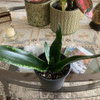
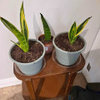
| Update: Shopping for other things, I went by the plant section again in Home Depot. The store wanted $37 for the fully grown Sansevieria. They weren't in a special pot or anything so I was quite turned off by that. Rooting around some of the other plants however, I did manage to find a smaller Sansevieria hiding beneath all of the others for $9. It is now in my living room patiently waiting to be repotted. The other six should arrive from Ebay sometime next week. The seller has almost all positive feedback lauding the quality of his plants so I should be in good hands. |
|
| Wow. too bad there's no Lowes' around you. Check down to my other posts. Most of what I own, I didn't spend more than $25 for and that was because it was rare at mail order, but most are only a few dollars with one being on clearance for only .50 cents. Next you must show us picture of what you bought. Stush |
|
- Posted by pirate_girl Zone7 NYC (My Page) on Thu, Apr 12, 12 at 17:05
| Could you pls. explain the following "employing passive hydroponics" what does this actually mean? I ask 'cause I grow some Hydro Sans. which pix can be seen at this forum if you look around for my handle 'Pirate_girl'. |
|
| If by "passive hydroponics", you mean growing in a medium of lightweight expanded clay aggregate (LECA) and some kind of water reservoir, then I don't think you have to worry about six plants significantly increasing the amount of humidity in your apartment. I've been growing a variety of plants this way for two years or so; I'm now up to a couple dozen and have not noticed any affect on my ambient humidity. If you're worried that the humidity in your apartment is so low that you'll need to be watering all the time, then that'd be another matter... Most of my hydroculture plants are in 4" or 6" pots, in a mixture of environments (ranging from a bathroom, to fluorescent lights at 25-30% humidity, to a sun room at 40-60% humidity depending on the outside weather). The 4" plants under lights need to have the reservoir refilled every couple of days; by contrast, some of the hydro plants in my sun room take a couple weeks to dry down. Four days seems about typical. If your apartment is one of those ultra-dry ones I hear about during the winter (under 20% humidity) then you might have watering trouble under hydro. In specific terms of hydro Sans, I'll bow to Pirate_girl's experience; she's been playing with Sansevieria in this medium longer than I have. :) I've been doing hydro with other plants for a couple of years, but my first hydro Sans was about six months ago. I've generally been pleased, though -- enough so that I'm considering moving all my Sans to hydro. |
|
- Posted by Experimental 6 (My Page) on Thu, Apr 12, 12 at 22:25
| pirate_girl, I am referring to the method you use. There are two categories to hydroponics, passive and active. Active hydroponics is when you supply the nutrient solution directly to the plant using a pump. Passive hydroponics on the other hand is when one puts the nutrient solution below the plant and allows the plant's roots to seek out the nutrient solution on its own(illustrated by you in the useful link at the bottom of this post). I will most likely use hydro clay like so: http://forums.gardenweb.com/forums/load/afrviolet/msg0716245331525.htm l cliss, I know it does get quite dry here in the winter but did not take readings a couple of months ago like I should have. D'oh. I am relieved the humidity has not been a concern for you, I hope I have the same results :) There are a lot of amazing people on here. Evidence to that fact is that almost every plant related search I have made to Google has resulted in being pointed to a post on this website, often times with an answer! I am looking forward to hearing more from the experts! I will do my best to be sponge like and soak up all that I can from this community. |
Here is a link that might be useful: Pirate_girl's pirate plants sailing in a sea of nutrient solution.
|
- Posted by lovemysans (My Page) on Fri, Apr 13, 12 at 17:39
| Hi Experimental! That's great that you were able to get your plants! I recently started feeding/watering my plants the passive hydroponics way and I am loving it. Keep us posted Experimental on your plants! Take care! |
|
- Posted by lovemysans (My Page) on Fri, Apr 13, 12 at 18:44
| Hi Cliss! Do you give your Sansevierias that you have in passive hydro a water refill right after the last refill is finished? Over watering still concerns me a bit when using this method, so I take them out of the water for a while each day. Do you have yours in the water reservoir constantly? |
|
| lovemysans, It depends on the variety of sans you are using. The all green types are the most hardy. You can start a trifasciata in a glass of water. Also when hot and brightly lit, they can take a lot more abuse. There are many factors to consider. Water alone is only one. Sorry I think you already know this. |
|
- Posted by lovemysans (My Page) on Sat, Apr 14, 12 at 10:22
| Hi Stush! Thank you for the reminder. |
|
- Posted by lovemysans 10 (My Page) on Sat, Apr 14, 12 at 18:49
| I just thought Stush that by using this method we might not have to worry about over watering, since they take in water on an as needed basis. I wonder if Cliss has any variegates in passive hydro constantly? I am being careful though and letting all dry out some between refills. Thanks again Stush! Take care! |
|
- Posted by pirate_girl Zone7 NYC (My Page) on Sun, Apr 15, 12 at 23:41
| Since I've done a lot of these experiments myself, I'll share that I never take them out of the water (or VERY rarely, to check on the roots). I try to never let the reservoir dry out completely, I think once one is growing 'em in water, forget about risk of overwatering, however, that IS only my opinion (& experience). Also, I don't change the water, I just top it off from time to time. Of the 3 I've grown this way, including the oldest more than 15 months old, I haven't lost any yet. I'm just now rooting yet another like this (my 4th variety), a leaf of S. ballyi. |
|
- Posted by lovemysans (My Page) on Mon, Apr 16, 12 at 11:28
| Hi Karen! Thank you for sharing your experience with us... It's great to hear that they're doing well despite the constant water. If you ever grow a variegated one in water please share it with us Karen! |
|
| lovemysans, The only seriously variegated Sans I have (so far) is "Manolin" (or is that "Manolyn" with a y?), and I haven't tried moving it to hydro. Two of my earliest transfers, though, were a "Hahnii Marginata" and a "Hahnii Jade Marginata", and they both seem to be doing fine, 7+ months in; one has even started to offset. I've recently tried moving a NOID I suspect to be "Black Gold" or "Black Gold Superba" over, we'll see how that goes. Like Karen, I also always keep mine in a nutrient solution, never allowing it to dry out. Unlike her, I change the water out and flush the LECA medium once a month or so; my water's pretty hard, so I start getting mineral deposits on top of the LECA pretty fast if I don't flush regularly, and I hate to think what the concentration in solution would be. So far, the only transfer that's made me seriously nervous is S. dooneri -- it started developing yellow leaves shortly after the move, and otherwise looking like it was either being overwatered or suffering some kind of nutrient deficiency. It seems to be coming out of that now (a month or so in) but I'm still not confident it'll make the jump. All the S. trifasciata cultivars I've tried have come through with flying colors, though, so far at least. |
|
- Posted by cactusmcharris 4 / Interior BC (My Page) on Mon, Apr 16, 12 at 20:16
| Come to think of it, I've never seen a Sans. trifasciata in flower. |
|
- Posted by lovemysans 10 (My Page) on Tue, Apr 17, 12 at 13:11
| Hi Cliss! Thank you for the great info! It's interesting that the Dooneri is recovering...Keep us updated Cliss, if you can. I'd love to know if she finally adapts, and if you decide to pass your (Manolin/Manolyn?) to hydro. Cliss, I've seen Manolin/Manolyn spelled both ways... I don't know which is right, I usually spell it with an i. Thanks again Cliss! Take care! |
|
- Posted by lovemysans 10 (My Page) on Thu, Apr 26, 12 at 13:47
| Guys, I had to stop watering so much. Just re potted two of my Sans that I have had in part time passive hydro, and their roots were turning pale and thinning. Going back to watering when dry. |
|
| Lovemysans - Were the roots whitish or brownish? Did they smell bad? Water roots on Sansevieria are white instead of the "normal" orange or brown, and they do develop very fine roots to cling to the LECA and maximize surface area for water absorption, so right offhand what you're describing sounds normal and healthy to me... If they were brownish or "off-smelling", that's another matter. (Or if the number/length of roots was going down, that'd also be a bad sign.) FWIW: I do now have a small, highly variegated S. guineensis in hydro, which seems to be doing well (it's busily growing new leaves after spending a year in soil doing nothing). Fingers crossed... |
|
- Posted by pirate_girl Zone7 NYC (My Page) on Thu, Apr 26, 12 at 18:41
| My hydro Sans' roots aren't white, they're rust or orange colored, consistently so. Never white, except the earliest 'just starting to root' roots. |
|
- Posted by lovemysans 10 (My Page) on Fri, Apr 27, 12 at 11:55
| Hi Cliss! No they don't smell off...They're just turning really pale from the bottom up and are looking really weak. I am going to water them when dry for a while and check if the roots regain their color and strengthen up again. That's great you have a variegated in hydro and doing well! Fingers are crossed Cliss! Mine apparently were doing great with the extra water...They were putting up new pups, all looked great from the top. Oh well... Take care Cliss! Hi Karen! Thank you for letting us know that yours still have good color in hydro! I have mine in small pumice stones instead of leca stones, the pot might be retaining too much water for passive hydro... Maybe the roots are too suffocated with the small pumice and all the water... I am going to change the pumice to a larger size and ease on the watering for a while. After the roots strengthen I might give passive hydro another shot with the larger pumice stones and see if it makes a difference... Thank you Karen! Take care! |
|
| Karen - Yours keep the orange roots? Wild... Now that I think about it, I'm not sure I've unpotted any that have been in LECA for any length of time; I'm mostly going by what they look like then I'm rooting them in water prior to potting them up. Maybe the added air exposure in LECA makes them turn orange again? I'll try to take pictures of the S. aubrytiana I'm water-rooting now, it's developed a network of roots a few inches long, mostly white. |
|
- Posted by pirate_girl Zone7 NYC (My Page) on Fri, Apr 27, 12 at 22:08
| Hi Gang, I'll try to take some new pix of roots when I get a chance, but I just took my Hydro Sans. to a plant society meeting & ended up lifting one Sans out of its Leca stones to show the group its beautiful colored roots & how clean they are. Lovemysans (LMS), Thanks for the nice words. What kind of pot do you have this in? I think you may be making this overly complicated, don't think I understand what this means : "the pot might be retaining too much water for passive hydro." not sure there's a possible 'too wet' for passive hydro if I understand you correctly. |
|
- Posted by lovemysans (My Page) on Sat, Apr 28, 12 at 16:22
| Hi Karen! I have them in unglazed clay pots. Hahaha!!! I thought the same thing while I was writing it, but they just looked like they had been in water too long... Maybe the small pumice along with the clay pot isn't a good combination for this method? Thanks for the help Karen! Looking forward to the pictures! |
|
| I did take some pictures, but didn't get a chance to transfer them off the camera. Not to put too fine a point on it, though... I was wrong. S. aubrytiana does indeed have greenish-white roots, as I remembered, but then I double-checked some of the other Sans I'm trying to root, and found that S. parva and the various trifasciata are all distinctly orange if you pause to look at them. So... The aubrytiana is the exception, not the rule, and may be an exception for environmental reasons. (It's in a position to receive a lot of light on its roots, so I think it's pumping in chlorophyll so they can photosynthesize... Which may trump a normal orange color). I apologize for inserting misinformation into the discussion. |
|
- Posted by lovemysans 10 (My Page) on Mon, Apr 30, 12 at 20:27
| Thanks for the extra info Cliss! Hmmm... I changed mine over to larger pumice stones, and have them again in hydro. Maybe the pumice that I had them in was too small. Not letting enough air circulate in the pot, possibly... Thanks again for the help Cliss! Take care! |
|
- Posted by lovemysans 10 (My Page) on Fri, May 18, 12 at 12:03
| Update guys! The larger pumice didn't help... They're out of hydro for good. It's back to the good ole dry days for these guys! Take care! |
Please Note: Only registered members are able to post messages to this forum. If you are a member, please log in. If you aren't yet a member, join now!
Return to the Sansevieria Forum
Instructions
- You must be a registered member and logged in to post messages on our forums.
- Posting is a two-step process. Once you have composed your message, you will be taken to the preview page. You will then have a chance to review the contents and make changes.
- After posting your message, you may need to refresh the forum page in order to see it.
- It is illegal to post copyrighted material without the owner's consent.
- HTML codes are allowed in the message field only.
- No advertising is allowed in any of the forums.
- If you would like to practice posting or uploading photos, please visit our Test forum.
- If you need assistance, please Contact Us and we will be happy to help.